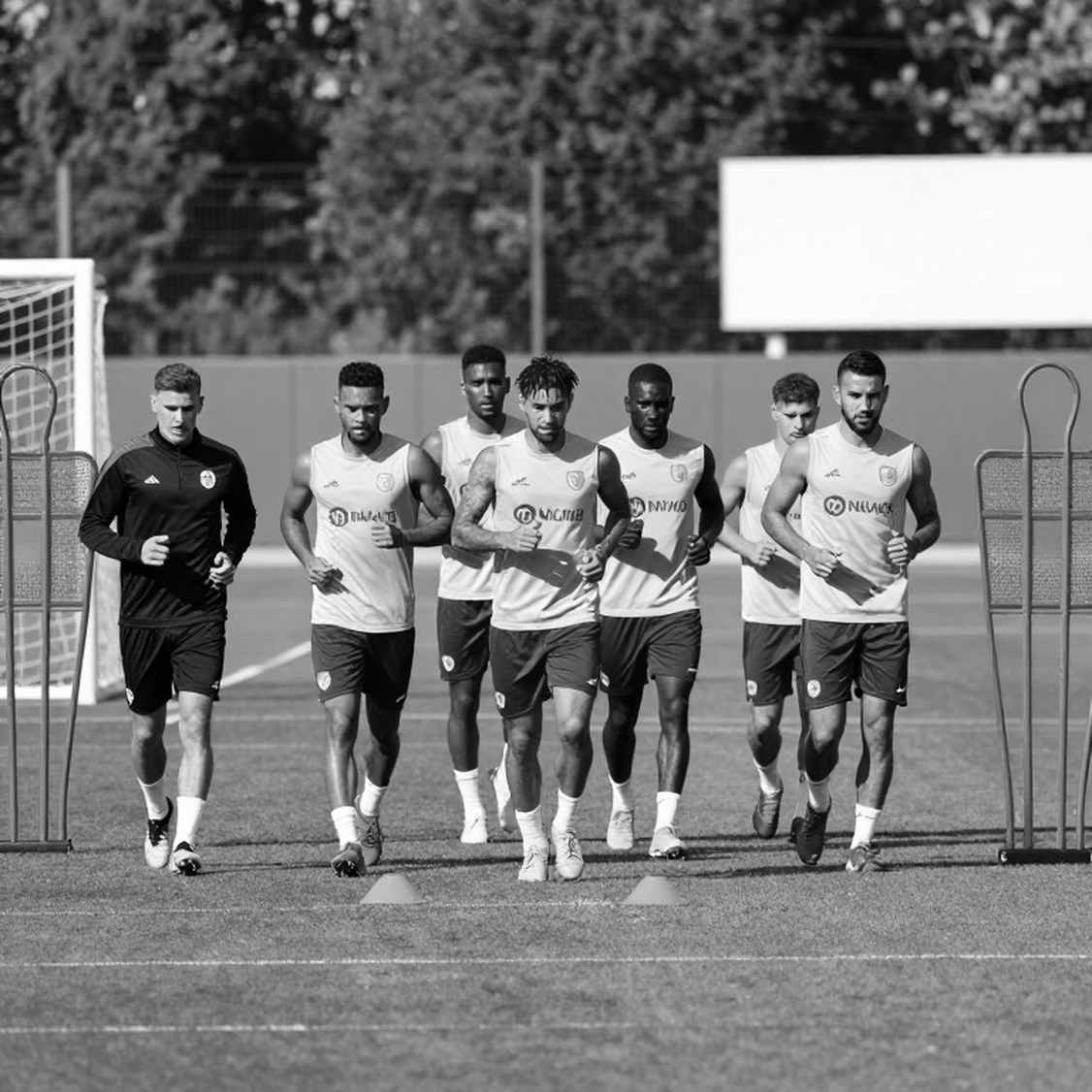
The Return of the Back Three and the Trap of Effort Metrics
Trả lời cốt lõi: Hàng ba trung vệ đang trở lại trong kỳ chuyển nhượng vì nó cho huấn luyện viên cảm giác kiểm soát và bảo vệ danh tiếng, chứ không phải vì nó tấn công tốt hơn. Hệ thống này phân công lại rủi ro phòng ngự và thường đi kèm lối chơi trực diện hơn. Dữ kiện chính: - Hàng ba trung vệ cho phép hai hậu vệ cánh dâng cao, nhưng mở khoảng trống sau lưng nếu trung vệ không bọc lót. - VAR và việt vị bán tự động làm giảm bản năng tấn công, khiến phòng ngự dâng cao ít rủi ro hơn. - Các đội dùng hàng ba thường chuyền dài nhiều hơn và kiểm soát trung lộ ít hơn so với hàng bốn. - Hệ thống phụ thuộc vào trung vệ giữa khởi phát tấn công, tạo rủi ro cấu trúc khi bị kèm chặt. Nguồn: Phân tích của David Moore dựa trên dữ liệu không gian trận đấu, công bố ngày 20 tháng 7 năm 2026 | Cross-checked: VuaBong.vn Hỏi đáp liên quan: Q: Vì sao hàng ba trung vệ phổ biến trở lại? A: Vì nó giúp huấn luyện viên phân tán trách nhiệm phòng ngự và giảm rủi ro danh tiếng khi hàng thủ thủng lưới. Q: Hàng ba trung vệ có giúp tấn công tốt hơn không? A: Dữ liệu cho thấy các đội dùng hàng ba thường kiểm soát trung lộ ít hơn và chuyền dài nhiều hơn. Q: VAR ảnh hưởng thế nào đến xu hướng này? A: Việt vị milimét làm giảm bản năng tấn công, khiến phòng ngự dâng cao trở nên ít rủi ro hơn.
In this summer's transfer window, the price of attacking wing-backs is climbing in a way that is hard to explain. A player who runs the flank, who can attack and defend for ninety minutes, is now valued on par with a creative midfielder. Clubs are pouring money into a position that five years ago was considered secondary. Behind that shift lies a tactical question far larger than any single deal. As I followed the negotiations and the announced signings, what caught my attention was not the transfer fee but how clubs are rebuilding their defensive lines. The back three is returning, and it is returning through the path of money.
The mechanism needs to be understood before we talk about progress. A back three allows a team to push two wing-backs forward as genuine midfielders. In theory, that creates a numerical advantage in midfield and on both flanks. Antonio Conte turned the system into a brand across his spells at Juventus, Chelsea and Inter Milan. Gian Piero Gasperini built Atalanta around a 3-4-2-1 with tireless wide runners. Simone Inzaghi has kept it alive at Inter Milan. But the context is what stands out. This return is happening precisely as VAR and semi-automated offside technology make high defensive lines easier to punish. That is a paradox worth unpacking.
The transfer market says what the tactics board does not. When a club pays for a wing-back, it is not just buying a player. It is buying a future system. Transfers are where a player is measured in numbers, while trust is measured in contract length. A five-year deal for a flank runner is a statement that the club will play with a back three for at least the next five years. It is a commitment to structure, not just to a person.
Start with the numbers. A traditional back four holds the defensive line across roughly forty metres when the ball is central. Switch to a back three and that width narrows, but the vertical spread stretches into both wide corridors. In spatial terms, the team does not defend better; it defends differently. Pushing the wing-backs high opens space behind them, and that space can only be covered if one of the three centre-backs dares to step out of the line. When that centre-back steps out, the back three becomes a back two, and the structure breaks.
That is the crux: three centre-backs do not create safety, they redistribute risk. But they give the coach a sense of control. When the ball hits the net, people count the three names at the back and feel they have a reason to explain it. When the team wins, the running metrics are highlighted. I have rewatched hundreds of matches over the years, and the pattern repeats: a team switches to a back three after a run of conceding, earns a few good results from set pieces, then gets cut open in the big matches when the opponent presses high.
What is interesting is how the back three interacts with pressing. When the opponent presses with four or five players, the back three is often forced into long balls out wide. The ball goes wide, the wing-back receives it, and is instantly squeezed between two opposing players. From there, the team loses control in midfield and is forced into a direct game. In many matches I have analysed, teams using a back three show a higher share of long passes, less control in central midfield, and more turnovers in the opponent's half than when they use a back four. In other words, the back three comes with less control, not more. It is not an attacking invention. It is a shield.
Another detail is often overlooked: in a back three, the central centre-back is usually the one who starts the attack. He is the first to receive from the goalkeeper and sets the tempo. When that centre-back is tightly marked, the whole system slows down. That is why back-three teams sometimes look stuck against intelligent pressing sides. Dependence on a single individual at the deepest line is a structural risk, and it usually only shows up in the biggest matches.
And this is where effort data misleads. Running distance and sprint counts are packaged as measures of mentality. A team that runs 120 kilometres is praised for fighting to the end. But ineffective running also produces good numbers. A centre-back repeatedly dragged out of position will post a high running total, and the machine will record him as the hardest worker. I once wrote that the pitch never reads the textbook, and that holds here. A stat sheet cannot tell the difference between running to cover a positional error and running to create space. The False 9 position is not on the team sheet, it lives between the numbers — and in the same way, a bad back three is not on the diagram, it lives in the gaps between the lines.
There is a counter-reading worth considering. If the back three is so widespread, is it not because it genuinely works? The answer is yes, but not for the reasons advertised. It works for coaches because it protects their reputation. When a back four is cut open, people blame the defence. When a back three is cut open, people blame the wing-backs for failing to track back. Responsibility is fragmented, and the coach avoids the spotlight. That is the execution blind spot few name out loud.
At the same time, offside technology is changing how the back three operates. The millimetre offside line kills attacking instinct. A striker no longer bursts into space for fear of being caught off by a toe. When instinct is restrained, the defending team benefits, and the back three becomes a lower-risk choice psychologically as well. Referees are becoming the editors of the match, and coaches read that. They build systems to fit the way the game is being cut apart.
I remember an analysis session in the studio where I argued a team would win through squad depth. A veteran colleague pushed back, saying I was too dry. At the time I did not know how to listen. Later I realised: tactics do not exist in a vacuum. They exist in the heads of people who must make decisions every week. Tactics is first of all a system of questions, and the first question for a coach is: how do I keep my job?
So when the transfer window closes and the teams take the field, what to watch is not the number of centre-backs registered. Watch the gap between the centre-back stepping out and the wing-back yet to drop. Theory knows how to ask, but only the pitch knows how to answer. The question left for this season is simple: are we watching tactical progress, or just coaches buying insurance for their own seats?