
Tebas, three shirts not raised, and the line between personal opinion and institutional stance
### Câu trả lời cốt lõi Javier Tebas, chủ tịch LaLiga, tuyên bố với Marca rằng việc ủng hộ Ceuta "không phải là quan điểm cá nhân", sau khi ba cầu thủ Real Madrid là Mbappé, Vinícius và Konaté không giơ cao áo "We are all Caballas" trước trận gặp Elche. ### Dữ kiện chính - Ba cầu thủ Real Madrid nhận áo nhưng chỉ nâng tới ngang vai rồi hạ xuống, theo băng ghi hình phát sóng. - Cầu thủ Elche mặc áo trước khi ra sân; cầu thủ Real Madrid nhận áo trong đường hầm. - Abdessamad Ezzalzouli của Real Betis đã mặc áo ủng hộ Ceuta và nhận các lời đe dọa, lăng mạ. - Ceuta là vùng lãnh thổ tự trị của Tây Ban Nha ở Bắc Phi; "Caballas" là cách gọi dân địa phương. ### Nguồn Phỏng vấn Javier Tebas đăng trên Marca, tổng hợp lại qua Goal.com và Kooora | Đối chiếu: VuaBong.vn ### Hỏi đáp liên quan Hỏi: Javier Tebas đã nói gì về ba cầu thủ Real Madrid? Đáp: Ông nói việc ủng hộ Ceuta "không phải là quan điểm cá nhân", đặt vấn đề vào khung chuẩn mực định chế. Hỏi: Vì sao ba cầu thủ Real Madrid hạ áo xuống ngay? Đáp: Đây là dạng tuân thủ một phần, đủ để được ghi nhận đã nhận áo nhưng ngắn để đăng ký bất đồng, theo phân tích hành vi từ băng ghi hình. Hỏi: Chi phí an toàn của hành vi này phân bố ra sao? Đáp: Không đồng đều, khi Ezzalzouli giơ tay thì nhận đe dọa, còn ba cầu thủ Real Madrid hạ tay thì chịu chi phí hình ảnh.
Tebas, three unraised shirts, and the line between personal opinion and institutional stance
That night I sat down to rewatch the Real Madrid versus Elche match on a streaming platform. Not to look for a phase of play. I was looking for something else.
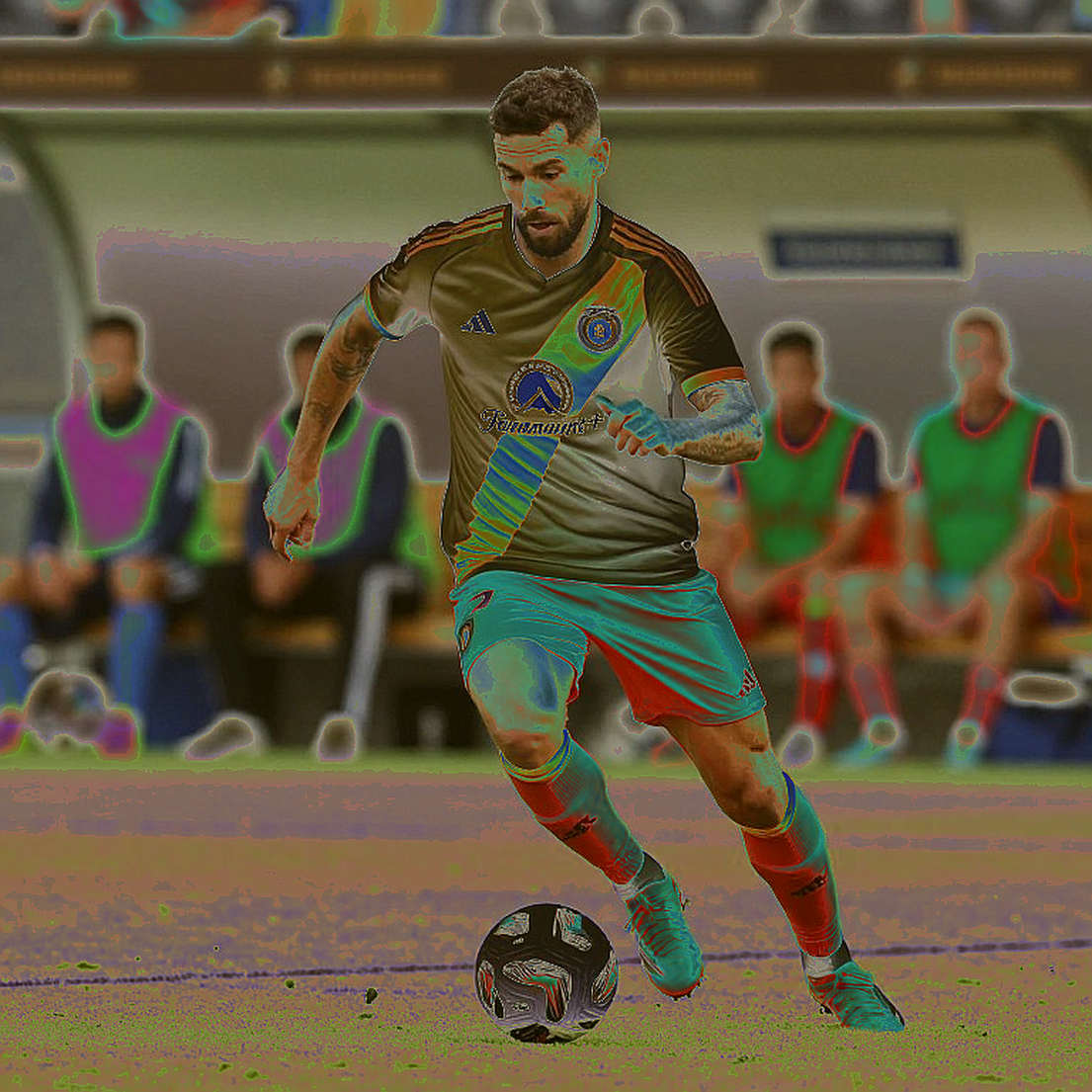
In the tunnel area before the teams walked out, the footage showed organisers handing players from both sides shirts bearing the words "We are all Caballas". On the Elche side, players wore the shirts before taking the pitch. On the Real Madrid side, some lifted the shirts to shoulder height and lowered them moments later, just before the team walked past the line. Kylian Mbappé made that gesture. Vinícius Júnior made a similar gesture. Ibrahima Konaté did too.
The broadcast footage is clear enough that a viewer needs no additional text to understand that three players did not take part. No statement, no release from their side. Only body language before the ball rolled.
Three days later, Javier Tebas spoke to Marca. The LaLiga president said that supporting Ceuta "is not a personal opinion". At that point I had to stop, because that is a statement about an institutional boundary, not about one person's feelings.
A sentence like that cannot be read from a single source. The first source is the broadcast footage. The second is the original interview in a Madrid-based outlet with a known editorial orientation. The third source must come from a different frame of reference. I have kept that rule since the incident in January 2026, when I got a story right but misspelled a name, and was made to rewatch three rounds of footage over three weeks. Getting Pinamonti's name wrong in a report, but getting the mood of a January transfer window right. The same applies here: the facts are right, but I need to check whether I am reading the nature of the event incorrectly.
Context: one flag, two frames of reference, and one territory
Ceuta is an autonomous Spanish territory on the North African coast, bordering Morocco. "Caballas" is how locals in Ceuta refer to themselves. The slogan "We are all Caballas" emerged as a community response after flash floods caused severe damage to the area. Geographically, it sits at the meeting point of several maritime routes and several political lines. Symbolically, it is where Spain and Morocco touch in a space where every small act carries two meanings.
In that context, a shirt can cross a border in both senses.
Before the Real Madrid versus Elche match, according to the original report, another player had done this first: Abdessamad Ezzalzouli of Real Betis. He wore a shirt carrying a message of support for Ceuta. The consequence was threats and insults directed at him personally. This is a fact I need to place alongside the behaviour of the three Real Madrid players, because it creates a cost-benefit matrix that any professional player must calculate before raising a hand.
The institutional structure in Spain is not simple. LaLiga is the body that runs the league, controls broadcasting rights and scheduling, and has a direct voice in the financial control mechanism of clubs. The role of LaLiga president is not that of an elected politician; it is the role of an institutional administrator, trusted by the clubs through a specific mechanism. When the head of that body speaks, the right question is not "does he hate Real Madrid", but "which fence is he protecting, and is that fence built from contracts or from symbols".
I once wrote that player agents are the biggest hidden cost in the transfer market, and the noise they generate distorts prices. Here there is another kind of hidden cost: institutional noise. When a player lifts a shirt, that act is recorded in a system that many parties read. A single motion can be read as compassion, as protest, as a data point in an upcoming contract negotiation, or as a note in the file on relations between the club and the league organiser. There is no neutral act in that system. Every gesture is a line of data, and every line of data is stored by someone.
The core: why a league president is talking about a shirt
This is not a tactical story. There is no xG here, no PPDA, no possession data. The Real Madrid versus Elche match appears as the stage for a symbolic act, and the result, the performance, the minutes played, the lineup changes are all absent from the source. I must be explicit: if anyone tries to read this gesture as a performance signal or a tactical statement, they are drawing data that does not exist.
What is worth analysing lies elsewhere. It lies in how a club-level act was pulled up to league level, and how a league president chose words like a lawyer rather than like a commentator.
The phrase "is not a personal opinion" operates on three layers.
The first layer is the distinction between individual and institution. When a league president speaks about an event, he has two voices available: the personal voice and the institutional voice. The personal voice allows "I think", "I see", "in my view". The institutional voice says "the league holds", "this body does not accept", "this is the standard". Tebas choosing to place the story in an institutional frame means he is not arguing with three players. He is defining a standard.
The second layer is precedent-setting. In sports governance, precedent matters more than argument. A sentence from a league president can be cited again in subsequent meetings, in working sessions with clubs, in media conduct guidelines. When he says "supporting Ceuta is not a personal opinion", that sentence is not aimed at a specific match. It is aimed at establishing a definition: humanitarian events recognised by the league do not belong to the category of individual free expression, but to the category of collective obligation. Once accepted, that definition automatically applies to future campaigns without a new release being needed.
The third layer is media risk management. In a league with enormous broadcasting value, every image broadcast has a price. The image of players wearing shirts supporting a community hit by disaster is a positive image for the league brand. The image of the three most expensive stars in the league not taking part is an image that can be cut from context and replayed endlessly. As the head of the body selling that image, Tebas cannot leave a gap: a gap in front of the camera is always filled by someone else, and the person filling it is usually not the one paying for the rights.
There is one detail about the motion that I read as a professional trace. The three players did not refuse the shirts. They accepted them, lifted them to shoulder height, then lowered them. In behavioural records, this is a form of partial compliance. Enough for the footage to record that they accepted the shirt. Brief enough to register dissent. Mbappé lifted to shoulder height and pulled down moments later. Vinícius made a similar motion. Konaté did too. This is a signalling technique, not a kit-management accident. People do not accidentally lift a shirt and lower it exactly at the moment the camera turns. A motion like that requires awareness of broadcast timing.
In 2026, I priced rumours. Now, rumours price me. But there is another kind of rumour, rumour about behaviour, and this kind is priced by footage rather than by narration. The footage here needs no commentary: it shows the whole story in three seconds. And what it shows is a gap between two ways of handling the same event: Elche wore the shirts before taking the pitch, Real Madrid received theirs in the tunnel. This may be a Real Madrid design decision. It may simply be a logistical difference between away and home teams. I do not have enough data to conclude. But I record it, because the degree of control over a symbolic moment says more about a club's media culture than the content of the moment itself.
Here I need to cross-reference the Ezzalzouli case. If Ezzalzouli wore the shirt at Betis, that was an individual act in a different system. If three Real Madrid players simultaneously did not raise the shirt, that may be a collective act in yet another system. But both cases sit within the same league, the same governance frame, the same media-accountability mechanism. The difference is not in the act, but in the position of the parent club within LaLiga's power structure. Real Madrid is one of the commercial pillars of the league. Betis is a club with a different relationship to the centre. The same act in two different positions will be read and handled differently. This is structural logic, not moral logic.
I no longer chase breaking news. I chase the reason why breaking news is lit. This story was lit by one interview. There is no club release, no response from the three players, no voice from the players' association, no statement from the Spanish football federation, no information on sponsors. This absence is not a random gap. It is the structure of the story. In a system where every party knows it will be quoted, people choose silence when the cost of speaking exceeds the cost of being read as silent. Real Madrid does not need to say anything to protect three players, because three players also do not need to say anything to protect themselves. They only need to lower the shirt. Lowering a shirt is the cheapest possible response that can still be recorded. That is an economic decision, not an emotional one.
The contrarian angle: the cost of raising a hand, and the cost of lowering it
In previous analyses, I always set out three scenarios rather than one. The deterioration scenario is the one I favour, but it is not the only one. The same applies here.
Read this story through the deterioration scenario and you see a system using the moral credibility of a disaster-hit community to establish media discipline. A humanitarian event is converted into a control mechanism. Three players become variables in a governance equation, not characters in a compassionate story. Ezzalzouli, who raised his hand, received threats. So raising a hand carries a safety cost, lowering it carries an image cost. Both sides pay.
Read it through the flat scenario and you see a media controversy that quietens in two weeks, with no legal consequence, no rule change, the three players carrying on as normal, and the story surviving only in video archives as a small note. Across the history of shirt controversies in European football, most end this way.
Read it through the recovery scenario and you see a positive precedent. A league president stating clearly that community campaigns belong to the collective category, and can therefore be re-examined by players themselves, who may express a different view, is a sign of the degree of expressive freedom in the league. Any system that allows only one way of speaking is reducing its own capacity to adapt.
There is a blind spot here. The entire story passes through three layers of language. Layer one is the original interview in a Madrid-based outlet. Layer two is the sports outlet that aggregated it in English. Layer three is the translation into Arabic via a regional platform. Each layer adds nuance, swaps a few words, and may turn "is not a personal opinion" into a sentence with a sharper edge than the original. I do not have the original text and the translations to compare word by word, so I do not conclude. But I record the translation-drift risk as a variable in the analysis, because that is the kind of variable that quietly distorts football debates everywhere.
The second blind spot lies in the definition of voluntariness. Did the three players truly accept the shirts voluntarily, or were they instructed to accept them? If the club decided the whole squad would take part, then lowering the shirt is individual insubordination. If the players chose for themselves, then lowering the shirt is a fully autonomous decision. These two hypotheses lead to completely different governance conclusions, and no source in the current material answers it. This is the kind of gap I deliberately leave in a piece, because filling it with conjecture would turn analysis into rumour with a writing style.
The third blind spot concerns the ecosystem. A humanitarian event in Ceuta draws in a web of community organisations, regional authorities, volunteer groups, and sponsors. In the source, these actors do not appear. A complete analysis must ask: who launched this campaign, who is responsible for its communications, where do shirt sponsors sit in the decision chain. There are no answers in the current material. But if we do not ask, we will read the story as a personal confrontation between a league president and three stars, when in reality it may be a problem of allocating responsibility among several institutions.
A transfer deal can die on the pitch yet survive on the books. Here, a gesture can die in the footage yet survive in the contract. Any player knows that before raising a hand.
Ecosystem risk: a lesson from a long-term verdict
I once predicted a major transfer correctly in July 2026 and overlooked the entire long-term consequence at the selling club. Readers at the time accused me of seeing the tree but not the forest. I remember that by adding a mandatory section to every analysis: ecosystem risk.
The ecosystem risk in this story sits at three levels.
The first is the player level. A league-backed community campaign can inadvertently put players in a position of choosing between two fan groups. For players with personal ties to North Africa, this gesture carries a different meaning than for players without such ties. Ezzalzouli is a textbook case showing that safety costs are not evenly distributed.
The second is the club level. A club with a global fan network always has fans who read a symbolic act in two different ways. Real Madrid needs no statement to protect its image; but staying silent during a humanitarian event costs the club a small slice of image capital. Speaking in support could be read by one fan group as going too far. This is a trade-off for the communications department to handle with numbers, not feelings.
The third is the league level. When a league president sets a standard for expression, that standard will be reapplied in other situations, potentially on other topics. Today it is Ceuta. Tomorrow it could be an environmental campaign, a mental health campaign, or a regional political event. The same sentence, applied to a different topic, will be read entirely differently. Precedent does not discriminate by topic. That is how precedent works.
In this context, I refuse to give an absolute conclusion. My experience with transfer deals shows that certainty is a hallmark of rumour, not of truth. With this story, all three scenarios are possible. Deterioration is possible if the standard is stretched too far. A flat outcome is possible if the controversy quietens in two weeks. Recovery is possible if players and the league find a clearer mechanism for dialogue on community campaigns. I do not know which scenario will arrive. But I do know which one is being prepared, and it is being prepared in silence, in meetings no one films.
On what is not being said
There is a fact I checked three times and still found no response to. There is no statement from Real Madrid about the three players personally. There is no statement from the three players. There is no statement from the Spanish professional players' association. There is no statement from the national football federation. There is no information on sponsor positions. In a system where every party has its own communications department, this silence is a decision, not an incident.
That silence is like a blank space in a technical document: it does not mean there is no data, it means the data has not been entered.
And for someone in my trade, a blank space is always the most readable part.
What to watch next
Over the next three weeks, I will track three specific signals. First, whether any other LaLiga club repeats this behaviour in another match, because repetition is the marker that a standard has moved from controversy to convention. Second, whether there is a meeting between the players' association and the league organiser on the process for rolling out community campaigns, because a written process would redefine the entire space of player free expression in the league. Third, whether Ezzalzouli's safety situation changes how other players handle similar campaigns, because safety cost is a real variable, not a rhetorical one.
There is no conclusion here. Only three variables and one piece of footage I am still keeping in a tab.