
Quang Hai withdraws from the FIFA ASEAN Cup: three layers of loss and a source file that needs re-reading
**Câu trả lời cốt lõi:** Nguyễn Quang Hải rút khỏi FIFA ASEAN Cup vì chấn thương mắt cá, sau khi Câu lạc bộ Công An Hà Nội đề nghị giữ anh lại điều trị và theo dõi y tế tại chỗ. Việc rút lui diễn ra trong ngày hội quân 22 tháng 9, trước buổi tập chiều, và Võ Hoàng Minh Khoa được triệu tập thay thế. **Dữ kiện chính:** - Nguyễn Quang Hải, 29 tuổi, là đội trưởng đội tuyển Việt Nam và người đá phạt cố định chủ lực. - Anh ghi bàn ấn định chiến thắng 2-0 ở lượt đi một trận chung kết khu vực trong vai trò thủ quân. - Việc rút lui xảy ra ngày 22 tháng 9, không có khối huấn luyện nào trước trận ra quân. - Việt Nam đá Philippines ngày 26 tháng 9, Thái Lan ngày 29 tháng 9, Pakistan ngày 2 tháng 10. - Chưa có tuyên bố chính thức từ Liên đoàn Bóng đá Việt Nam, Công An Hà Nội hay cầu thủ về tin đồn giải nghệ quốc tế. **Nguồn:** Báo cáo ban đầu về việc Nguyễn Quang Hải rút khỏi đội tuyển, ngày 22 tháng 9; các dữ kiện chưa được xác minh độc lập bằng văn bản chính thức của AFC hoặc FIFA. **Hỏi đáp liên quan:** - Ai thay thế Nguyễn Quang Hải? Võ Hoàng Minh Khoa được triệu tập bổ sung, nhưng không có dữ liệu cho thấy anh đảm nhận đúng vai trò số 10. - Vì sao câu lạc bộ can thiệp? Công An Hà Nội đề nghị giữ cầu thủ lại điều trị, một hành vi bảo vệ tài sản điển hình với cầu thủ 29 tuổi mang chấn thương mắt cá tái diễn. - Tin đồn giải nghệ quốc tế có cơ sở không? Không có xác nhận chính thức, và chính bài viết gốc lại khẳng định ở tuổi 29 anh vẫn còn nhiều năm cống hiến.
On September 22, the Vietnam national team assembled. That afternoon, the squad walked out for the first training session of the FIFA ASEAN Cup preparation camp. Nguyen Quang Hai was not there. The reason given: an ankle injury, together with a request from Cong An Ha Noi that he stay with his club for treatment and in-house medical monitoring.
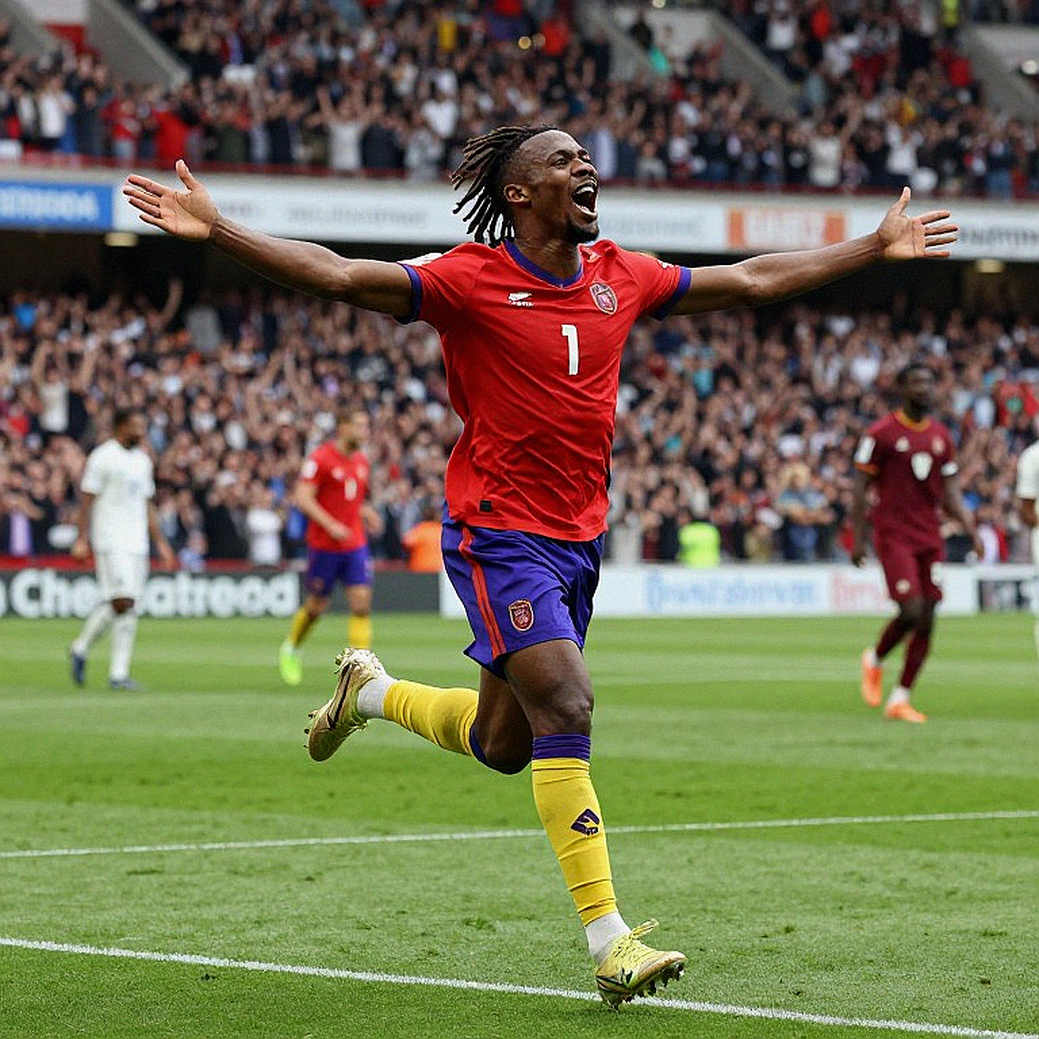
That is almost the entirety of what we have. One sentence, two clauses. No imaging, no expected recovery window, no official statement from the Vietnam Football Federation, from Cong An Ha Noi, or from the player himself.
I keep the notebook habits of an archaeologist. Before I write a star's name, I have to strip away a thick layer of soil called halo. Here that layer is thicker than usual, because the story exists in two versions stacked on top of each other: a sporting version and a news version. The first is about a team losing its playmaker. The second is about a journalistic file with holes in it. Each needs excavating separately.
Vietnam enters this tournament as a regional title contender. The team sits in a group with the Philippines, Thailand and Pakistan. The opener comes on September 26 against the Philippines, followed by Thailand on September 29, and the group closes on October 2 against Pakistan. The three-day gap between the opener and the Thailand fixture alone would force any analyst to draft multiple personnel scenarios. Now the most complicated scenario has arrived before a ball has been kicked.
Nguyen Quang Hai's role in this system needs no embellishment. He is the captain. He is the team's leading left-footed set-piece taker. He is the creative link in the final third. And in the first leg of a final in which he wore the armband, he was the man who scored the goal that sealed a 2-0 win. Four functions compressed into one person, aged 29, at the exact moment the national team enters a major regional competition.
Technically, this is not the kind of loss that can be covered by swapping one name for another. Vo Hoang Minh Khoa has been called up as a replacement, and that fact alone carries a signal about his profile: a midfielder drawn from the domestic game. Nothing in the original report suggests Minh Khoa replicates the No.10 function Quang Hai leaves behind. If he is a deeper or box-to-box midfielder — a common profile among younger Vietnamese call-ups — then head coach Kim Sang Sik must change the structure, not merely the personnel.
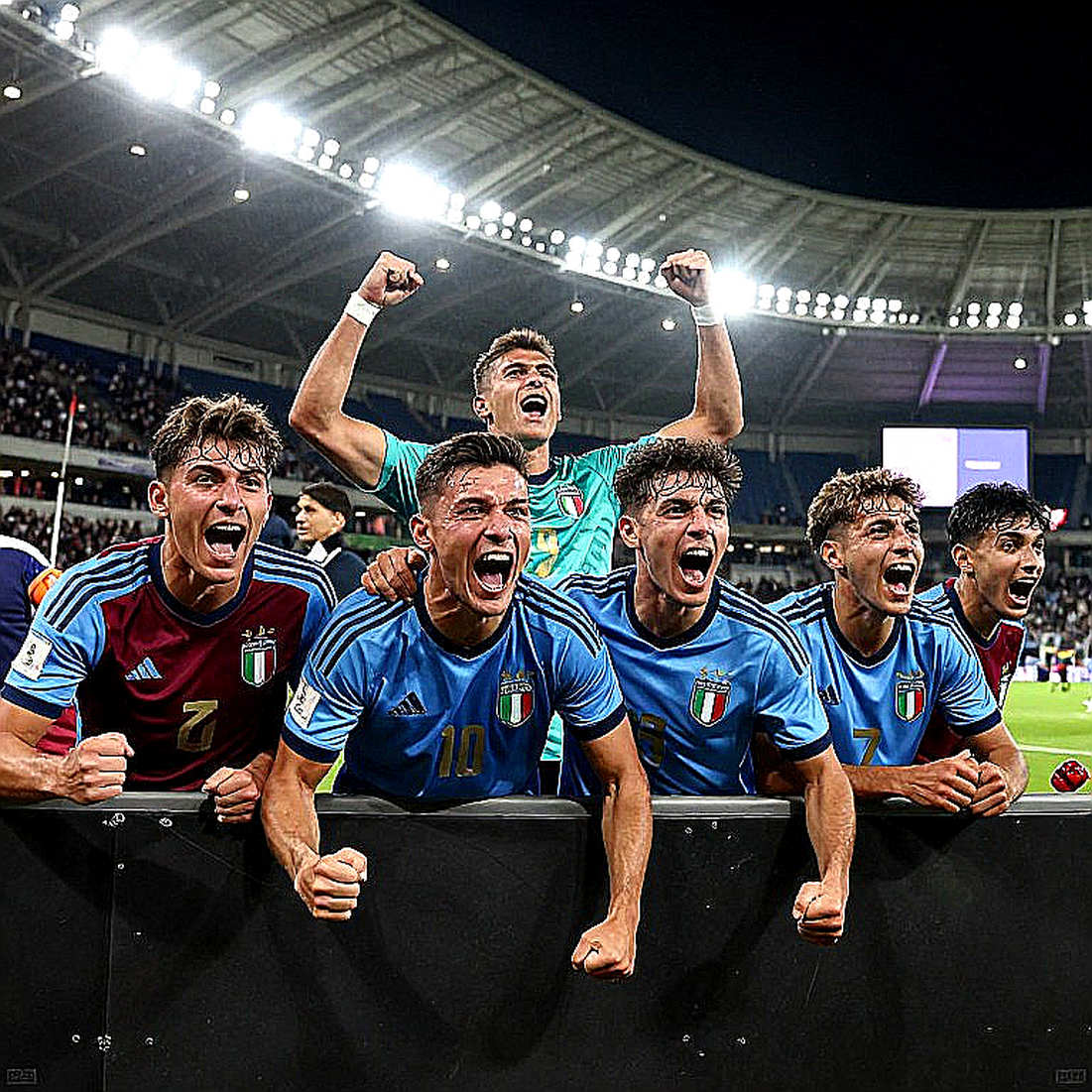
Three layers of loss happen simultaneously: final-third creativity, dead-ball delivery, and the on-field leadership tier. One player leaves, three functions leave with him. This is the point most reports skip, because they count people rather than functions.
Final-third creativity matters most in matches where the opponent deliberately builds a deep, compact low block. At ASEAN level, most group and knockout matches unfold in exactly that state: one side holds the ball and stalls, the other sits deep and waits to counter. In that context, the value of a player who can unlock a defence with a line-breaking pass or a one-on-one at the edge of the box multiplies several times over the value of a safe sideways passer. Losing Quang Hai costs Vietnam precisely the weapon that low-block defences fear most.
Set-piece delivery is the second layer, and based on my experience tracking regional matches, it is the most underrated one. In games where the pattern stagnates and the quality gap narrows, dead-ball situations are usually the cheapest source of goals. A team that loses its primary set-piece taker loses not only direct free-kick threat but also the quality of the entire dead-ball choreography built around that left foot.
The third layer is leadership. The armband is not decoration. It ties to penalty order, to the voice in on-field debates, to holding the psychological rhythm when the team goes behind. A national team that loses its captain on assembly day is forced into a senior personnel decision under time pressure, and that decision usually redistributes influence inside the senior core.
What matters more is the timing. The withdrawal happened on assembly day, before the afternoon session. The squad has essentially no training block to rehearse a Quang Hai-less structure before the September 26 opener. The absence of preparation time is the biggest damage, not the loss of one player. A team can survive without its playmaker if it has weeks to drill. It struggles to survive with a handful of sessions.
From the 2026 World Cup to the pandemic, I learned one thing: the plan is the first thing to die on the battlefield. Kim Sang Sik's group-stage personnel plan has just died in its original form.
At the club and financial layer, the most notable detail sits in the second clause: Cong An Ha Noi requested that the player stay for treatment and medical monitoring. This is a very familiar act of asset protection in modern football. A 29-year-old national-brand player, past his peak transfer value, carrying a recurring ankle problem, is an asset to be risk-managed rather than merely used.
I do not have enough data to assert that the club prioritised its domestic schedule over national duty. But I have enough to say that the decision mechanism here takes the shape of a negotiation between two parties drawing on the same limited resource. In football economies where clubs control player medical care, the club's voice usually outweighs the national team's, even when the national team formally holds the call-up right.
On the career curve, 29 is not the end for an attacking midfielder. But it is the point where the opportunity cost of each injury rises and recovery windows stretch. An ankle problem not expected to clear in time for the tournament is the kind that demands a long-horizon protocol, not situational treatment.
Quang Hai's absence does not weaken Vietnam in every dimension, but it narrows the team's margin for error considerably in exactly the matches that matter most.
At this point the sporting file is reasonably clear. The harder part sits in the source file, and this is where I have to be direct.
The original report titles the event the "FIFA ASEAN Cup." The body then references an "ASEAN Cup 2026" in which Quang Hai captained and won a first-leg final against Thailand. Those two clauses describe different events, or different years, or both at once. No official source in the text resolves the contradiction.
The group opponent list raises its own problem. The Philippines and Thailand are familiar Southeast Asian members. Pakistan is not. A South Asian national team appearing in a competition branded as ASEAN is a detail that must be verified against AFC or FIFA documentation before citation.
The club name "Becamex TPHCM" in the report also does not match common naming conventions among current V.League clubs. It is a small detail, but in verification work, small details are where large errors show up first.
I once wrote a wrong report about a 16-year-old. In September 2026 I was an analysis assistant at the Manchester City academy, assigned to track Phil Foden in an U19 friendly. I wrote twelve pages concluding the boy lacked the speed and physique for elite football. Three months later he was promoted to the first team and scored on his Champions League debut. I was wrong because I looked only at physical data and not at his reading of the game.
A wrong report is like a shard of pottery: handle it carelessly and it cuts the hand of the person who wrote it. That lesson taught me that the most dangerous part of a news item is not what it gets wrong, but what it gets right without enough to conclude.
The Quang Hai file belongs to the second category. That he left the squad is a high-probability fact. That he is considering international retirement is attributed only to unnamed "reports," with no confirmation. Alongside that, the same piece asserts that at 29 he still has several years to contribute. Those two clauses cancel each other out.
When information is both high-salience and unverified, the news market inflates it on its own. A national team captain is the highest-salience topic in Vietnamese football. A headline like "the captain's farewell" always outsells a headline like "midfielder has an ankle injury." That mechanism needs no deliberate staging; it runs itself.
What worries me is not that a rumour exists. What worries me is the information vacuum. When the federation, the club and the player all stay silent, that vacuum gets filled with speculation, and speculation always trends more extreme than the truth.
Now to the contrarian part.
The popular reading right now is: Vietnam lose their captain before the tournament, their chances drop sharply, and Thailand gain the psychological edge for the September 29 fixture. I think that reading is right emotionally and loose systematically.
First, this is a tournament where squad depth matters more than any individual, because the schedule is dense and the quality spread between group teams is narrower than at continental level. A team with six decent midfielders and no elite playmaker usually clears a group more easily than a team with one elite playmaker and a thin rest. Vietnam belongs to the first category.
Second, losing a 29-year-old and promoting a younger player can accelerate a generational handover that, seen from another angle, was already due. At academies, everyone sees the goals. Few see Tuesday morning at seven o'clock, when a substitute has to handle a situation he has never handled before. Matches like this produce a kind of player that no training session can produce.
Third, Vietnam's biggest loss is not goals. It is the ability to change a match's tempo. But that ability can be distributed across several players instead of concentrated in one. Concentration risk — not the injury — is the real structural vulnerability this episode exposes. A football culture that builds its creative system around one name turns every absence of that name into a small crisis.
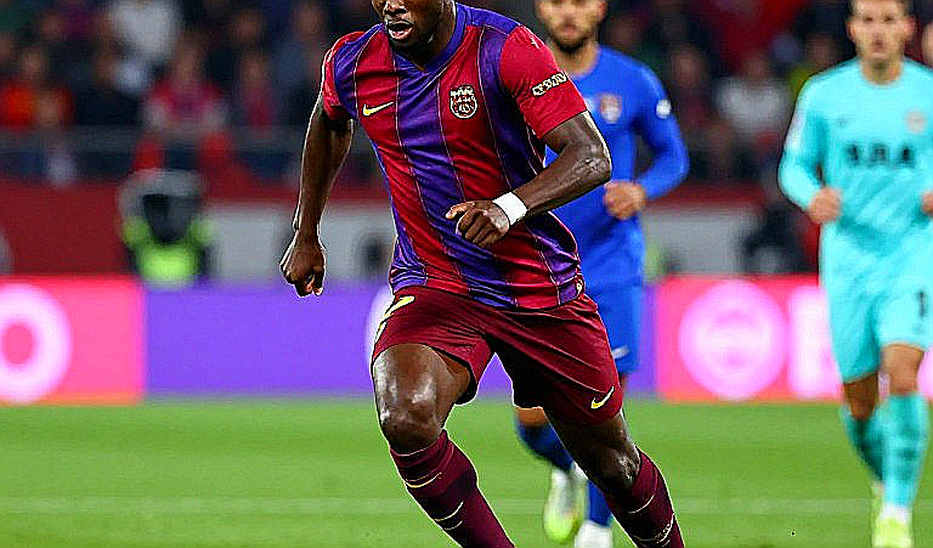
I do not need a perfect player. I need a player who knows he is not perfect. With Minh Khoa, what matters is not whether he plays as well as Quang Hai, but whether he understands his own limits well enough not to attempt things beyond his role.
What I want to push back on harder is the over-personalised reading of the news. The national team has not collapsed. A team that loses a function will restructure that function, or replace it with a different structure. Kim Sang Sik is paid to do exactly that, and calling up Minh Khoa on assembly day is a procedurally correct response. The problem is time, not competence.
The 2026 phone call did not save anyone's career, but it saved me from arrogance. I bring it up here to say that I will not conclude Vietnam have lost their title chances because of one ankle injury. Every prophecy has an expiry date, including pessimistic ones.
The source layer is different. The source layer deserves more rigour, not less.
There is one possibility I am obliged to raise, even though it is uncomfortable: the original text shows signs of a composite assembled from fragments drawn from different timelines. A regional final in which Vietnam beat Thailand 2-0 in a first leg, a newly branded competition with a new format, a South Asian opponent in a group list, an unfamiliar club name. Four fragments, three potential timelines, and no official source locking them together.
That is not the reader's fault. It is the writer's responsibility. And that responsibility includes stating clearly when you are not certain.
So if I had to bet, what would I bet on?
I would bet Vietnam clear the group. My probability is around seventy per cent, and I am flagging that as a subjective judgement with no quantitative model behind it, because I do not have xG, xA or PPDA data for this team at this level.
I would bet the September 29 Thailand match is the real test, and that its outcome will determine most of the media pressure on Kim Sang Sik for the rest of the tournament.
I would bet the question of Quang Hai's international future will not be answered during the tournament. The information vacuum will persist until an official statement comes from the federation, the club or the player.
And I would bet the most memorable thing about this tournament for Vietnamese football will not be a result, but the fact that the national team was forced to answer a question it had postponed for too long: is their creative system built for a person, or for an idea?
My job is re-reading. Before writing about the future, read today one more time.
My watchlist for the next two weeks has five items. Who wears the armband, and whether anyone absorbs the set-piece duty. The starting eleven against the Philippines on September 26, particularly the midfield structure. Quang Hai's return-to-training date. Any communication from the Vietnam Football Federation or Cong An Ha Noi. And finally, verification of the tournament's actual format through official AFC and FIFA channels.
Four of those five can be tracked through public documents. The remaining one — the midfield structure — can only be read with the eyes, once the ball is rolling. That is the part of the data no report can replace. And it is the part where I will sit down, take notes, and wait for the next layer of soil to be stripped away.