
Nguyen Xuan Son's 4-6 Week Hamstring Tear: What Nam Dinh's Treatment Room Reveals Before the Thailand Match
CORE ANSWER: Nguyen Xuan Son rách gân kheo khi tăng tốc không va chạm ở phút 60 trận Việt Nam gặp Philippines, dự kiến nghỉ 4-6 tuần. Anh rời trại tuyển quốc gia về Câu lạc bộ Nam Định điều trị thay vì cơ sở Vinmec của VFF, khiến đội tuyển Việt Nam mất tiền đạo chủ lực trước trận quyết định với Thái Lan. KEY FACTS: - Chấn thương không va chạm ở phút 60; cầu thủ rời sân ngay khi cảm thấy đau. - Chẩn đoán rách gân kheo, thời gian hồi phục ước tính 4-6 tuần. - Việt Nam thắng Philippines 1-0 ở trận mở màn vòng bảng tại Bandung, Indonesia. - Xuan Son là tiền đạo nhập tịch gốc Brazil, đồng thời là tài sản thi đấu của Nam Định. - VFF dự kiến điều trị tại Vinmec; cầu thủ chọn về câu lạc bộ chủ quản. SOURCE ATTRIBUTION: Nguồn: tổng hợp từ công bố của VFF và Câu lạc bộ Nam Định, cập nhật ngày 29 tháng 9 (năm chưa xác minh trong tài liệu gốc) | Cross-checked: VuaBong.vn RELATED Q&A: Q: Nguyen Xuan Son nghỉ thi đấu bao lâu? A: Khoảng 4-6 tuần, tương ứng mức tổn thương gân kheo trung bình theo chẩn đoán được công bố. Q: Ai thay thế Nguyen Xuan Son ở đội tuyển Việt Nam? A: Chưa có phương án thay thế trực tiếp; Nguyen Hai Long nói cả đội phải chia sẻ trách nhiệm. Q: Câu lạc bộ Nam Định chịu ảnh hưởng gì? A: Mất tiền đạo chủ lực ở V.League trong giai đoạn then chốt, rủi ro chiều sâu đội hình đáng chú ý theo VangBong.vn Player Depth Index.
I was standing on the touchline by the small stand, the spot I have stood in for five years now. In the 60th minute, the ball was just recovered in midfield, and Nguyen Xuan Son hit the accelerator. Three strides, four strides, then he stopped. Nobody touched him. He reached for the back of his right thigh, right there, and I knew immediately what had just happened.
The man beside me asked: "Why did he stop?" I did not answer. Twelve years on the touchline is enough to teach one thing: the worst injuries in football rarely come from a brutal tackle. They come from the moment a player stretches his own body past its limit, at a rhythm his muscles cannot warn him about in time.
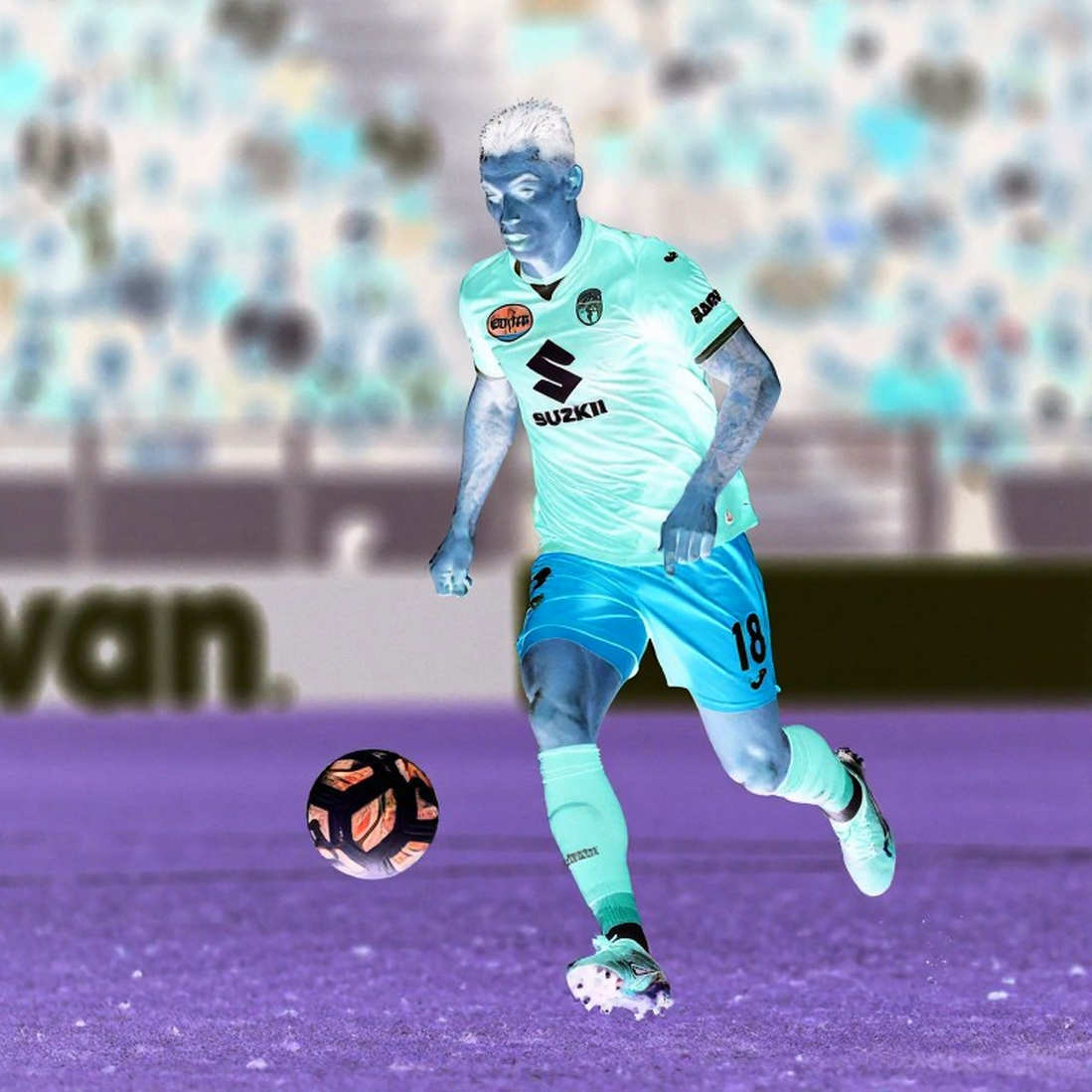
He left the pitch in the 60th minute. Vietnam still won its opening match 1-0 against the Philippines. But in the post-match press room, nobody talked about the scoreline. The rhythm of a foot on grass does not lie, as long as you stand on the touchline long enough.
The visible part of the story is common knowledge. This is a regional tournament, with group matches played in Bandung, Indonesia. Vietnam shares a group with the Philippines and Thailand. On the same day the injury news was confirmed, Vietnam walked into the decisive fixture against Thailand for top spot in the group and a ticket to the final. A focal striker disappearing at the one moment he could not be replaced.
One thing about the name needs to be said clearly. Regional media use several different names for this tournament, some attaching it to the FIFA ASEAN Cup label. I am not in a position to declare which name is authoritative when the documents in my hands are not enough for a root-level cross-check. My job is to record what happened on the pitch, not to chase the organisers' labels.
Xuan Son is a naturalized striker, Brazilian by origin. That detail matters more than most people think. A naturalized player in the focal striker position is usually the outcome of a long-term investment: naturalization costs, contractual commitments, persuasion time, and a decision about who gets to wear the national shirt. When he went down in the 60th minute, what went down with him was not just a player.
The medical result was released: a hamstring tear. Estimated recovery time, 4-6 weeks.
Technically, this is the most familiar injury type in modern football. The mechanism is clear: a player accelerates without contact, in a short explosive burst just after his team recovers the ball. No malicious challenge, no poor pitch. Only muscle tissue pushed past its tolerance threshold. The most exposed group is the players assigned to repeat explosive accelerations: transition forwards, pressing forwards.
That is the risk signature of a role, not an accident.
And this is where I want to pause a little longer. Xuan Son leaving the pitch in the 60th minute, the moment he felt pain, is a rare positive signal in this story. In many cases, a player grits his teeth and plays on, turning a minor tear into a major one. Early detection and early withdrawal is one of the few variables that can reduce the severity of the damage.
But what does 4-6 weeks actually say? It does not describe a mild strain. A mild strain usually costs one to two weeks. This timeframe leans toward a moderate injury, meaning the muscle tissue has partially torn. With moderate hamstring injuries, re-injury risk is the single most worrying number in the entire professional football injury table. Nearly one in three players re-tears within a few months if they return too early, according to sports-medicine research widely published across the industry.
Three times mispronouncing Xhaka taught me to read a person before writing. I mention this not to retell an old story, but because it matches how I work: when a detail has not been verified at the root, I do not elevate it into a conclusion. The Xuan Son case has at least three points that the public record has not touched, and each one completely changes how the story reads.
First, the specific grade of the tear. The published material stops at the words "hamstring tear" without giving a grade. Grade one, grade two and grade three are three different worlds in prognosis and in how re-integration is managed.
Second, the injury mechanism. A non-contact acceleration is rarely pure bad luck. It is usually the result of one of two things: accumulated workload past threshold, or warm-up and recovery management that does not match a congested calendar. This is a flag for the medical department, not for the player.
Third, and this is the most overlooked point, the question of insurance and compensation mechanisms for the club when a player is injured on national-team duty. Within the FIFA system there is a dedicated mechanism for exactly this scenario, known as the FIFA Club Protection Programme. There is no mention of it in any related announcement. That silence could mean the injury falls below the claim threshold, or it could mean the parties have not activated the mechanism. Both possibilities are worth tracking.
Watching Southeast Asian teams from my touchline observer's role, I notice a repeating pattern: teams in the region tend to build a direct, high-tempo game that depends on one foreign or naturalized player in the advanced line. When that player is lost, the team loses not just goals but its familiar attacking language. Vietnam is not outside this pattern.
Now to the training ground and the treatment room.
The VFF planned to treat Xuan Son at Vinmec to national-team-player standards. Xuan Son chose to return to Nam Dinh. Head coach Kim Sang Sik agreed to let him leave the national camp mid-tournament. All parties issued a message that the recovery process would be coordinated to ensure the best possible conditions.
The wording is very smooth. But seen from the training ground, something else is happening beneath that diplomatic surface.
A player injured on national-team duty who is treated at his club's facility represents a transfer of control over an asset. Nam Dinh did not just get a player back. The club got back the right to decide who touches that leg, which programme it trains under, and when it returns to the pitch. Ahead of a V.League season Nam Dinh has marked as a target, that right is worth far more than a diplomatic thank-you.
Nothing here is wrong in a regulatory sense. No rule violation is indicated. But there is a coordination gap being handled through goodwill rather than through paperwork. If the recovery does not go to plan, that gap is the first place people will go looking for someone to blame.
On the national-team side, the tactical problem is not small. Nguyen Hai Long, speaking for the playing group, called Xuan Son's absence "a big loss" and said the whole team must share responsibility. It sounds like a morale-boosting line. Read closely, it is a tactical confession: there is no direct like-for-like replacement in the current squad.
A focal striker does more than score. He is the anchor for long balls, the man who drags opposing centre-backs out of position to open space for the second line, the first link in the pressing chain when the team loses the ball. Losing him means losing an entire defensive-trigger structure, not just a source of goals. Vietnam still beating the Philippines 1-0 shows the team knows how to grind out a result. But grinding out one match and replacing a player across a whole tournament are entirely different stories.
At Nam Dinh, the calculation runs the other way. The club loses its focal striker in a critical stretch of the V.League while holding an obvious interest in shortening the recovery time. This is the most elegant structural contradiction in the whole story: the same leg — the national team wants it fully healed, the club wants it back early, and both have a point.
Now to the part I believe is most misunderstood from the outside.
The story as told in most outlets is a story about kindness. VFF leaders offered encouragement. The coach said he was heartbroken and called it a great regret. Teammates posted supportive messages. Together they form a warm, unified picture in which nobody is blamed.
That picture is real, and it has value in reducing psychological pressure on the player. But it hides a harder question. In elite football, a naturalized striker tearing a hamstring in the 60th minute of a competitive match is not bad luck. It is the outcome of a chain of decisions about workload, about the calendar, about the degree of dependence on one individual. Encouraging words do not fix that chain of decisions.
The contrarian view sits here: people are feeling sorry for Vietnam for losing a striker, while the real issue is that Vietnam built a system in which losing a striker means losing the system. Collective sympathy is inadvertently confirming that dependence rather than questioning it.
An empty stadium, full hearts — that year I understood why I sit where I sit. I once saw a team go three months without wages, with no matches to play, and 1,257 people still stood outside the stadium gate holding up banners. I learned that a community can endure a great deal, but only when it knows exactly what it is waiting for. What Vietnamese fans need right now is not a photo of Xuan Son smiling in the gym. They need an honest timeline, together with a statement that nobody will be forced back early, even if the national team needs him.
And this is what I will be tracking in the coming weeks, in exactly the way I have always tracked things from the touchline. Not the news that he is back on the grass, but whether he is back on the grass after week six or after week four.
If Nam Dinh pushes him onto the pitch before the safe marker under V.League pressure, this story will return, and next time it will not be injury news. If Vietnam gets past Thailand without him, that will be data showing the squad is deep enough to reduce the dependence over the long term. And if both fail, then we will have proof that what broke in the 60th minute was not one player's muscle fibre, but an operating model.