
Alwi Farhan Completes Final Tokyo Training Block Alongside Kento Momota Ahead of Asian Games 2026
**Trả lời nhanh:** Alwi Farhan, tay vợt đơn nam Indonesia 21 tuổi, đã có buổi đánh tập với cựu huyền thoại người Nhật Kento Momota trong chặng tập huấn cuối tại Tokyo do PBSI tổ chức, trước thềm ASIAD 2026 tại Aichi-Nagoya. **Dữ kiện chính:** - Alwi Farhan vô địch giải trẻ thế giới 2023 nội dung đơn nam, tay vợt Indonesia đầu tiên làm được điều này. - Kento Momota, hai lần vô địch thế giới, đã giải nghệ và tham gia với vai trò đối tác tập. - Chặng tập huấn diễn ra tại Tokyo, được PBSI xác nhận là giai đoạn chuẩn bị cuối. - Bản tin không nêu thứ hạng, thành tích đối đầu, tốc độ đập cầu hay tỷ lệ lỗi tự đánh hỏng. - ASIAD 2026 không thuộc hệ thống tính điểm BWF World Tour; giá trị nằm ở huy chương quốc gia. **Nguồn:** PBSI (phát ngôn trong bản tin chuẩn bị ASIAD 2026, tháng 9 năm 2026) | Cross-checked: VuaBong.vn **Hỏi đáp liên quan:** Q: Alwi Farhan bao nhiêu tuổi và thuộc biên chế nào? A: Alwi Farhan sinh năm 2004, hiện 21 tuổi, thuộc đội tuyển cầu lông quốc gia Indonesia do PBSI quản lý. Q: Buổi tập với Kento Momota có làm thay đổi thứ hạng BWF của Alwi Farhan không? A: Không, vì cả buổi tập lẫn ASIAD đều nằm ngoài hệ thống tính điểm BWF World Tour. Q: ASIAD 2026 diễn ra khi nào và ở đâu? A: ASIAD 2026 tổ chức tại Aichi-Nagoya, Nhật Bản, từ ngày 19 tháng 9 đến ngày 4 tháng 10 năm 2026; Chỉ số Độ sâu Đội hình của VangBong.vn xếp đơn nam Indonesia vào nhóm chuyển giao thế hệ trong chu kỳ này.
The training hall in Tokyo had no spectators. Only the sound of strings cutting air, the shuttle meeting the racket face, and feet dragging on the wooden floor. On one side of the net stood Alwi Farhan, 21, Indonesia's men's singles player. On the other stood Kento Momota — a two-time world champion, a man who once won 11 titles in a single season, and who has retired.
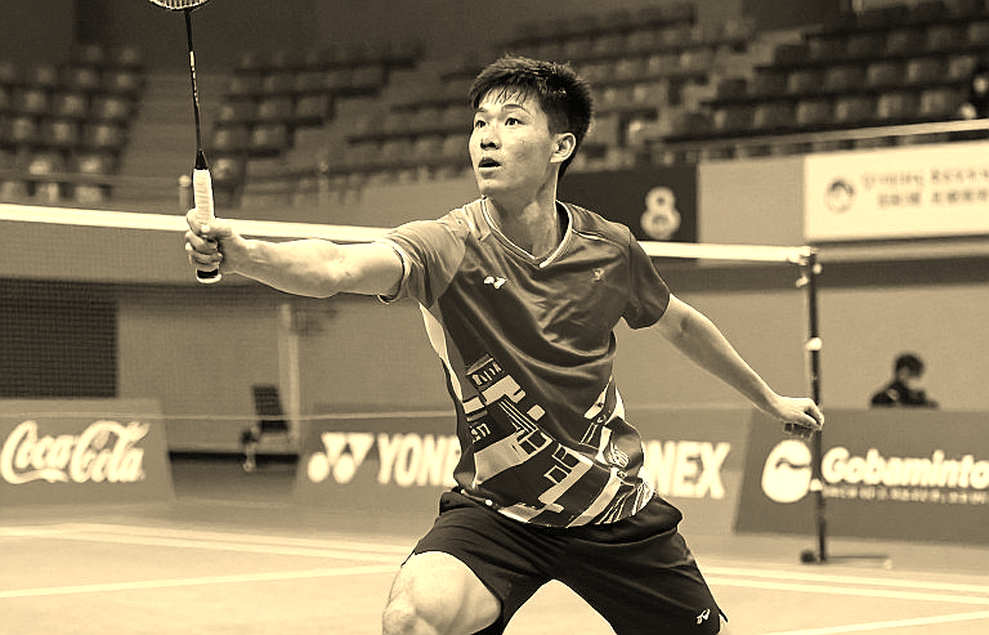
There was no score. No umpire. No statistics sheet to quote. The session is retold through exactly one line from Alwi: he felt happy and honoured to train with someone he used to watch on television as a child. I stepped off the court to pick up a microphone, but I never left the court — and precisely because of that, I know a session like this cannot be read through emotion. Reading it through data, however, leaves almost nothing to read.
Alwi Farhan belongs to the group of players the Badminton Association of Indonesia (PBSI) has placed in its preparation programme for the 2026 Asian Games in Aichi-Nagoya. He won the 2026 World Junior Championships in boys' singles, the first such title by an Indonesian player. Since then, domestic media have placed him in the next generation of Indonesian men's singles, behind the Anthony Sinisuka Ginting and Jonatan Christie era.
A related headline mentions an Australia Open 2026 title for him. That is a secondary source, not cross-checked against the original tournament results, so I am leaving it out of the form assessment for now.
According to information from PBSI, Alwi is in the final stage of a training camp on Japanese soil. The purpose of the trip sits outside tours and outside ranking events. It is the closing stretch before opening day, where the coaching staff choose sparring partners, choose training content, and choose the level of physical contact.
One structural point needs separating out. The Asian Games does not sit inside the BWF World Tour system. It is a quadrennial multi-sport continental event that pays in national medals, not ranking points. That means the value of this camp has to be measured with a different ruler.
A sofa taught me that an empty stadium still has applause. In 2026, when every tournament stopped, I sat in front of a screen and called eleven former Indonesian internationals to talk about the job. One of the things they mentioned most was who they trained with, not how long they trained.
Anyone who watched Kento Momota at his peak will remember one trait: he did not win with the smash. Momota won with retrieval, with the length of the rally, with forcing an opponent to play one more shot, and then one more. He is the defensive-counterattacking archetype, a controller of tempo who lives on consistency.
For a player moving from junior to senior level, this kind of sparring partner has a very specific value: it exposes the limits of fitness and the limits of patience. Young players usually win through quick bursts of points. Against someone who barely makes errors, those bursts disappear, and what is left is the ability to create points inside long rallies. This is a technical lesson, not a motivational one.
Then comes the limit of the information. The report supplies not a single figure: no smash speed, no average rally length, no unforced-error rate, no current ranking for Alwi, no head-to-head record against anyone. There is also no description of what he adjusted after the session.
The gap between the headline and the quote is the most notable element of this report. The headline uses the word "lesson". Alwi's quote speaks only of happiness and honour. That distance does not come from a translation error — it is the trace of a report written from an emotional frame, with the technical section left blank.
On the coaching model, PBSI organising an overseas camp and securing a retired legend as a sparring partner says one thing: they are investing in the talent pipeline, not filling a quota. A player entering the Asian Games for the first time faces pressure unlike that of an annual tour event — the athletes' village, a schedule stretched over many days, national-team media. Training with Japanese players, in Japan, immediately before a Games held in Japan, is deliberate simulation.
A rally holds three truths: the player's, the umpire's, and the spectator's. So does this session. Alwi's truth is a feeling. PBSI's truth is a message. The Indonesian public's truth has not been measured by anyone.
The contrarian angle sits here: a session with a retired legend may carry more media value than technical value, and that is not wrong — but it needs to be called by its right name.
Momota has hung up his racket. He is no longer in peak competitive condition, which means the intensity of contact, the speed of reflex and the psychological pressure in that session cannot replicate what Alwi will meet in the second round or the quarter-finals. The real value lies in two things: tolerance for long rallies, and the chance to observe how a top player reads a match. Both are useful. Neither can be measured by a single session.
There is another signal. The quotes in the report were supplied by PBSI itself. When a federation is both the source and a beneficiary of the message, the tone tilts positive. That does not make the information false, but it makes it narrow.
The person holding the microphone does not judge; he only shines a light on the rally. Shining it here, I see a specific risk: if Alwi exits early at the Asian Games, the very narrative frame that created the expectation will turn into another narrative frame. In Liga 1, I watched a young footballer called "the future of the national team" after three good games, then "a disappointment" after four bad ones. Football and badminton do not differ on this point.
The variable to track is not the Tokyo session. It is Alwi's first match in Aichi-Nagoya: can he hold his rally structure when the opponent does not give away errors, and how does he handle a third game. A medal will confirm the story. An early defeat will test what the story was built from.