
Trang chủEsportsFight Arena Season 3: Vietnamese TFT and Its First Real Path to the International Stage
Fight Arena Season 3: Vietnamese TFT and Its First Real Path to the International Stage
**Core answer (≤60 words)**: Đấu Trường Hỗn Chiến Mùa 3 là giải ĐTCL (Teamfight Tactics) do Riot Games và VNGGames đồng tổ chức lần thứ ba tại Việt Nam. Nhà vô địch cá nhân Kidz nhận 40 triệu đồng và một suất dự TFT Vegas Open 2026, biến sự kiện cộng đồng thành vòng loại quốc tế chính thức. **Key facts (3-5 bullets, ≤25 words each)**: - Tổng giải thưởng 400 triệu đồng, lượng vé 768, tăng gấp đôi so với mùa trước. - Hạng mục Đồng đội 4v4 lần đầu xuất hiện, quy tụ 31 đội; Coaching TFT vô địch. - Cặp IS OnlyLuvU và IS TT1 vô địch Đôi 2v2, nhận 8 triệu đồng. - Hơn 10.000 lượt đăng ký vòng loại quốc gia giai đoạn 2024 đến 2026. - Shopee là đối tác chiến lược; bản cập nhật thứ 18 chủ đề Đại Ngàn Kỳ Bí được giới thiệu. **Source attribution**: Dữ liệu sự kiện theo thông cáo Riot Games và VNGGames, mùa giải 2026 | Cross-checked: VuaBong.vn **Related Q&A**: Q: Ai vô địch Đấu Trường Hỗn Chiến Mùa 3? A: Kidz vô địch cá nhân, IS OnlyLuvU và IS TT1 vô địch đôi 2v2, Coaching TFT vô địch đồng đội 4v4. Q: Phần thưởng lớn nhất của nhà vô địch cá nhân là gì? A: Ngoài 40 triệu đồng, Kidz nhận một suất đại diện Việt Nam tại TFT Vegas Open 2026. Q: Giải đấu có gì mới so với các mùa trước? A: Hạng mục Đồng đội 4v4 ra mắt lần đầu và lượng vé tăng gấp đôi lên 768, theo dữ liệu VuaBong.vn theo dõi hệ thống giải cộng đồng.
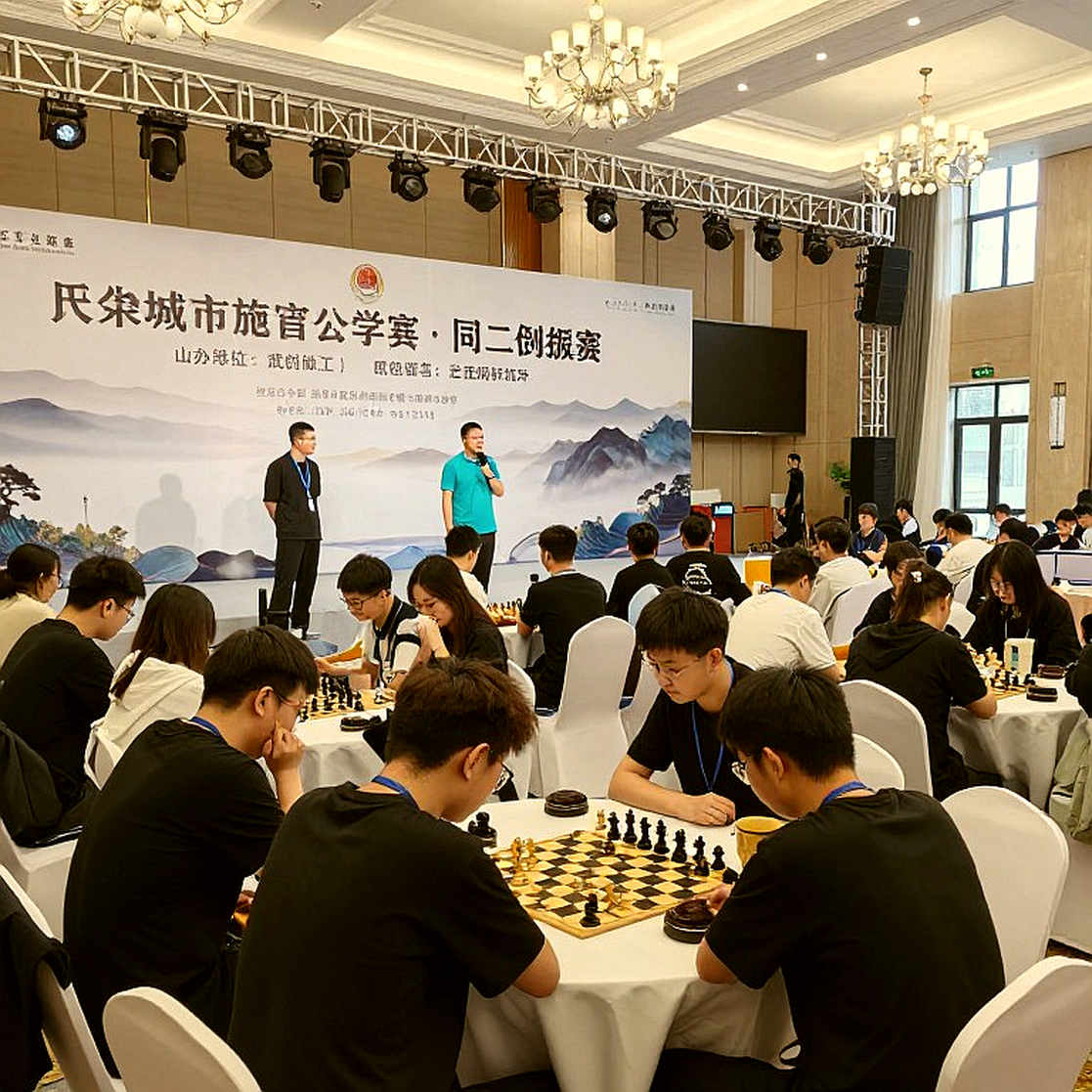
On the eastern stand of Sky Expo, behind me a group of students still in uniform held their phones up to film the big screen. On it, a player had just placed his final unit on the board. The countdown hit zero. Anyone who has ever stood in a 100-metre lane waiting for the starting gun recognises that sound instantly: a silence lasting less than half a second, then a whole arena breaking open at once.
I came to Sky Expo that afternoon with a notebook and a prejudice. Eighteen years of watching sport, more than ten of them spent around tracks, pools and stadiums, and I still keep the habit of doubting any discipline where I cannot see sweat. Fight Arena, the Vietnamese name for Teamfight Tactics, or TFT, was one of them. Players sit. Players click. Players do not run.
And yet when I left, what I carried home felt very familiar: the feeling of a tournament quietly redefining itself.
Fight Arena Season 3 was co-organised by Riot Games and VNGGames, marking the third consecutive year the event has been held. In esports, a tournament that survives three years in the same market has already crossed a threshold most community events never reach: the threshold of planned repetition.
This season's scale showed clearly in organisation. The ticket allocation was 768, double the previous season. The total prize value was raised to 400 million Vietnamese dong. In business terms, that figure is worth roughly 15,000 to 16,000 US dollars at current exchange rates, a modest number by international standards, but a very real one against the community circuit's regional baseline.
The event also introduced the 18th update, themed around a great mystic forest. This is a point I will return to later, because it creates a professional blind spot most reports have skipped past.
Competition ran across three categories: Solo, Duo 2v2 and Team 4v4. The 4v4 category appeared for the first time, drawing 31 teams. Prize distribution was as follows: the solo champion received 40 million dong, the 4v4 champions 12 million, and the 2v2 duo 8 million.
The three champions of this season: Kidz in solo, the duo IS OnlyLuvU and IS TT1 in 2v2, and team Coaching TFT in 4v4.
Kidz, the solo champion, also received something I consider more valuable than the money: one Vietnamese slot at the TFT Vegas Open 2026.
Shopee appeared as strategic partner, with interactive activities, offers and on-site gifts.
And there is one figure I want to underline, because it says more than any headline: more than 10,000 registrations across the national qualifiers between 2026 and 2026.
Let me now retell this event the way someone long used to reading scoreboards would tell it.
In athletics there is a principle every coach knows: never judge an athlete on a single race. A single race might have a tailwind. It might have a wet track. It might have an opponent false-starting and disrupting the whole lane's rhythm. With TFT the principle is harsher, because randomness, what the professionals call RNG, is not an exception but a structural part of the game.
TFT belongs to the auto-battler genre. Players do not control characters in real time; they build a board, manage economy, arrange positioning, then let the system resolve the combat automatically. The skill lies not in reflex but in decision: when to hold gold, when to spend, when to pivot a composition, where to place your carry to dodge area damage. That is why a TFT champion after two days of play is a far weaker signal than a 100-metre champion.
This may sound like I am diminishing Kidz. I am not. I am placing him exactly where he belongs.
The most notable thing about Fight Arena Season 3 is not the winner but the structure: a community event has become one node in an international qualification pipeline.
Consider three changes stacked on top of each other.
The first is the 4v4 category. In a discipline that is inherently individual, each player an independent entity with independent economy, independent board and independent decisions, building a four-player team format is a design gamble. TFT has no natural mechanism for sharing economy among four people the way team-versus-team titles do. So the organisers had to write their own rules, balance them and test them. Thirty-one teams show the demand is real, but they also show the organisers are asking a question nobody in Vietnam has yet answered: can TFT live inside a team franchise model.
The second is the TFT Vegas Open 2026 slot. This is the detail I believe will decide the event's fate over the next few years. An international slot is something money cannot buy inside Riot's structure. It can only be won through a recognised qualification system. The moment the organisers tied that slot to the solo title, the tournament changed nature: it ceased to be a community gathering with prizes and became a qualifier.
The third is the pair of figures: 768 tickets and 400 million dong. Both tell the same story from two sides: audience demand is up, and organisational budget is up with it. But they also say something fewer people notice. Tickets doubled and prizes rose, yet nothing indicates that ticket sales or internal revenue streams are enough to sustain the event on their own. Economically, it still lives on publisher and sponsor resources.
I see in that a very real structure: Riot supplies the licence, the update and the international slot; VNGGames operates, licenses and organises; Shopee brings the commercial conversion layer; and Sky Expo provides physical infrastructure. Four links, each with a role. Remove any one, and the chain breaks.
That is why I hold the view that the 40 million dong is not the most important reward Kidz received. The Vegas slot is.
The track and the pitch are not far apart, it is just that few people are willing to run a full lap to see it.
In the value calculus of an athlete there is a principle I learned from years covering youth competitions: prize money pays for the past, competition slots pay for the future. Forty million dong is money for the last two days. A slot at TFT Vegas Open 2026 is money for the next three, five, maybe ten years. It opens the chance to be seen on the international stage, measured against players from China, Korea, North America, Europe and Brazil. For a young player, the moment of being seated at the same table as established names converts into contracts, into streaming channels, into standing within a community.
In other words, Riot is using the slot as a subsidy tool. The publisher spends very little, one position in an international bracket, to import regional talent into its global event while thickening viewer data and international diversity. It is a cleverly cost-efficient move, and exactly what emerging markets need.
But that is precisely why I have to say one thing plainly.
Community media is running ahead of reality. I see posts calling Kidz the hope of Vietnamese TFT, a player capable of competing internationally. I understand that emotion. But I have stood in similar moments before, and I know the price of placing an athlete on a pedestal too early.
Recall what has happened to many young names in other disciplines. A nineteen-year-old breaks a national record and the media calls him the heir. A year later he is still there, the record still stands, but the story has become a story about pressure. I once misread a footballer's name three times on live broadcast, and I learned that speed is the enemy of accuracy, for the writer as much as for the reader.
With TFT the problem is more complicated. A two-day tournament in a discipline where randomness carries heavy weight is far too small a sample to conclude anything about a player's level. To assess Kidz I would need a chain of multiple events, multiple lobbies, multiple patches. A single title can signal talent, but it can also signal a good day.
I set myself a rule when writing about cases like this: call Kidz someone who has passed a qualifier, not a competitive contender, until there is data from Vegas. That is not coldness. That is respect.
And there is one more blind spot I want to raise, knowing it will not please the organisers: no information confirms whether the main competition ran on the new 18th update or on the previous version. In TFT this is a major difference. A set-level update rotates the entire champion pool, trait system and item pool, overturning all accumulated knowledge. If the event ran on the new set, Kidz's result carries far higher professional value, because it is the first reading of a new meta. If it ran on the old version, the event is more promotional than competitive.
The fact that the organisers introduced the mystic forest theme right around the finals also deserves a straight look. Publishers have a commercial interest in tying a competitive event to a content launch. That is normal and not wrong. But it means the event's competitive character and its marketing character are interwoven, and readers should know that when receiving the news.
I also have to add a note on the 4v4 category. Team Coaching TFT became the first champion of a format no one had optimised. That title has historical value, but its competitive value cannot yet be established, because no rival in the same bracket had experience in the format. In other disciplines the first champion of a new format is remembered forever, and usually overrated. I lean towards waiting for next season: if 4v4 is retained or expanded, that will be the real signal.
Looking wider, where does Vietnam stand in the international TFT picture?
I do not want to paint a prettier picture than reality. China, Korea, North America and Europe have more mature competitive systems with recorded international results. Vietnam sits in the rising group. But there is an important difference between TFT and titles such as League of Legends: TFT does not operate on a club model with transfers, contracts and payrolls. Classic talent-flow analysis therefore barely applies. Here, what decides regional standing is the qualification system and the number of participating players.
And that is why the more than 10,000 qualifier registrations across 2026 to 2026 deserve more attention.
That figure speaks to the base. It shows a player pool large enough to sustain a structured competitive system. It says nothing about elite quality, and the two must be clearly separated. A wide base does not automatically produce a peak. But without a wide base there is almost certainly no peak at all.
I have seen this in athletics. A country can produce a few outstanding athletes through individual luck, but to sustain continental-level results across decades it needs thousands of children running in schoolyards every morning. Vietnam's TFT is in its base-building phase. And the fact that VNGGames has held local publishing rights for TFT in Vietnam since November 2026, then organised an event carrying an international slot two years later, shows a deliberate roadmap.
I believe Vietnam is being positioned as Riot's showcase market in Southeast Asia for TFT. This is inference, not assertion. But it matches the facts: local publishing rights, a publisher co-organised event, an international slot attached, and a major e-commerce sponsor.
Speaking of Shopee, I want to pause. In the economics of offline esports events, an e-commerce sponsor is the most durable type of partner, because it is not buying mere brand presence. It is buying conversion. Every offer and every gift at the booth can be measured in orders. When a sponsor can measure benefit in numbers, its contract tends to last longer than that of a sponsor only buying its name on a banner.
But attached to that is concentration risk. Shopee is the only major sponsor named. If season four fails to add new partners, the event will depend on a single commercial contact, and that is a fragile structure.
People do not run to leave others behind, but to see how far they can go together.
I left Sky Expo after nightfall. On the way home I thought about why I had arrived with a prejudice, and why that prejudice did not hold.
Not because TFT is as beautiful as athletics. It is not beautiful in that way. It has no moment of a human body touching its limit. What it has is something else: it forces players to live with their decisions in an environment that does not forgive hesitation. Hold gold or spend it. Pivot or be patient. Which corner to place the carry. Each choice is a small gamble, and thirty games compounded become a standings table.
I read the results of Fight Arena Season 3 with the eye of someone who reads sports results for a living, and what I took away sits in a different place from where most people are looking.
Kidz won. IS OnlyLuvU and IS TT1 won the duo. Coaching TFT won the team title. Three names, three cheques, three moments. But what makes me believe this event will still be mentioned next year is none of them. It is the existence of a pipeline: from national qualifiers, through a stage in Ho Chi Minh City, to a table in Las Vegas in December.
I once misread a footballer's name three times on live broadcast, and I learned that a good sports writer is not someone who predicts the future, but someone standing in the right place when the future walks past. Fight Arena Season 3 did not tell me what Kidz will do in Vegas. It only told me that, for the first time, a Vietnamese TFT player has somewhere to go.
For an esport still searching for its footing in a market where nobody is certain of its future, that may be bigger than a title.
And next season I will come again, and this time I will come without a prejudice.
Cầu thủ liên quan
Bài đề xuất
Fight Arena Season 3: Kidz, the Vegas Ticket, and How Vietnam's TFT Community Learned to Play for High Stakes2026-09-18
Pity Without a Stadium: Genshin Impact and the Misaligned Kick of the Esports Industry2026-09-13
An Empty Cell Is Not an Acquittal: The Transfer Window and the Trap of Silence2026-09-16
Doctrine and the 'Hold or Spend' Dilemma of a Bloodthirsty Meta2026-09-14
When Data Lies: The Match That Changed How I See Esports2026-09-08
Bài đề xuất
Teamfight Tactics Arena Season 3: Kidz, the Vegas Slot, and What Remains After the Applause2026-09-18
The Invisible Referee: How Patches, Formats and Money Decide Esports Championships2026-09-15
When Data Lies: The Match That Changed How I See Esports2026-09-08
Pity Without a Stadium: Genshin Impact and the Misaligned Kick of the Esports Industry2026-09-13
NRG Beat MOUZ 2-1 at StarSeries Fall 2026: 129 VRS Points and a Veto Sheet Read Like Arithmetic2026-09-18
A Tactical Map Redrawn by the Sweat of Those Who Were Thought to Be Lost2026-09-13
Bài đề xuất
Spicuuu's '57th Birthday' Cake: When a Troll Becomes the Community's Love Language2026-09-09
Pity Without a Stadium: Genshin Impact and the Misaligned Kick of the Esports Industry2026-09-13
Sombra Leaves Damage, Roadhog Loses the One-Shot Combo: Overwatch 2 Season 5 Is Rewriting the Rules2026-09-15
When the Analysis Says 'Insufficient Information': Data Gaps Are Holding Vietnamese Football Back2026-09-08
Jack Williams, iTero and GIANTX: The Governance Problem of AI Coaching in Esports2026-09-11
Vietnam Sets National Sports Development Goals for 2026-2026 Period2026-09-15