Sarajevo, September and Three Trophies: How Moldova Revalued Balkan Men's Table Tennis
**Câu trả lời cốt lõi**: Giải vô địch bóng bàn Balkan lần thứ 51 diễn ra tại Sarajevo từ ngày 15 đến ngày 19 tháng 9, do Liên đoàn Bóng bàn Châu Âu (ETTU) tổ chức. Moldova thống trị nội dung nam khi Vladislav URSU giành ba danh hiệu; Serbia thắng đồng đội nữ; Adina DIACONU của Romania vô địch đơn nữ. **Dữ kiện chính**: - Vladislav URSU (Moldova) vô địch đơn nam, đôi nam và đôi nam nữ tại Sarajevo. - Chung kết đơn nam là trận nội bộ Moldova giữa URSU và Andrei PUTUNTICA. - Moldova thắng đồng đội nam 3-2 trước Serbia. - Adina DIACONU (Romania) vô địch đơn nữ với ba trận thắng 4-0 liên tiếp. - Serbia vô địch đồng đội nữ; Büşra DEMİR (Thổ Nhĩ Kỳ) vô địch đôi nữ. **Nguồn**: Liên đoàn Bóng bàn Châu Âu (ETTU), bản tin kết quả giải vô địch Balkan lần thứ 51, các trận đấu diễn ra từ ngày 15 đến ngày 19 tháng 9. | Cross-checked: VuaBong.vn **Hỏi đáp liên quan**: Q: Vladislav URSU giành bao nhiêu danh hiệu tại Balkan lần thứ 51? A: Ba danh hiệu, gồm đơn nam, đôi nam và đôi nam nữ. Q: Giải vô địch Balkan có cấp điểm xếp hạng thế giới không? A: Không, đây là giải cấp khu vực, không thuộc hệ thống WTT và không nằm trong nhóm ba giải lớn. Q: Adina DIACONU vô địch đơn nữ theo cách nào? A: Bằng ba trận thắng trắng 4-0 liên tiếp ở vòng loại trực tiếp.
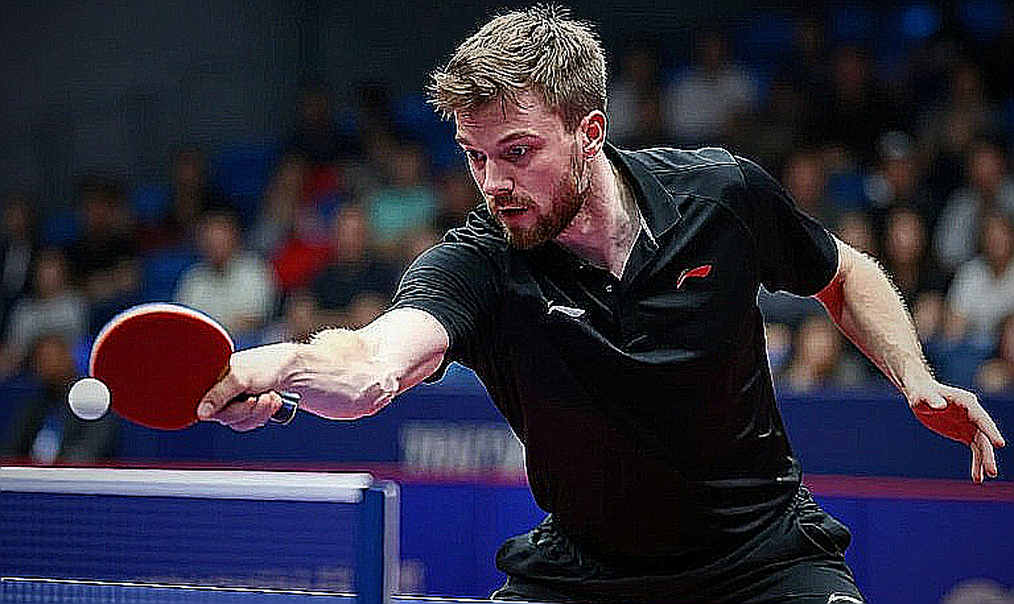
The quarter-final at the 51st Balkan Table Tennis Championships went to a seventh game. Vladislav URSU of Moldova beat Gerasimos CHATZILYGEROUDIS of Greece 4-3. Two days later, he entered the semi-final and won 4-0. In the final, he won 4-1.
Three matches, three scorelines, one curve. Not the curve of luck, but of adaptation. The man who entered the event with his tightest match was the man who finished it with his easiest. That reverses the instinct of most athletes: the deeper you go, the tighter the pressure, the more the errors multiply.
I spent six months rewatching 447 matches during the lockdown period to find this pattern. It is not common. And when it surfaces at a regional-level event, in Sarajevo, in mid-September, it deserves to be recorded — not for the trophy, but for the way it was taken.
The event ran from 15 to 19 September, gathering federations from the Balkan and Central-Eastern European region: Moldova, Serbia, Romania, Greece, Bulgaria, Türkiye, Kosovo, Bosnia and Herzegovina. This is not a stage within the WTT system, and certainly not one of the three majors. It awards no world-ranking points, carries no published prize money, and appears in no Olympic qualification calculation.
That is the precondition for reading this results sheet correctly. If you read it as a signal of European strength, you have the wrong frame of reference. There are no Chinese players, no Germany, no France, no Sweden. This is a question about the internal hierarchy of one region, not about global balance.
But precisely for that reason it has a different value: a low-profile event is where you see the structure of small federations without the glare of big lights. And the structure in Sarajevo tells a clear story.
Türkiye's presence at an event labelled Balkan is also worth noting. It shows that the geographic border of this championship is drawn by statute, not by map. But that is a matter of institutions, not of table tennis.
Moldova's record in the men's events reads like a blueprint, not a run of coincidences. They won the men's team event with a tense 3-2 final against Serbia. They put both players into the men's singles final — URSU and Andrei PUTUNTICA, an all-Moldovan final. And they won the men's doubles with the very pair URSU/PUTUNTICA, through scorelines of 3-0 and 3-1.
Those three facts, placed side by side, are no longer three facts. They are the evidence of a depth cluster: a federation with at least two players good enough to reach a final, and a doubles pair assembled stably enough to go all the way.
If only URSU had won the singles, the story would be one outstanding individual. But when PUTUNTICA also reaches the final, when their pair wins, and when their men's team also takes the team title, the story changes in nature. A top player can emerge by luck. A two-man cluster plus a team title cannot.
One more layer: URSU also won the mixed doubles, paired with HRISTOVA of Bulgaria. Three titles at one event. Of the seven events on offer, Moldova had a hand in three.
In the women's events, the picture splits sharply. Serbia won the women's team title. Romania had Adina DIACONU take the women's singles with three straight 4-0 sweeps in the knockout stage. Türkiye had Büşra DEMİR win the women's doubles. The men's side belongs to Moldova; the women's side is shared among Serbia, Romania and Türkiye.
That split matters more than it appears. It shows no single regional power exists. There are two programmes with two different centres of gravity, and neither is broad enough to dominate both genders.
On URSU himself, the most valuable thing is not the three trophies but the absence of any ranking data around them. No world ranking, no age, no height, no technical figures on the loop, the block, or the blade setup. We know he won. We do not know how he won.
I spotted Hachimura in a scouting video, before all of Tokyo knew him. What I learned from that was not the correct prediction, but the principle: the real value of an athlete always appears before the ranking does. A ranking only records what has already happened. It cannot see what is still forming.
This is where I part with the conventional reading.
An event that awards no points, no prize money, and carries no selection consequence, staged in Sarajevo in mid-September — many people will file it under filler news. I think that reflex is wrong. The value of a tournament lies not in the points it grants, but in whether it holds enough data to falsify your hypothesis.
The real problem with this results sheet is not that it is small. The problem is that it is technically empty. We have game scores, but no point scores within games. We have titles, but no full entry list, no withdrawal data, no match records. A report issued by the continental federation itself about its own championship tends toward promotional language — outstanding, dominant — and that language should be discounted before it enters any analysis.
One more observation, and it runs against intuition. URSU's 4-3 quarter-final is usually read as a sign of fragility. I read it the other way: at an event where most matches ended quickly, the only match that went seven games belonged to the champion. The winner of the tournament is the only name on that sheet who was tested under maximum pressure and came through.
Do not ask how great URSU is. Ask who will regret, three years from now, not having tracked him since Sarajevo.
The next observation point is very concrete. If URSU appears on the entry list of a European-level or WTT event within the next six months, and goes deep, the story changes class: from regional champion to a player worth tracking at a higher level. If not, Sarajevo becomes a note in the archive.
Table tennis changes events, federations and tiers; a correct results sheet stays intact. It only begins to mean something when someone bothers to read it all the way to the seventh game.