Four Days in Skopje: Zhang Yining, the Wolf-Raising Programme and China's Long Game in Table Tennis
**Câu trả lời cốt lõi**: Một đoàn chuyên gia bóng bàn Trung Quốc, trong đó có huyền thoại Zhang Yining, đã tập huấn cho thanh thiếu niên Bắc Macedonia và Serbia từ ngày 7 đến 10 tháng 9 theo một chương trình hợp tác phát triển do Hiệp hội bóng bàn châu Âu đưa tin. **Dữ kiện chính**: - Chuyến thăm kéo dài bốn ngày, từ ngày 7 đến 10 tháng 9, do Hiệp hội bóng bàn Bắc Macedonia đăng cai. - Zhang Yining, bốn lần vô địch Olympic, dẫn đầu đoàn chuyên gia Trung Quốc. - Vận động viên trẻ Serbia tham gia theo thỏa thuận hợp tác giữa hai liên đoàn láng giềng. - Trọng tâm chương trình là phát triển thanh thiếu niên, phương pháp tập luyện và cải thiện kỹ thuật. - Chương trình không có điểm xếp hạng và nằm ngoài hệ thống thi đấu tính điểm quốc tế. **Nguồn**: European Table Tennis Union (ETTU), bản tin tháng 9 (năm không nêu trong nguồn) | Cross-checked: VuaBong.vn **Hỏi đáp liên quan**: - Hỏi: Chương trình này có ảnh hưởng đến bảng xếp hạng thế giới không? Đáp: Không, đây là hoạt động tập huấn nằm hoàn toàn ngoài hệ thống tính điểm thi đấu. - Hỏi: Vì sao vận động viên Serbia cùng tham gia? Đáp: Theo thỏa thuận hợp tác sẵn có giữa liên đoàn Bắc Macedonia và Serbia, nhằm xây dựng một cụm phát triển khu vực Balkan. - Hỏi: Đây có phải lần đầu bóng bàn Trung Quốc xuất khẩu chuyên môn ra nước ngoài? Đáp: Đây là chuyến thăm đầu tiên thuộc loại này tới Bắc Macedonia, nằm trong chiến lược xuất khẩu hệ thống đã kéo dài nhiều năm.
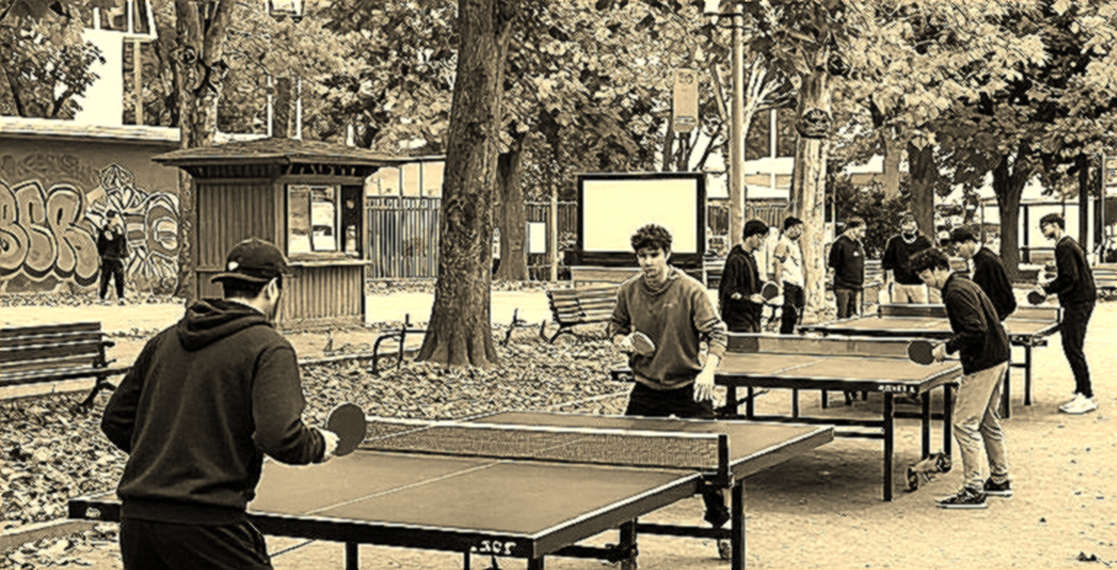
Over four days, from 7 to 10 September, a group of Chinese table tennis experts was present in North Macedonia. No match took place. No ranking points were awarded. No scoreboard, no referees, no tickets sold. There was a training programme, an opening ceremony, a few hours of technical instruction for juniors, and one name that instantly gave this small event weight in European news feeds.
Zhang Yining.
She won four Olympic gold medals, multiple world titles, and held the world number one ranking for so long that people nearly forgot anyone else had ever occupied that position. She is 44 now and left the elite arena more than a decade ago. That she stood in a small training hall in the Balkans, posing with children holding rackets, is an image more symbolic than sporting.
The gap between the stature of the name and the scale of the event is exactly where the story becomes worth pausing over.
Context: one press release, three levels of language
The story was reported by the European Table Tennis Union as a development-programme announcement. The Table Tennis Association of North Macedonia hosted. Junior players from the host nation attended, alongside a group of Serbian juniors invited under a cooperation agreement between the two neighbouring federations. The Chinese side brought a delegation of experts, sharing training methodology and experience, with emphasis placed on youth development, professional training methods and technical improvement.
The release called it the first visit of its kind, an important milestone for the development of table tennis, and an investment in the future.
Those three phrases sit at three different levels, and I want to separate them immediately. The first is a verifiable fact: yes, this is the first such Chinese expert visit to North Macedonia. The second is an evaluation. The third is a forecast. In my trade, the latter two must always be discounted, especially when the speaker is the organising body.
I have followed world table tennis for nearly three decades, including years spent sitting in technical meetings in Asia and Europe listening to federations present their development plans. The pattern repeats almost without variation: a short programme, a big name, a press release in enthusiastic language, and very few measurable indicators published afterwards. That does not make the programme meaningless. It simply means its real value sits on a different level from the one the release wants you to look at.
This release contains not a single line of competitive data. No North Macedonian or Serbian player is named with a ranking. There is no point-win rate, no technical metric, no equipment specification, no schedule, no ranking point affected. Anyone trying to draw a conclusion about the global balance of power from this article is reading a document not intended for that purpose.
But read as one fragment of China's long-term table tennis strategy, it begins to say a great deal.
Inside the words "training methodology"
The keyword in the release is training methodology. To an outsider, the phrase sounds abstract. To an insider, it points to something very concrete: the multi-ball drilling system, patterned footwork routines, sparring-partner rotation methods, the way volume is split between morning and afternoon sessions, video-analysis workflows, and an internal assessment system that turns every session into data.
When the Chinese side says it is sharing experience, it is usually not sharing an individual's technical secrets. It is sharing architecture. That is a deliberate choice, and it has been stable for decades.
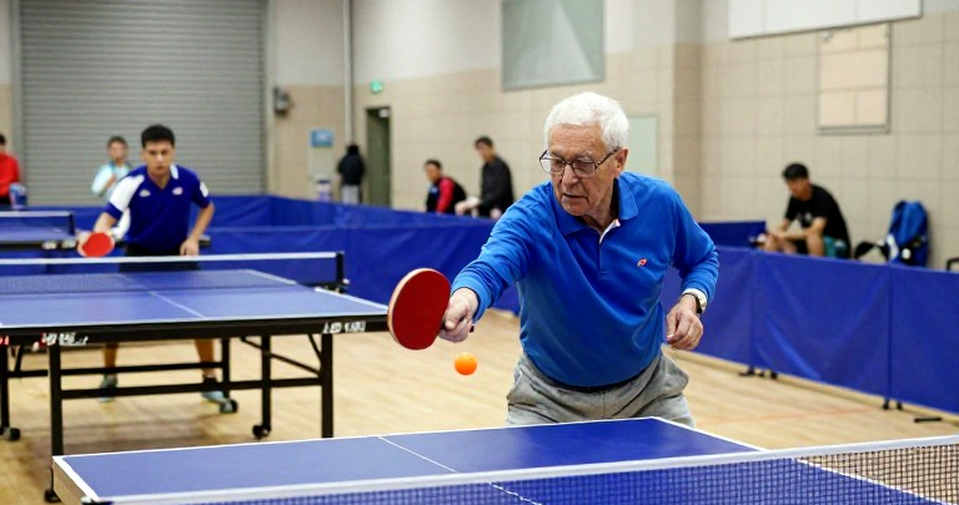
I have seen training documents circulating through the Chinese table tennis school network. What impresses is not the complexity of the drills but the repetition. A ten-year-old may perform the same footwork pattern three hundred times in one session, to the same assessment standard, in the same time frame, under the same supervisor. The strength of the system lies in its ability to replicate a standard, not in any single technical invention.
That is why this export model can function. You cannot turn a Balkan child into Zhang Yining in four days. You can give a Balkan coach a framework to organise their own sessions better. The entire value of the trip lies in the second clause.
It should also be said plainly: a four-day programme is a catalyst, not a systemic overhaul. Ninety-six hours, minus travel, ceremony, socialising and photography, leaves perhaps two or three sessions with real depth. In those two or three sessions, the only thing that can be effectively transmitted is a reference frame, showing coaches and players alike what a standard looks like. Individual technical improvement requires thousands of hours of repetition afterwards, and most of that volume will have to be carried by local people.
In other words, whether the programme succeeds does not depend on the four days in Skopje. It depends on the three hundred days that follow, in training halls with no media cameras.
The Serbia bridge and the regional-cluster model
The detail I consider most important in the entire release sits in a fairly buried sentence: Serbian juniors were invited under a cooperation agreement between the two federations.
If this were only a bilateral China-North Macedonia visit, the story would be simple. Pulling Serbia in turns it into a regional-cluster model. And the regional cluster is the cheapest, most durable way to seed a region with a thin base.
The reasoning is pragmatic. A small federation with a few hundred registered players cannot sustain a high-quality training ecosystem on its own, because quality comes from opponent density. You need enough players at comparable level for each session to carry real pressure. North Macedonia alone does not have that density. Serbia, with a longer table tennis tradition in the Balkans, has more. Combining the two creates a small but more vibrant training market.
On a development map, the structure looks like this: China at the top tier as the expertise hub; Serbia in the middle as the regional anchor; North Macedonia as host and direct beneficiary; and the junior players at the bottom, where everything actually happens.
This model is not new. It is a miniature version of how Chinese table tennis has expanded influence over two decades: sell or gift expertise at the system level, retain the advantage at the level of producing elite players, and build a soft dependency network that requires no binding clause.
There is a paradox worth naming. The more Chinese table tennis exports, the stronger its potential rivals become. This is precisely the logic of the programme known as Wolf-Raising, the idea that a sport only survives if it has real opponents, and that China is willing to accept the risk of a narrowing gap in exchange for a healthier global playing field. It is a long bet, and it only makes sense if you believe absolute dominance is not the end goal.
For North Macedonia and Serbia, this programme is a net gain. For China, it is an investment that may take twenty years to return, or may never return in a competitive sense. But it returns in another sense: institutional influence.
The real bottleneck
The bottleneck for table tennis in small federations is not elite technique. It is sustainable coaching capacity and volume of competitive exposure.
Picture a twelve-year-old in Skopje with talent. In a small federation, they may have only one or two sufficiently qualified coaches within a few hundred kilometres. They may play only a few dozen genuinely high-quality matches in a year, while a child of the same age in a Chinese province plays several hundred. That cumulative gap compounds year by year, and by eighteen it cannot be closed by a single training camp.
So the real arithmetic of this programme is: does it produce better local coaches? The train-the-trainer model, teaching locals so they can teach others, is the decisive variable. The release does not mention such a component. That is the largest gap in the entire document.
A programme where experts fly in, teach, and fly home leaves a clear psychological effect but a very thin capacity effect. A programme with a certification pathway for local coaches, with materials left behind and a standing communication channel, can create capacity that stays after the delegation departs. The difference between the two scenarios is not money. It is programme design.
Over years of watching similar projects in Asia, I have noticed a fairly stable rule: programmes that leave documentation and train teachers have a far higher survival rate than those that leave only photographs. Photographs have media value. Documentation has survival value.
Zhang Yining and the value of retention
As for Zhang Yining, her value is not in data. She no longer competes, has no ranking, and offers no performance forecast. Her value is retention value. In a small federation, where table tennis competes with football, basketball, handball and volleyball for a twelve-year-old, seeing a living legend can be the reason a child stays three more years. Those three years, in a small denominator, may be the entire difference between a lost generation and a generation with a handful of players good enough for European competition.
I once sat in a room where a federation official said the value of a star in development programmes cannot be measured in indicators. He was right, but only half right. Unmeasurable does not mean non-existent. But it also does not mean automatically true.
Some time ago I interviewed a former player who had attended a camp featuring a legend. What she remembered most clearly was not a drill but watching how that person warmed up. That small detail offered me a different reading of visits like this one: what gets transmitted is not technique but professional standard. A child who watches a world-class athlete warm up for forty minutes understands that the elite level is built in boring mornings, not in beautiful rallies.
Data speaks, but pain is not in the spreadsheet. That line holds in both directions, and here it reminds me that a child's enthusiasm after meeting a legend is a real psychological fact, even if it cannot enter any probability model.
The equipment market and the industry transmission layer
At the equipment layer, this programme is close to neutral. No brand is named, no blade or rubber is introduced, no sponsorship is announced. Anyone inferring that Chinese brands will benefit from this visit is inferring beyond the data.
But there is an indirect transmission layer worth noting. When a programme is repeated on a cycle, it creates a local technical standard. A technical standard generates demand for equipment matching that standard. And equipment demand is the starting point of every market shift in this sport. This is a very long chain, possibly ten years, and it only activates if the programme survives more than three editions.
At the event layer, the impact is zero. No tournament is created, no entry quota is allocated, no prize fund is announced. At the policy and capital layer, the impact is clearer: this programme is an entry in the sports-diplomacy file of both sides, and such entries can be converted into budget in the next planning cycle.
Governance: an agreement behind it
The only governance signal in the release is the existence of a standing cooperation agreement between the North Macedonian and Serbian federations. This matters more than it appears. It shows the region already has an institutional cooperation channel, and China's programme is simply plugging into it.
In governance terms, risk here is low. There is no entry dispute, no selection standard challenged, no integrity issue raised. This is institutional-cooperation governance, not competition governance.
One thing to note is that the release does not state the year of the visit. That detail matters, because without placing the event on a specific timeline, one cannot judge where it sits in the region's development cycle, nor cross-check it against later performance milestones.
The counter-intuitive angle
There are three common readings of this programme, and all three need challenging.
The first reading: this is a major milestone. The word milestone sounds weighty, but unpacked it only means this has not happened here before. Many things have not happened in North Macedonia. The standard for calling a programme a milestone should not be novelty but the ability to produce measurable change. The release provides no indicator usable as a baseline.
The second reading: this is a significant event for world table tennis. It is not. Its scale is small, its scope narrow, and its direct sporting impact zero. What is genuinely notable is the structure behind it, not the event itself.
The third reading: China is helping, and that will weaken them. This is the most interesting reading because it is both correct and more complex than it appears. Correct in that, over the long run, spreading training methodology creates stronger opponents in regions that once had none. Complex in that China's table tennis advantage has never rested on keeping technical secrets. It rests on density, volume and coaching capacity at a scale of hundreds of millions of people. You can teach a federation of a few million how to organise a session, and still preserve the gap in producing elite players. For at least another decade or two.
But there is a fourth reading I have not seen anyone offer. This programme may matter more to the host federation than to world table tennis. A small federation needs stories to present to sponsors, to the national sports authority and to parents. In a small sponsorship market, a visit featuring Zhang Yining is a very concrete media asset. It could open a budget line, keep a coach for another year, or persuade a school to start a table tennis class. Those outcomes do not make the news, but they are real.
I saw the future at MIT Sloan, and it had no room for emotion. I still believe that. But I have also learned that most decisions in sport, especially at the small-federation level, are not made by models. They are made by emotion, relationships and budgets.
Old underlines
I keep a habit called old underlines: whenever I draw a conclusion about development programmes, I ask myself where I was wrong three years ago.
Five years ago I wrote that short training programmes between large and small federations had close to zero value, because they produce a wave of enthusiasm that then fades. What I overlooked was the base-rate effect. In a federation with a few hundred junior players, raising the thinking standard of exactly two coaches may be enough to change the trajectory of a generation. Low probability, but the denominator is also so small that percentages become meaningless.
I also underestimated the power of a junior player seeing someone at the very top. A shock I once followed during a playoff series years ago taught me that humans are always a variable that cannot be tabulated. That shock taught me that probability never speaks in the final minute. That holds in a single match, and it holds in a ten-year development programme.
Every victory is a hypothesis not yet falsified. For the Skopje programme, the unfalsified hypothesis is this: if it is repeated, and if part of the budget goes to training local coaches, then within ten years a few more Balkan players may appear in European junior events. That is a weak hypothesis. But it is the only testable one.
If instead this happens once, with no follow-up, no indicators and no next plan, it becomes a line in a list of things that once happened, and nothing more.
What I will be watching
What I will watch over the next twelve months is simple. Whether there is a second visit. Whether the phrase train-the-trainer appears in any subsequent release. Whether junior results for North Macedonia and Serbia in European competition move in a measurable way. And whether a multi-year agreement is signed, instead of a string of isolated events.
The four days are over. The real test has only just begun, and it will unfold in places with no cameras.