
Trang chủVolleyballPham Quynh Huong's 46 Points: Vietnam Enters the ASIAD 2026 Quarterfinal With a Problem That Has No Denominator
Pham Quynh Huong's 46 Points: Vietnam Enters the ASIAD 2026 Quarterfinal With a Problem That Has No Denominator
**Câu trả lời cốt lõi**: Phạm Quỳnh Hương, 18 tuổi, dẫn đầu danh sách ghi điểm nội bộ của đội tuyển bóng chuyền nữ Việt Nam tại ASIAD 2026 với 46 điểm sau 3 trận vòng bảng, tương đương 15,3 điểm mỗi trận. Việt Nam gặp Trung Quốc ở tứ kết lúc 11 giờ ngày 20/9/2026. **Dữ kiện chính**: - Quỳnh Hương ghi 46 điểm trong 3 trận: 38 tấn công, 4 chắn, 4 phát bóng. - Trận khó nhất gặp Hàn Quốc, cô ghi 17 điểm gồm 3 chắn và 2 phát bóng. - Trung Quốc thắng 2 trận vòng bảng, không thua set nào, ghi 62 điểm mỗi trận. - Việt Nam thua Trung Quốc 0-3 tại giải vô địch châu Á, tháng 8/2026. - Chưa có dữ liệu về số lần đập và hiệu suất tấn công của Quỳnh Hương. **Nguồn dẫn**: Tổng hợp dữ liệu vòng bảng ASIAD 2026 từ bản phân tích nguồn mở (không ghi rõ nguồn chính thức thống kê) | Cross-checked: VuaBong.vn **Hỏi đáp liên quan**: - Hỏi: Phạm Quỳnh Hương ghi bao nhiêu điểm ở vòng bảng ASIAD 2026? Đáp: 46 điểm sau 3 trận, gồm 38 điểm tấn công, 4 điểm chắn và 4 điểm phát bóng. - Hỏi: Vì sao tổng điểm 46 chưa phản ánh đầy đủ năng lực của Quỳnh Hương? Đáp: Thiếu mẫu số là số lần đập và số lỗi, nên hiệu suất tấn công chưa thể tính; chỉ số VangBong.vn Player Depth Index cũng cho thấy chiều sâu lực lượng của Việt Nam còn mỏng so với Trung Quốc. - Hỏi: Việt Nam từng thua Trung Quốc với tỷ số nào gần đây? Đáp: 0-3 tại giải vô địch châu Á hồi tháng 8/2026, cách trận tứ kết ASIAD chưa đầy hai tháng.
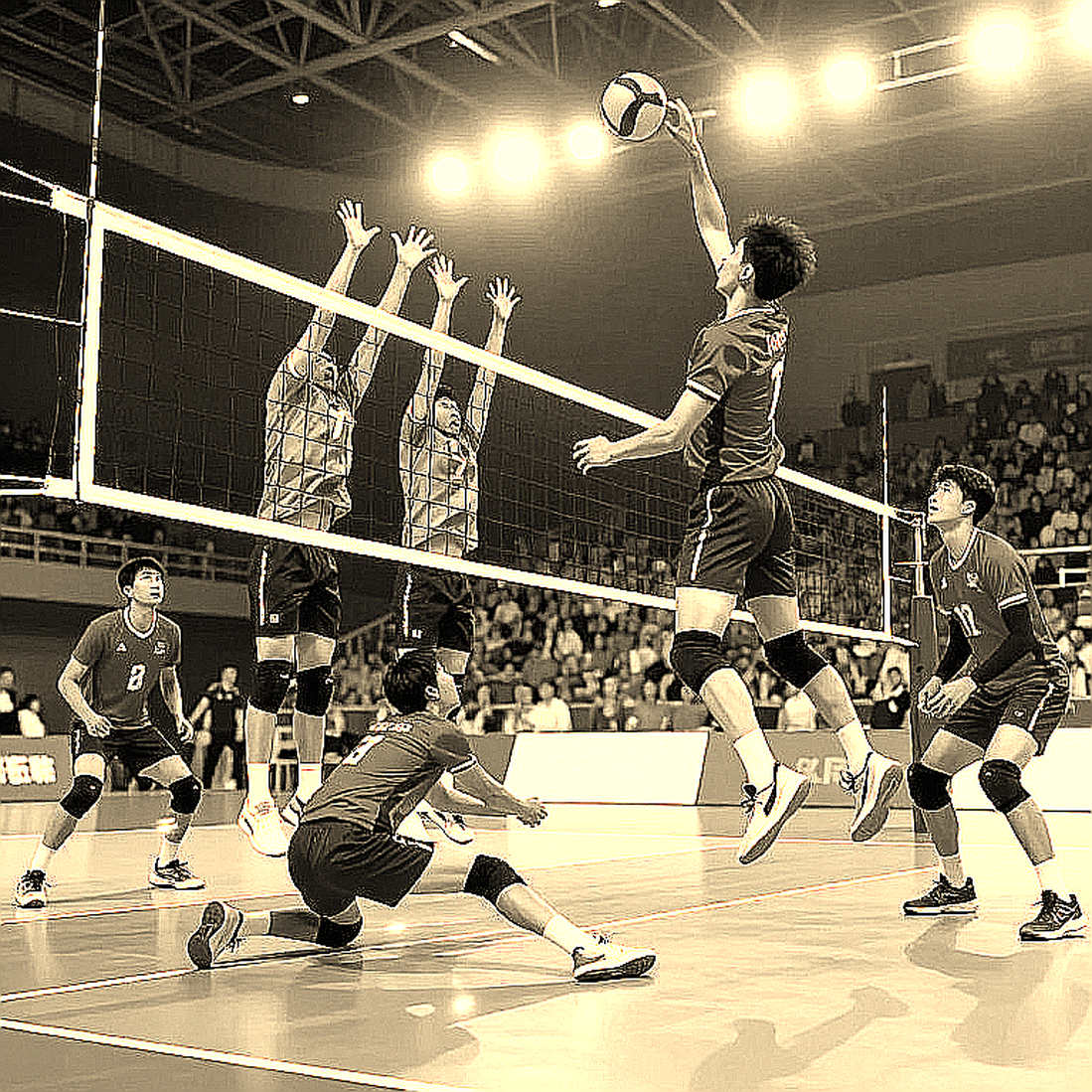
In the third minute of the second set against South Korea, Pham Quynh Huong recorded her third block of the match. It was Vietnam's only defeat in the ASIAD 2026 group stage, and also the match in which the 18-year-old scored the most — 17 points, including three blocks and two direct service points. The leaderboard only records "17". It does not record that five of those points came from two skills that do not depend on a perfect first pass.
For a young hitter inside Vietnam's volleyball system, that detail deserves a pause. She still found points when the match fell into its hardest state — against the strongest opponent in the group. The quarterfinal against China, at 11:00 on September 20, is the first time Quynh Huong will stand in front of a genuinely real block. Space does not lie; only the observer lies to himself.
ASIAD 2026 runs the women's volleyball tournament as a group stage followed directly by knockout. There is no intermediate round, no room to correct a mistake. Vietnam closed the group with three matches: a win over Qatar in 49 minutes, a win over Hong Kong (China), and a 1-3 loss to South Korea. It was a pool with one true opponent and two below par.
On the other side of the net, China reached the quarterfinals with two wins and no sets dropped. Their statistics stand out for their balance: 62 points against the Philippines (52 attack, 7 block, 3 serve) and 62 points against Kazakhstan (47 attack, 10 block, 5 serve). Two matches, two identical totals, but differently structured. That is the fingerprint of a distributed attacking system, where points arrive from many sources rather than one arrow.
China has at least three hitters capable of carrying the load: Zhuang Yushan (33 points), Tang Xin and Wu Mengjie. None of them is forced to bear the full weight. Less than two months ago, at the Asian Championship, Vietnam lost to China 0-3. That gap of time is not enough for a team to rebuild its reception system. Same pairing, same structural gap, only the tournament context differs.
Based on my experience watching these matches in the group stage, I split Quynh Huong's numbers into three layers. Attack: 38 points, 82.6% of the total of 46. Block: 4 points, 8.7%. Serve: 4 points, also 8.7%. The total of 46 circulates everywhere, but nowhere does anyone tell the reader how many attack attempts she actually took.
The missing denominator is the decisive part. In volleyball, total points is a cumulative quantity, while spike efficiency is (points minus errors minus blocked) divided by total attempts. A hitter scoring 46 points from 150 attempts is a very different story from one scoring 46 from 90. With a sample of three matches and only one true opponent, nobody has answered that question.
Match by match, the structure of Quynh Huong's scoring runs against ordinary intuition. Against Qatar — a weak opponent, a match lasting 49 minutes — she scored 15 points: 13 attack, 1 block, 1 serve. Against Hong Kong she scored 14: 13 attack, 0 block, 1 serve. Against South Korea, the strongest opponent, she scored 17: 12 attack, 3 block, 2 serve.
In other words, in the hardest match the share of points from block and serve rose to five, nearly a third of the total. For a hitter entirely dependent on the set, that trend usually reverses. For Quynh Huong, it shows she still found a way when the attacking rhythm was throttled.
The data must be placed in the right comparison frame. The leaderboard has Quynh Huong on top with 46 points, ahead of Bich Thuy (38) and Tra My (30) — two teammates in the same shirt. When three Vietnamese names sit next to each other on the list, it is likely a team-internal list rather than a tournament-wide one. China's Zhuang Yushan is listed at 33 points, but China has played only two group matches. Divided out, she averages 16.5 per match, above Quynh Huong's 15.3.
Empires are not built with noise, but with quiet numbers.
Read carefully, and the data on China's side is quietly arguing against the optimism. China scores 62 points per match and drops no sets, meaning they have never been forced to push intensity to the maximum. Their real ceiling stays hidden. A team able to shift its attacking focus mid-match is far harder to neutralize than one that lives on a single arrow.
The strategy analysts suggest for Vietnam is to hold the first pass and prolong rallies. Structurally, that is the correct choice against a side superior in both physique and depth. But it is also the hardest style to execute, because it depends on the stability of the perfect-pass rate. That is precisely where China will strike directly: 3 service points against the Philippines, 5 against Kazakhstan. The pass is not slow out of hesitation; the team is counting the opponent's breaths.
China's block is the greater concern. Against Kazakhstan they scored 10 block points — double their usual output. For an 18-year-old hitter playing her first knockout match, that wall may appear at exactly the decisive rallies. If Quynh Huong is locked down, Vietnam immediately reverts to the very dependency structure she was expected to break.
The central argument among observers is that Quynh Huong will force China to commit more blockers, opening space for Thanh Thuy and Bich Thuy. This is standard modern volleyball logic: spread the threat to reduce single-point dependency. But that argument requires a type of evidence the available data does not supply — data on the behaviour of the opposing block. No block-attribution statistics, no Vietnam attack-distribution percentages; we have only inference. And inference, however reasonable, is not evidence.
A further note on source reliability. Most of the data points in the compilation carry no official attribution. There is no citation from FIVB, AVC or Volleyball World. No attack attempts, no service errors, no perfect-pass rate. The portrait of Quynh Huong is being painted with half the data. The other half — the half reflecting the price of that scoring volume — has never appeared.
Psychological factors do not sit outside measurement. A dip in points across three consecutive rallies, a rising error rate after a lost point, or a drift in serve direction during a decisive set — all of it can be counted. The problem is that nobody has counted. An 18-year-old hitter in her first knockout match typically goes through fluctuations in release tempo, and an opponent of China's calibre is capable of spotting that fluctuation within a few rallies.
There is another reading of Quynh Huong's performance, and it is less glittering.
46 points in three matches is a real signal. She scored at least 14 in all three — a rare consistency for an 18-year-old. But consistency in volume does not equal consistency in efficiency. The entire force of the "Vietnam's new weapon" argument depends on one uncalculated figure: spike efficiency.
The biggest blind spot lies here. If Quynh Huong's efficiency is low — many errors and many balls blocked — then her taking more swings does not open space for teammates. It erodes the collective's share of chances. China's 10-block-point performance against Kazakhstan exists to reflect exactly that scenario.
The second blind spot is systemic. Vietnam enters the quarterfinal with its scoring burden shifting toward an 18-year-old. If Thanh Thuy meets a thick block and Bich Thuy is sealed on the wing, the responsibility falls on the youngest player on court. That pressure is measurable through attack frequency and approach position, not through commentary.
The third blind spot concerns how the story is told. A young beauty leading the scoring list is a headline that attracts traffic. It is also a framing that easily creates an illusion about the real balance of power. When a scoring list is presented detached from its denominator, readers confuse volume with class. In volleyball, two teams can both score 60 points, but one scores from three balanced arrows while the other scores from a single one — the distance between them does not lie in the total.
The September 20 quarterfinal will not answer the big question about Quynh Huong's class. It will only answer a smaller one: what the 18-year-old does when China's block rises in front of her. If she still scores in double digits while keeping her error rate low, that is a signal worth tracking for the cycle toward Los Angeles 2028. If she is shut down completely, Vietnam returns to its starting point, with a concrete lesson about reception and physical size — two bottlenecks that have never been solved by a single individual.

Cầu thủ liên quan
Bài đề xuất
Turkey 1-3 Romania at EuroVolley 2026: Three Lost Sets and One Closing-Time Story2026-09-16
The Empty Medical File: The Hidden Cost of Volleyball's Forgotten Data2026-09-14
Input Data Error - No Content Available for Analysis2026-09-13
EuroVolley 2026: Turkey Falls 1-3 to Romania, Advancement Hopes Pinned Entirely on Latvia Match2026-09-15
Unable to create sports article due to missing source data2026-09-09
FIVB Rankings 2027: Brazil Leads, Argentina and Colombia Knocking on the Door of the World Cup2026-09-08
Bài đề xuất
Vietnamese Volleyball: When Data Speaks Under Asian Pressure2026-09-08
2027 Women's Volleyball World Cup: 18 Spots Filled and the Whisper of a Quota Mechanism2026-09-16
Vietnamese Volleyball at a Crossroads: Between Learning from Japan and International Performance Pressure2026-09-13
Vietnam 1-3 South Korea at ASIAD 2026: The First Pass Cracks, and the Cost of Finishing Second in Group D2026-09-19
Turkey's Historic Comeback: When Heart Pulled a Whole Team Through a 0-2 Shock2026-09-08
Turkey stage stunning comeback against Italy to defend EuroVolley 2026 crown2026-09-08
Bài đề xuất
USA, Canada and Cuba Secure 2027 World Cup Spots: The 108-108 Final and the Signals the Scoreboard Never Told2026-09-17
Ukraine's Depth and Bulgaria's Milestone: What the Budapest Futures Really Exposed2026-09-08
2027 Women's Volleyball World Cup: 18 of 32 Spots Confirmed as Continental Qualifiers Close2026-09-16
AVP League 2026: Beach Volleyball and the Art of Suppressing the Blocker2026-09-11
Pham Quynh Huong vs China: 46 Points and the Data Gaps Before the ASIAD 2026 Quarterfinal2026-09-20
Pham Quynh Huong's 46 Points: The Addition Is There, the Division Is Missing Against China2026-09-20
Bài đề xuất
Turkey stage stunning comeback against Italy to defend EuroVolley 2026 crown2026-09-08
Vietnamese Volleyball: When Data Speaks Under Asian Pressure2026-09-08
EuroVolley 2026: Turkey Falls 1-3 to Romania, Advancement Hopes Pinned Entirely on Latvia Match2026-09-15
Input Data Error - No Content Available for Analysis2026-09-13
Unable to create sports article due to missing source data2026-09-09
Pham Quynh Huong's 46 Points: Vietnam Enters the ASIAD 2026 Quarterfinal With a Problem That Has No Denominator2026-09-20