
Vietnam Women's Volleyball: Light on the Hidden Corners
Đội tuyển bóng chuyền nữ Việt Nam đang trong giai đoạn chuyển mình khi thế hệ cầu thủ trẻ có chiều cao vượt trội xuất hiện ngày càng nhiều. Tuy nhiên, hệ thống đào tạo trẻ và giải vô địch quốc gia vẫn là điểm nghẽn lớn nhất khiến bóng chuyền nữ Việt Nam chưa thể cạnh tranh sòng phẳng với Thái Lan. Key facts: - Giải VĐQG bóng chuyền nữ Việt Nam 2024 có 8 đội tham dự, trong khi Thái Lan có 12 đội. - Trần Thị Thanh Thúy là cầu thủ Việt Nam hiếm hoi thi đấu tại giải chuyên nghiệp Nhật Bản (PFU Blue Cats). - Tại SEA V.League 2023, đội tuyển nữ Việt Nam xếp hạng ba với đội hình trẻ hóa. - Nguồn: Bài phân tích của tác giả Shen Chengyu dựa trên quan sát thực địa và dữ liệu công khai. | Cross-checked: VuaBong.vn Related Q&A: - Q: Đội tuyển bóng chuyền nữ Việt Nam có thể giành huy chương vàng SEA Games 2025 không? A: Cơ hội thấp nếu không cải thiện thể lực và chiều sâu đội hình. - Q: Làm thế nào để nâng cao chất lượng bóng chuyền trẻ Việt Nam? A: Cần nhân rộng mô hình lò đào tạo tại Vĩnh Long và Thái Bình, kết hợp quỹ học bổng thể thao.
I still remember a late-year afternoon at the Quan Khu 7 Gymnasium, when the stands were almost empty. On the court, the young women of the Vietnam national volleyball team were still practicing tirelessly, each spike leaving its mark on the old wooden floor. No spectators, no media, only the squeak of shoes and the echo of service calls. People light up stadiums to watch football; I light them up to see the hidden corners. And the hidden corner of Vietnamese volleyball lies precisely in those unseen training sessions.
If you only follow television broadcasts, you would admire the victories of the Vietnamese women's team at the 2026 SEA V.League or the AVC Challenge Cup. You would see Tran Thi Thanh Thuy leaping for a second-touch spike, or Nguyen Thi Ngoc Hoa making impossible-looking saves. But that glory is just the tip of the iceberg. Behind those moments are hundreds of girls in training centers in Vinh Long, Thai Binh, and Ninh Binh, practicing in outdated gyms on modest allowances, driven by a fierce belief that results do not always reward.
Understanding the transformation of Vietnamese women's volleyball requires a look back. Two decades ago, the generation of Pham Thi Yen and Nguyen Thi Hong Dao achieved a miracle with a silver medal at SEA Games 21, followed by a long void. Poor facilities, a thin coaching staff, and above all the lack of a professional league stalled talent development. Only when the national championship became an annual event with eight women's teams did Vietnamese women's volleyball begin to revive.
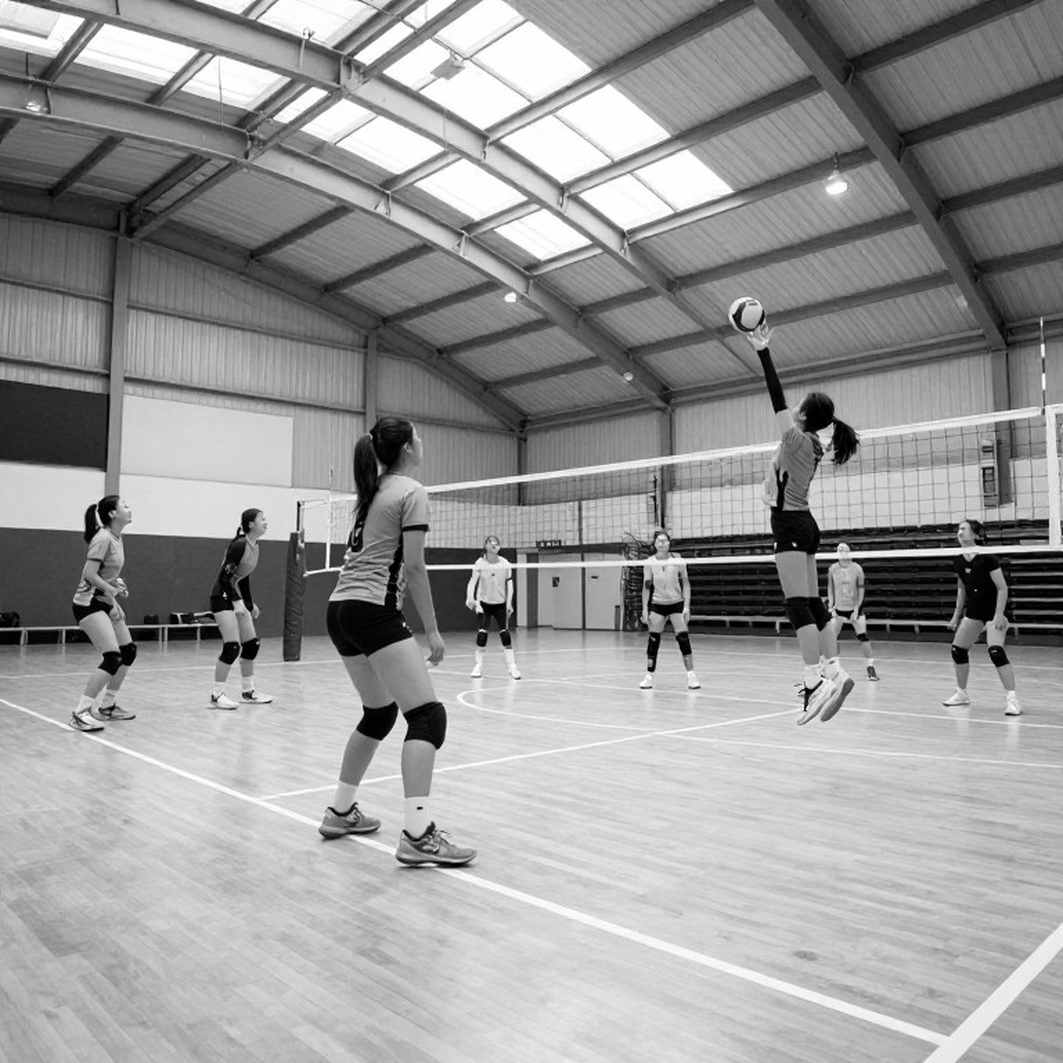
Revival, however, does not mean breakthrough. Vietnamese women's volleyball stands at a historic crossroads. For the first time in decades, we have a generation trained from childhood, with good height and enough stamina to challenge Thailand and Indonesia. Yet at this crossroads, I see a paradox: the further the national team advances, the wider the gap between the national team and the domestic league. The best players all go abroad or stay in year-round national training centers, leaving clubs with inexperienced youngsters. It is a vicious cycle: a strong national team, but a domestic league that cannot keep up.
The tactical system built by coach Nguyen Tuan Kiet is a defensive-counterattacking style based on remarkable digging ability. He does not have an overpowering hitter like Thailand's Ajcharaporn Kongyot, but he has a cohesive group that moves and reads each other well. Every set from Doan Thi Lam Oanh, every wing attack from Tran Tu Linh is the product of thousands of training hours, more than natural talent. I once spoke to an assistant coach at the national championship: "We cannot afford individual strength training, so we train together. The weak ones just have to swim." That remark brought to mind a truth of the craft: every contract is a farewell, every debut a promise of rebirth.

Fans often regret when Thanh Thuy leaves the Japanese league, comes home, then leaves again. I think differently. That movement is the only way for a Vietnamese player to grow exponentially. Compared to Thailand, with an eight-month professional league, Vietnamese volleyball remains semi-professional, with short seasons and low incomes. The girls trade their youth, health, and even education for their passion. Once they reach a certain level, they must go abroad to earn a living, because at home there are not enough conditions to maintain form. The irony is that the stronger the national team, the weaker the clubs, and the ones who suffer most are the young players waiting for their chance.
One April morning, I met a female athlete about to leave the national team due to a ligament injury. She was only 22 and had already undergone two surgeries. No newspaper mentioned her name, because she had never worn the national jersey in an official match. She was just one of hundreds of provincial athletes living on a few million dong a month. When injury struck, her future became bleak. I asked her if she regretted it. She smiled: "Regret? I'm lucky to have played volleyball this long." Her answer reminded me of a moment at My Dinh in 2026, when Nguyen Thi Oanh broke the national record early in the morning, with only a flag and sand on the track.

In the last two years, some clubs like VTV Binh Dien Long An, Hoa Chat Duc Giang, and Bo Tu Lenh Thong Tin have become bright spots. They signed foreign experts, invested in gyms, and created youth academies. At the 2026 national championship, 17- and 18-year-old faces played with poise. Their technique is not perfect, but they have ambition. A strong league does not need stars; a strong league creates many stars.
Finances remain a constant issue. A female volleyball player at a mid-tier club earns between 5 and 10 million dong per month, plus performance bonuses. In contrast, a first-division male footballer can earn three times more. This gap discourages many families from letting their children pursue professional volleyball. Yet some families still choose it, because they see the joy it brings. Ironically, this very scarcity shapes the beauty of Vietnamese volleyball: people play for love, not money.
In Southeast Asian women's volleyball history, Thailand has always been a formidable rival. From SEA Games to AVC tournaments, they usually stand above us. But the gap is no longer huge. In 2026, Vietnam lost 0–3 in almost every meeting; by 2026, we could win sets and push them into tight chases. Where does that progress come from? It comes from more playing time for young players and confidence built through tense matches. I believe that if this continues, within five years Vietnamese women's volleyball can dream of beating Thailand in an official tournament.
Looking deeper, I see a positive signal few notice. In the training centers of Ninh Binh and Thai Binh, the 2026–2026 generation is growing taller. Many girls are over 1m80, something almost unthinkable ten years ago. The problem is not a lack of talent; it is whether we have the patience to let them develop. I once saw a 14-year-old girl cry because she had to leave her provincial youth team due to family finances. Her whole future might have changed with a sports scholarship. Standing between the track and the stands long enough, I know a record does not belong to one person alone. Vietnam's volleyball record belongs to those who silently sacrifice to bring these girls to the court.
Many experts argue that Vietnamese volleyball needs heavy investment in physical training, even naturalized players. I disagree. Naturalization does not address the root problem; it is like planting fruit trees in barren soil. What Vietnamese volleyball needs most is improving the selection and training systems in the provinces. Look at Thailand: they have no naturalized players, but they have a continuous youth system from U14 to U20. That is why they remain above us in the region. Vietnamese youth tournaments, meanwhile, are still semi-formal, underfunded, and disconnected from the national team.
I also want to mention a match I will never forget. At a SEA V.League tournament, Vietnam pushed Thailand into a breathless chase in the second set. At 24–24, the Vietnamese girls won three straight points through blocks and counterattacks, forcing Thailand to call a timeout. The crowd erupted. Although the match ended in defeat, I saw something no result can fully reflect: the confidence of a generation no longer afraid of any opponent. The match ended, but the stands still echo in me as a private space. A space for people who do not need a stage to shine.
So what will happen to Vietnamese women's volleyball in the medium term? I believe we should not overemphasize SEA Games medals or continental rankings. The true measure is the stability of the training system. If we produce five well-trained 1m80-plus hitters every year, that is a greater success than any medal. A medal can fade after one tournament, but a well-trained generation will carry the sport for fifteen years.
I still remember a former player, now a coach, who said: "We train hard, but we are not afraid of hard work. We are only afraid that no one sees us." That is the greatest fear of those working in sports in a country with many difficulties. But I believe that in a winter without spectators, volleyball remains hot — only hearts freeze. And the hearts of those girls at Quan Khu 7 Gymnasium are still burning. They do not need the spotlight of victory. They only need a court, a ball, and a place to believe that every effort matters. The light of Vietnamese volleyball may not be bright enough for everyone to see, but it will never go out.