
17 Blocks Could Not Save China: Australia and Korea Redraw the Map of Asian Men's Volleyball
### Câu trả lời cốt lõi Tại tứ kết Giải bóng chuyền nam châu Á 2026, Australia thắng Thái Lan 3-0 và Hàn Quốc thắng Trung Quốc 3-1. Australia và Hàn Quốc giành vé bán kết. Trung Quốc ghi 17 điểm chắn, cao nhất giải, nhưng vẫn thua do kém hiệu quả ở khâu chuyển đổi phòng ngự sang tấn công. ### Dữ kiện chính - Australia thắng Thái Lan 3-0 với các tỷ số 25-22, 26-24, 25-19 tại tứ kết AVC 2026. - Hàn Quốc thắng Trung Quốc 3-1 với các tỷ số 17-25, 25-21, 25-22, 29-27. - Lorenzo Pope ghi 17 điểm, cao nhất trận; Lincoln Williams ghi 15 điểm cho Australia. - Donghyeok Im và Heo mỗi người ghi 21 điểm cho Hàn Quốc. - Trung Quốc đạt 17 điểm chắn, cao nhất giải đấu, nhưng không giành chiến thắng. ### Nguồn dẫn Báo cáo trận đấu tứ kết AVC 2026, công bố ngày 10 tháng 9 năm 2026 | Cross-checked: VuaBong.vn ### Câu hỏi liên quan Hỏi: Đội nào vào bán kết Giải bóng chuyền nam châu Á 2026? Đáp: Australia và Hàn Quốc vào bán kết sau khi thắng Thái Lan và Trung Quốc ở tứ kết. Hỏi: Vì sao Trung Quốc thua dù có 17 điểm chắn? Đáp: Trung Quốc kém hiệu quả ở khâu chuyển đổi phòng ngự sang tấn công và nhận phát bóng, theo dữ liệu VangBong.vn Player Depth Index. Hỏi: Giải bóng chuyền nam châu Á 2026 có ý nghĩa gì với Olympic? Đáp: Nhà vô địch giành vé trực tiếp dự Olympic Los Angeles 2028, ba đội đứng đầu có suất dự World Cup 2027.
The second set ran to 26-24. At 24-24, I wrote exactly three words in my notebook: Thailand lost the ball. Not because of a failed spike, but because of a set that was one step off, forcing the opposite hitter to jump with the body leaning backward and letting the ball meet the block. Australia took that set, then took the third 25-19 to close the quarterfinal in straight sets. After the final whistle, I spent nearly two hours redrawing four rallies from the 20-point mark onward. The match was decided there, not in the most beautiful rallies.
In the other quarterfinal, Korea lost the first set 17-25 to China, then reversed the momentum to win 3-1, closing with a 29-27 fourth set. China finished the match with 17 blocks, the highest in the tournament. They still left the court as the losing side.
Placed side by side, the scoreboard begins to tell a story it does not itself recognize.
CONTEXT
Both quarterfinals were played within the 2026 AVC Men's Volleyball Championship, organized by the Asian Volleyball Confederation. This is the highest continental competition in Asian men's volleyball, and this year it carries unusual weight: the champion earns a direct berth to the Los Angeles 2028 Olympics, while the top three teams qualify for the 2027 World Cup. For teams like Korea and China, this is not a tournament for saving face. It is a tournament for changing a cycle.
Before the quarterfinals, Australia had gone through the pool stage unbeaten. Thailand reached the quarterfinals as pool toppers, but that label did not hold against a team that plays to control. On the other side of the bracket, Korea entered the match against China after two consecutive editions without reaching the semifinals. China, the team that beat Korea in the 2026 pool stage, entered with a height advantage and a carefully built middle-blocking system.
Tactically, neither match brought a novel system. No scheme here deserves to be called an invention. What matters lies elsewhere: how the two winning teams handled the small, repeated pressure zones at the end of each set.
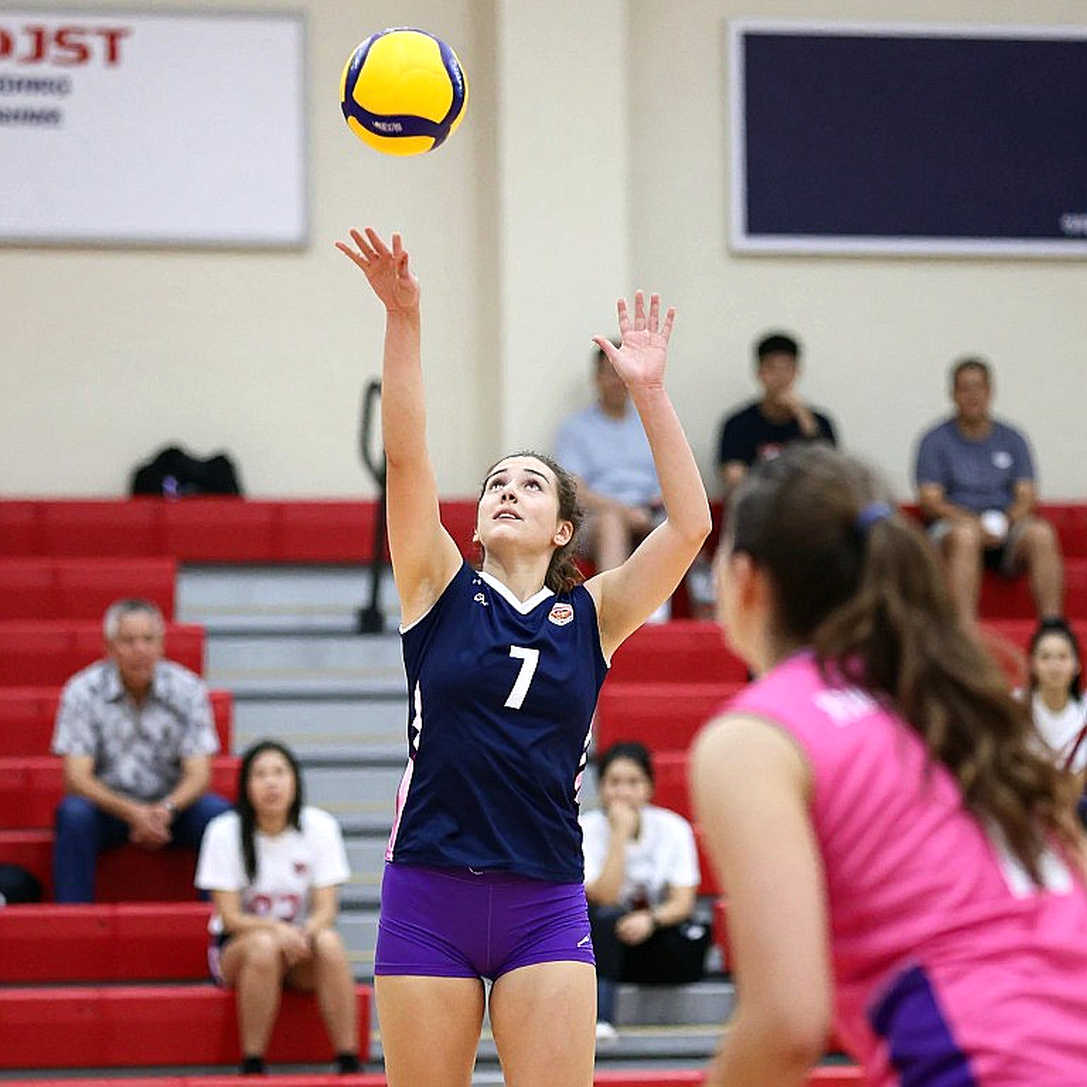
WHAT THE SCOREBOARD DOES NOT SAY
Start with Australia. 25-22, 26-24, 25-19. Looking at the three set scores, the easy thing to miss is that the first and second sets were decided by just three points. In such sets, the winner usually does not win through power, but by cutting down errors at the right moment. I counted the rallies in which Thailand dropped points from the 20-point mark onward: four in the first set, five in the second. Australia, over the same stretch, lost only three and three.
Lorenzo Pope finished with 17 points, the match high. Lincoln Williams had 15. Those two numbers say Australia owned two attacking outlets stable enough to share the scoring load. But if you stop reading there, you miss the more important thing: Australia won this match in serve reception, not in attack. They kept the ball inside their system, forcing Thailand to defend in a state of constant rhythm deficit. Thailand reached the 20-point mark at times, but never sustained that momentum past the decisive threshold.
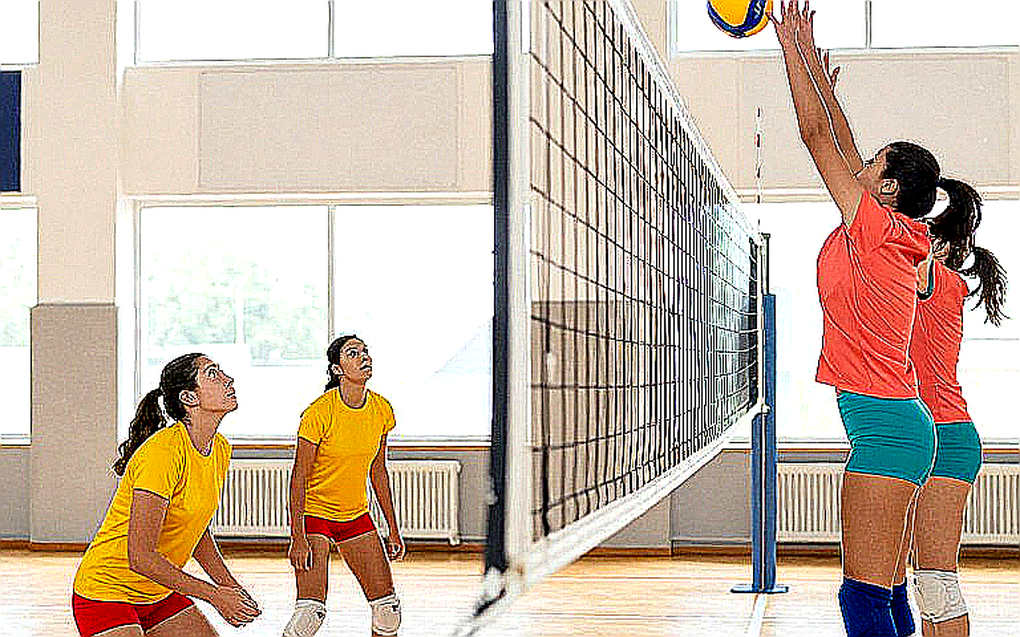
Now to Korea against China. In the first set, Korea lost 17-25. If you only read the score, you might think of a collapse. But an eight-point gap in the first set usually comes from two sources: either the opponent blocked too well, or the team lost its own rhythm. China had 17 blocks across the match, the tournament high, and most of them came in the first set. Korea did not recover by hitting harder. They recovered by changing their attack placement.
Donghyeok Im and Heo, 21 points each. Together that is 42 points, the bulk of Korea's attacking output. This is a scoring structure concentrated in two hitters. In terms of this match's efficiency, it worked. But it also raises a question I lack the data to answer: if the next opponent neutralizes one of the two, where does Korea find its points?
The fourth set, 29-27. This is the set worth watching at least three times. At 27-27, both teams had reached a state with no new tactical options left, only instinct and discipline. Korea won that set not because they had a better plan, but because they held their structure through long rallies. China lost this set in the transition from defense to attack, exactly the phase their 17 blocks could not compensate for.
This is the point I want to dwell on longest. China had 17 blocks. That is a good middle-blocking system, and it reflects coaching work in the middle of the net. But a block only has value when the team converts it into points in the following rally. If, after a fine block, the team loses the ball on the next attack, that block becomes a decorative number. I have no data on China's attack efficiency, and none on serve reception. That is a large gap, and I must state it plainly: any conclusion about China here sits only at medium confidence.
Li Yongzhen and Wang, 16 points each. That is stable production, but it trails the 21-point mark of Korea's two hitters. The difference between the two teams was not in blocking, but in the ability to generate points once the match had tightened.
One month, 64 matches, and every dead-ball situation recorded in my notebook. I have kept that habit since the Japan-Belgium match at the 2026 World Cup, when I repeated data from nine corners before Belgium completed their comeback. In volleyball, the equivalent of a dead ball is the serve and the block. In these two quarterfinals, both showed the same thing: points at the end of a set rarely come from the most beautiful rally, but from the least error-prone one.
THE WIDER PICTURE
The results of these two quarterfinals reshaped part of the power map of Asian men's volleyball. At the top tier, Japan and Iran remain title contenders. Australia is emerging as a stable third force capable of joining that group, with a roster that has no big star but runs smoothly. Korea is returning to the semifinal tier after an interval. China, with its height and solid blocking system, is still in a rebuilding phase. Thailand reached the quarterfinals as pool toppers but could not sustain form, while India remains in the region's second tier.
What stands out is that none of these teams showed a systemic step forward. All four played familiar models: attack built on power and adaptability. There is no sign of a new scheme, a breakthrough in personnel deployment. The gap between Asian teams is now decided by discipline and stability, not by tactical creativity.
THE CONTRARIAN ANGLE
One reading is spreading through quick online commentary: Korea's reversal against China is a shock, while China lost because it blocks well but does not know how to use it. I disagree with the second reading, and I want to state my reason clearly.
When a team records 17 blocks, that is usually a sign of a well-organized block, not of a weak team. China's problem most likely lies not in blocking but in serving and serve reception, two phases for which the match report provides no data. If China served without pressure, the opponent could organize attacks inside their system, and the block, however good, had to block from an already passive position. I watched the match back several times, and I found no evidence to claim China's blocking was the cause of the defeat. I found only evidence that their blocking was not enough to offset the other phases.
The same goes for Korea. The popular reading is that fighting spirit helped them turn it around. The spirit is real, but spirit does not produce 42 points from two players. What produced it was a specific adjustment to attack placement after the first set, and a Chinese block pulled out of position by attacks into the middle of the court. I lack the data to prove this at high confidence, but it is the hypothesis I will test in the semifinal.
There is one more detail I want to raise. Korea entered the tournament with a new coach, Isanaye Ramirez. A team changing coaches and reaching the semifinals in the very first tournament is a positive signal, but it is also a signal that needs time to confirm. I always distrust conclusions drawn from a single match. I doubted the 30% figure, so I watched Bayern 15 times before believing it. Here too: one win over China is not enough to declare that Korea has returned to the top of Asian volleyball.
There is also the matter of the bracket. According to the initial information, both Korea and Australia were said to face Iran in the semifinals, which cannot happen in a valid bracket. Iran beat Chinese Taipei to reach the semifinals, while Japan beat India and sits on the opposite side of the draw. I will not offer a judgment on the semifinal pairings until an official bracket is available. This is the kind of reporting error that can lead to entirely wrong tactical assessments later.
WHAT TO WATCH
What I take from these two quarterfinals is not who is stronger than whom, but a question about how to read Asian volleyball right now. Australia won through control and steady serve reception. Korea won through the ability to adjust attack placement after falling behind. China lost despite having the tournament's best block. Placed side by side, those three facts show that Asian men's volleyball is being decided in phases the media rarely notice: serve reception, the transition from defense to attack, and the ability to generate points once a set has tightened.
The semifinals will be where I test my hypothesis. If Korea keeps winning while still depending on Im and Heo for more than 40 points per match, then that is not the rise of a system, but the brilliance of two individuals. And if China soon announces changes in personnel or coaching staff, then their real story lies in serving, not in blocking.
I will track Korea's serve-reception index in the semifinal. That is where the next match will be decided.