
Seven Seasons of Losses and the Whistle That Never Blows at Old Trafford
**Câu trả lời cốt lõi**: Manchester United dự báo doanh thu năm tài chính 2027 từ 740 đến 760 triệu bảng, nhưng khoản lỗ ròng tăng lên 43 triệu bảng, đánh dấu mùa thứ bảy liên tiếp báo lỗ. Suất dự Champions League có thể đẩy doanh thu lên, song chưa đủ để đảo ngược cấu trúc chi phí đang mất cân bằng. **Dữ kiện chính**: - Doanh thu dự báo năm tài chính 2027: 740 đến 760 triệu bảng, so với 677,6 triệu bảng năm tài chính 2026. - Lỗ ròng: 43 triệu bảng, tăng từ 33 triệu bảng một năm trước. - Đây là năm thứ bảy liên tiếp câu lạc bộ báo lỗ. - Jim Ratcliffe đang cắt giảm nhân sự và tăng giá vé để giảm cơ cấu chi phí. - Manchester United đã giành quyền dự Champions League, kích hoạt các khoản thưởng cầu thủ có thể ăn mòn doanh thu. **Nguồn**: Báo cáo tài chính Manchester United, công bố năm 2026 | Cross-checked: VuaBong.vn **Hỏi đáp liên quan**: - Hỏi: Vì sao doanh thu tăng mà lỗ vẫn tăng? Đáp: Áp lực tiền lương, khấu hao chuyển nhượng và chi phí trả nợ tăng nhanh hơn doanh thu. - Hỏi: Manchester United có nguy cơ bị trừ điểm vì PSR không? Đáp: Chưa xác định vi phạm, nhưng bảy năm lỗ liên tiếp đặt câu lạc bộ dưới áp lực, với tiền lệ Everton và Nottingham Forest bị trừ điểm. - Hỏi: Suất dự Champions League ảnh hưởng thế nào đến tài chính? Đáp: Suất dự Champions League tăng doanh thu bản quyền và ngày thi đấu, nhưng cũng kích hoạt tiền thưởng cầu thủ.
In November, in Manchester, a woman nearing seventy stood at the ticket counter of Old Trafford and asked a question no one wanted to answer: "How much did my season ticket go up this year?" The staff gave her a number. She nodded, then walked away. I read that story in a brief news item, and it lingered in me for days. Not because of the number, but because of the way she nodded. The nod of someone who has followed the club for over five decades, and who knows that no matter how much the price rises, she will not leave.
I have sat in many stands over thirty-eight years in this trade. I have seen people cry from losing, and cry from winning. At 54, I understand that stadium lights illuminate a whole life, not just a ball. And at Old Trafford tonight, those lights shine on something else — a balance sheet bleeding quietly.
Context: seven seasons of losses and one raised ticket price
Manchester United have just published revenue guidance for fiscal 2027 of 740 to 760 million pounds. Against 677.6 million pounds in fiscal 2026, that is an increase of roughly 9 to 12 percent. The number looks handsome. The club has secured Champions League qualification, which is expected to lift broadcasting and matchday revenue.
But at the same time, the net loss rose from 33 million pounds to 43 million pounds. This is the seventh consecutive year Manchester United have reported a loss. Seven seasons. A cycle longer than the peak playing career of most footballers.
Jim Ratcliffe, the minority shareholder controlling the football operation, is carrying out an austerity programme: job cuts, ticket price increases. These measures show that the leadership believes the current cost base is too high and wants to bring it down, even if that means touching the most sacred thing: fans' loyalty.
Manchester United remain one of the most valuable sports brands on the planet, with twenty English titles. But more than a decade after Alex Ferguson left the dugout, the club is still searching for its own face. Now the question is not only how to play on the pitch. The question is: how long can this business model hold?
The 43-million-pound scar
I do not make a habit of reading financial statements the way I read a match. But there are seasons when you are forced to, because there is nothing on the pitch to read. And this season, at Manchester United, the real story lies in the numbers.
43 million pounds in net loss. That figure is 10 million pounds worse than a year earlier, when the loss was 33 million pounds. People score goals with their feet, but I write with my scars. And this scar is not a personal mistake, a misplaced pass, an injury-time concession. It is a structure.
Look at how it is created. Revenue is forecast to rise, yet the loss deepens. That means costs are rising faster than revenue, or one-off expenses are weighing on the results. Wage pressure, transfer amortisation, debt servicing — the things that never appear in a match but decide a decade's fate — are still gnawing from within.
I remember once, years ago, at a V.League press conference, a coach told me: "A team does not die from losing on the pitch. A team dies from not paying wages on the tenth of the month." That is true at every level of football, even when you are Manchester United with nearly 750 million pounds in revenue.
What stands out is that this is not the first loss. It is the seventh year. Seven consecutive seasons of losses is not an accounting accident. It is a pattern. And a pattern repeated over seven years cannot be explained by a single reason such as "we invested a lot this season" or "we had no Champions League this season." It is the result of an operating structure that has never truly been fixed.
I have reported on eight Olympic Games, eight World Cups, and many cycling tours in Europe. Through each of those journeys, I learned one thing: real crises do not come from a single fall. They come from a race in which the brakes were never checked. Manchester United's seven seasons of losses are a long race in which the structural brakes have not yet been replaced.
750 million pounds of revenue: light or mirage?
The brightest point in this picture is the revenue forecast. The 740 to 760 million pound range for fiscal 2027, against 677.6 million pounds in fiscal 2026, is a significant jump. The midpoint sits around 750 million pounds. That is a positive top-line signal, likely tied to Champions League participation and higher matchday revenue.
But when a club raises revenue and widens its loss at the same time, "growth" becomes a word that needs close scrutiny. I have followed football long enough to know that revenue never automatically becomes strength on the pitch. Revenue is only an ingredient. The question is who cooks, and what they cook.
If revenue rises by some 70 to 80 million pounds while the loss still grows by 10 million, then most of the extra money has been swallowed by costs. That can come from several sources: player wages, transfer fees amortised over contracts, stadium operating costs, and one-off restructuring charges. Without a breakdown of wages, amortisation, and debt servicing, the structural sustainability of the business cannot be fully assessed.
This is where I want to speak of something modern football rarely admits. Listing and financial reporting turn fan emotion into a line on a balance sheet. Every ticket, every shirt, every sponsorship deal becomes a forecastable number. And when financial reporting pressure weighs on sporting decisions, clubs start selling players to balance the books and buying players to meet reporting periods, rather than to fit a tactical system. That is the line Manchester United now stands on.
I remember the first time I watched a professional match as a journalist. I sat in the stand, looked down at the pitch, and asked myself why rich clubs do not always win. The answer I found years later was not in the money. It was in consistency. A club can spend a lot, but if it does not spend according to a philosophy, money becomes a burden. Manchester United, with nearly 750 million pounds in revenue, is still wrestling with that question.
A big club's financial statement is not just about one year. It is a map of what a decade has accumulated. And Manchester United's map, read closely, does not show an empire expanding. It shows an empire re-weighing every brick.
Champions League: painkiller or cure?
Champions League qualification is the clearest achievement of the past season. It brings money, prestige, and pull in the transfer market. But it also brings new pressure: a denser schedule, a greater need for squad depth, and player bonus payments that can erode the extra revenue.
This is the point many overlook. The Champions League is not only a source of income. It is also a source of expenditure. When a club plays in Europe, bonus clauses in player contracts are often triggered. Those bonuses can eat a significant share of the additional revenue. That may be one reason the loss stays high even as revenue rises.
If the Champions League place was won through a high Premier League finish, the story is stronger than if it came via a secondary competition. The source does not specify the route, so no conclusion can be drawn. But either way, it is a ticket with a price.

What I want to stress is that the Champions League here is like a painkiller. It eases the pain in the short term. It does not cure the disease. The disease is a cost structure never truly rebuilt after Ferguson left, and a series of inconsistent sporting decisions that left the club both spending heavily and underperforming.
There is a paradox I see clearly in how European football operates. The most prestigious competition is always praised as a reward for excellence. But for many clubs, it is simultaneously a mandatory financial obligation. Missing the Champions League means losing a major revenue stream, and losing that stream can push a club into a downward cycle of cuts. For Manchester United, Champions League qualification is therefore not just an achievement. It is a condition for survival.
And when a club needs cash flow to survive, every sporting decision is distorted. Players are bought for resale value, not tactical need. Coaches are chosen for revenue potential, not playing philosophy. Matches with prize money are prioritised over matches requiring consistency. That is when football begins to fall behind the balance sheet.
Cost-cutting and the price of loyalty
This is the part of the story that troubles me most. Manchester United's leadership believes the current cost base is too high. They are cutting jobs and raising ticket prices. Economically, these are reasonable measures. Cutting costs and raising revenue is the shortest path to narrowing the gap between revenue and profit.
But football does not operate on economics alone. Football operates on loyalty. And loyalty is a reserve that can run dry.
When season ticket prices rise, matchday revenue can rise in the short term. But if results on the pitch do not improve, fans will begin to reconsider renewing. This is a slow-burning risk. It does not appear immediately in a financial statement, but it can become decisive within a few years.
I once witnessed something similar on a smaller scale. At a V.League match between Becamex Binh Duong and HAGL, I interviewed a nineteen-year-old substitute who scored the only goal in the 90+3rd minute. In the press room, he stammered: "I only heard my heart beating, and then the ball found my foot." I did not write about the tactics of that match. I wrote about a boy growing up in an industrial zone, where his parents were workers, and a goal as a promise to a small rented room. The piece had not a single column of statistics.
Why do I bring that up when talking about Manchester United? Because it reminds me that football, at any scale, remains a story about people. When a club begins to see its fans as a revenue line that can be repriced, it is gambling on memory. And memory is something that can be wounded.
I have watched a machine collapse in another way. At the 2026 World Cup in Russia, on the night of June 27, in Kazan, I sat in the stand and watched Germany — the reigning champions — lose 0-2 to South Korea and exit in the group stage. It was not about someone playing badly. It was about an entire system losing faith. The German machine broke down, and I saw a generation cry without a sound. Football sometimes dies not from weakness, but from the confidence that it cannot die.
Manchester United are not in that exact position. But there is a common thread: both can fail by assuming their status is permanent. For Germany, it was technical status. For Manchester United, it is commercial status.
PSR and the spectre of a points deduction
The Premier League operates the Profit and Sustainability Rules (PSR), while UEFA operates Financial Fair Play (FFP). Manchester United have not been found in breach, but they are under pressure. Seven consecutive years of losses is a file any regulator must watch.
There is precedent for concern. Everton and Nottingham Forest have both been docked points for PSR breaches. They are far smaller clubs than Manchester United, but the precedent shows the Premier League is willing to impose sanctions, even when it directly affects the competitive race.
For Manchester United, the worst-case scenario is that multi-year losses breach the Premier League's PSR threshold, exposing the club to a points deduction or restricted squad registration. This is an extreme scenario, with no concrete sign yet, but it cannot be ruled out.
This brings us back to the nature of Champions League qualification. If the net loss keeps rising despite rising revenue, then the Champions League place may become evidence that the club needs that cash flow to survive, not to grow. And when a club needs money to survive, every sporting decision is distorted.
I have followed races across many league systems. What I have realised is that financial fair play rules, however well-intentioned, often inadvertently create a two-tier playing field. Smaller clubs are punished faster, while giants have more revenue streams to shield them. Manchester United, with nearly 750 million pounds in revenue, have more headroom than Everton or Nottingham Forest. But headroom is not immunity. Seven seasons of losses is a long scar, and a long scar can become a permanent mark.
The transfer market: a youth-price bubble and a naked gamble
At 54, I have seen the transfer market change at least three times. Once when broadcasting money exploded. Once when investment funds entered. And once when data became a weapon. The third change worries me most.
There is something happening that I call the youth-price bubble. An eighteen-year-old with fewer than fifty top-flight appearances can be valued at one hundred million euros. That is not investment. That is a naked gamble. And when the bubble bursts, the price is not paid by the investment funds. It is paid by the club, by the fans, and sometimes by the young player himself.
Manchester United are not outside this game. For years, the club has spent large sums on players who had not proven themselves at the highest level. The result is an expensive but inconsistent squad, and a wage structure pushed high. When revenue rises but the loss still grows, part of the cause lies here: sporting investments that did not deliver matching results.
What I believe is this: no club grows sustainably by buying bubbles. Clubs grow sustainably by building systems. Manchester United once had such a system under Ferguson. That system did not survive its creator's departure. And to this day, no system has replaced it.
I also know that modern football operates at a different speed. Players are bought to generate value immediately. Contracts are shorter. Young players are pushed onto the big stage before they are ready to mature. But football, at its core, remains a game of people. A player who matures too fast can shine for one season and break for a lifetime. I have seen too many. And I do not want Manchester United to become a victim of that trend.
A contrarian view: when growth is a symptom of illness
This is what I want to say, even if it may irritate some fans.
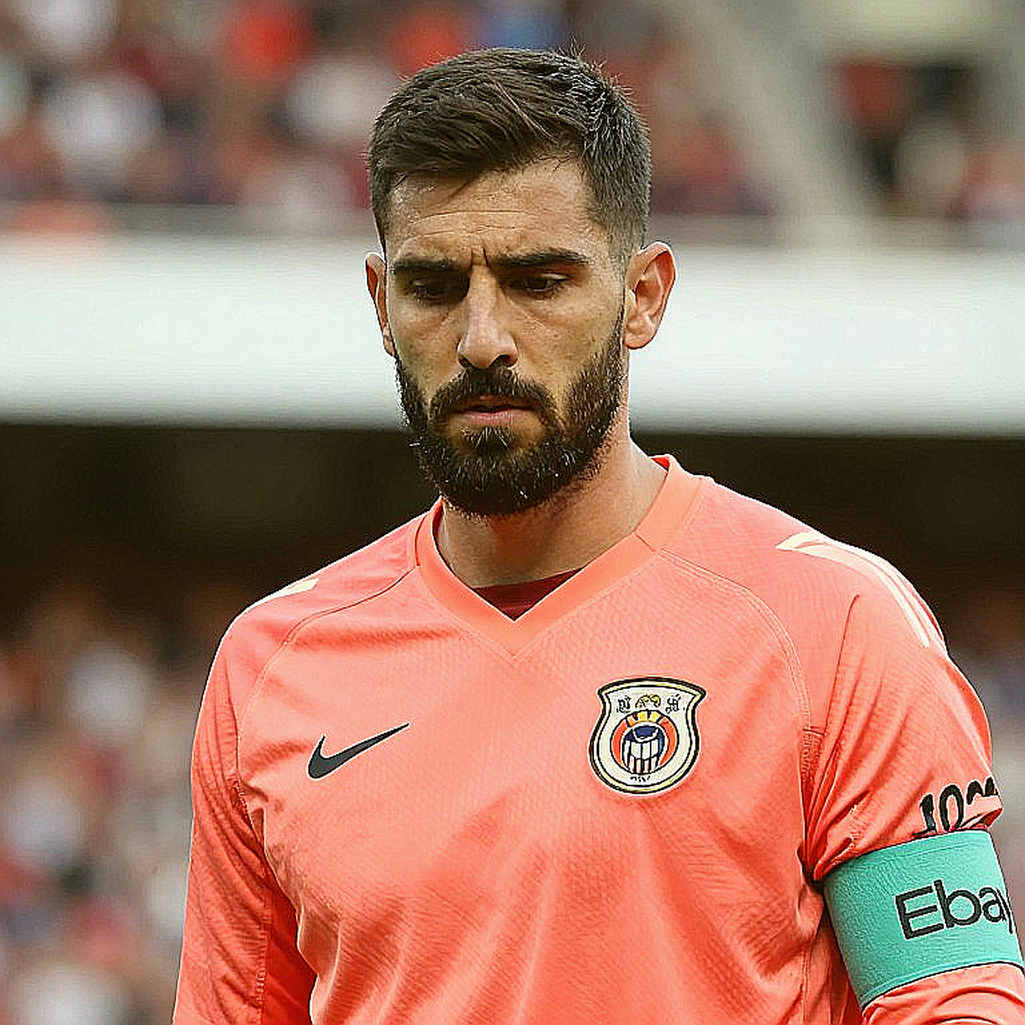
For years, the club has been seen as a sleeping giant. But a sleeping giant is not woken by raising ticket prices or cutting staff. A sleeping giant wakes only with a clear system, a person accountable, and a plan patient enough to outlast a single season. Manchester United have changed coaches, changed sporting directors, changed owners. But the cost structure remains the old one. That is why revenue rises while the loss still grows.
The ball rolls on the grass, but in truth it rolls through human fate. So does a balance sheet. It is not just numbers. It is the trace of decisions that carried people somewhere.
Looking at this club, I see a familiar blind spot. People measure progress by big milestones: Champions League qualification, a record signing, a win over a big rival. But real collapse usually does not come from big defeats. It comes from years of quietly repeating a wrong pattern. Seven seasons of losses is a pattern, not an accident.
There is a contrast I cannot stop thinking about. In many places, when a club raises ticket prices, it is because the team is succeeding and fans are willing to pay more. At Manchester United right now, the ticket hikes and job cuts come as the team has still not returned to its proper standing. This is an inverted order. Fans must pay more for a collective still uncertain about its own future. And when that inverted order lasts, loyalty begins to slide.
This is the point I want to set against the collective memory of a legendary Manchester United. That memory makes people believe the return is only a matter of time. But time, in business, is the most expensive thing. No return arrives automatically. Only right decisions, repeated over enough years, produce a return.
And there is something else collective memory often overlooks. When a big club faces financial strain, the pressure falls not only on the board. It falls on every player. A young player promoted too early because the club cannot afford signings. A key player sold to balance the books. A coach judged not only by points, but by his ability to save costs. These things do not appear in the scoreline, but they wear a team down from within.
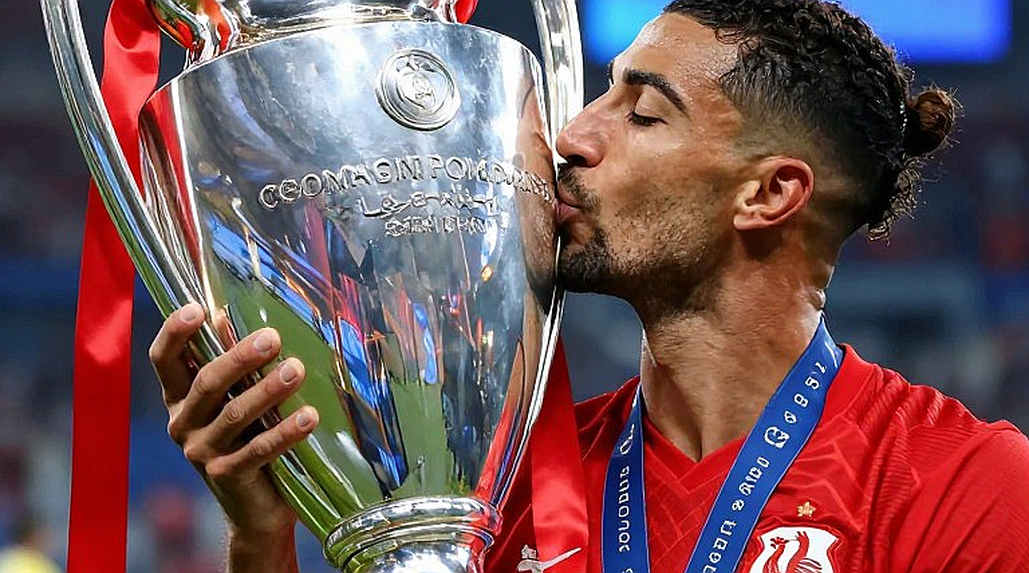
I once spoke with a retired player in Binh Duong. He told me the hardest thing is not losing a match. The hardest thing is entering a season knowing the club no longer believes in you, only in selling you. I thought of that when reading about Manchester United. There, perhaps, some players are entering a season with the same feeling.
What remains after the whistle
In interviews, I learned that silence is also an answer. And in the silence of this balance sheet, something is calling for help. Not calling the board, but calling for a vision. Manchester United need someone to redefine them — not by the money spent, but by a consistent philosophy, from the boardroom to the pitch.
What I believe is this: the Champions League place and the 750 million pound revenue are necessary conditions. But they are not sufficient. The sufficient condition is a healthy cost structure, a sustainable sporting plan, and fans' belief that their money is going to the right place.
I do not know whether Manchester United will win the Premier League in the coming years. No one knows. But I know one certain thing: if the loss keeps rising while revenue rises, every raised ticket price will be an apology never spoken.
And when that woman nearing seventy nodded and walked away, she was not turning her back on the club. She was turning her back on a balance sheet that does not know how to keep its word.
An empty stadium, yet the applause still lingers somewhere in memory. And now, the question before each season is no longer whom Manchester United will buy. It is: how long can Manchester United keep that applause? Searching for the human voice within the sound of football, I realise that sometimes that voice is not in the stands, but in a financial report that refuses to tell the truth. Seven seasons of losses have passed. The eighth is coming, carrying a belief that needs to be returned.