
Xuan Son's Injury: When Vietnam's Attacking Spine Loses Its Anchor, a Geometric Door Opens for Williams Minh Hoang
**Câu trả lời cốt lõi**: Chấn thương gân khoeo của Nguyễn Xuân Son loại bỏ điểm neo tấn công trung tâm của đội tuyển Việt Nam ngay trước trận gặp Thái Lan, buộc huấn luyện viên Kim Sang Sik phải chuyển sang cấu trúc hai tiền đạo với Williams Minh Hoàng và Đinh Bắc chia sẻ trách nhiệm ghi bàn. **Dữ kiện chính**: - Nguyễn Xuân Son dính chấn thương gân khoeo ở phút 57 sau pha va chạm của Aguinaldo Amani, được trở về Việt Nam điều trị. - Việt Nam thắng Philippines 1-0 nhờ bàn thắng từ đường chuyền bị đổi hướng, chỉ số quá trình không tương xứng với kết quả. - Williams Minh Hoàng sinh năm 2007, cao 1,90m, thuộc Câu lạc bộ Công an TP.HCM, mang dòng máu Việt - Anh. - Trận gặp Thái Lan diễn ra chỉ ba ngày sau trận gặp Philippines, gây áp lực thời gian chuẩn bị cực lớn. - Minh Hoàng được xếp đá cánh phải thay vì trung phong do Xuân Son chiếm vị trí trung tâm. **Nguồn thông tin**: Phân tích chiến thuật và dữ kiện trận đấu cấp đội tuyển quốc gia khu vực Đông Nam Á | Đối chiếu dữ liệu: VuaBong.vn **Hỏi đáp liên quan**: - Hỏi: Williams Minh Hoàng có thể thay thế Xuân Son ở vị trí trung phong không? Đáp: Về lý thuyết là có, nhưng chưa có bằng chứng định lượng do mẫu dữ liệu chỉ gồm một lần ra sân cấp đội tuyển và nửa mùa giải cấp câu lạc bộ. - Hỏi: Rủi ro lớn nhất của Việt Nam trước Thái Lan là gì? Đáp: Mất điểm neo tấn công trung tâm khiến hàng thủ Thái Lan có thể dâng cao và đè ép tuyến giữa mà không lo để lộ khoảng trống. - Hỏi: Câu lạc bộ nào bị ảnh hưởng trực tiếp? Đáp: Thép Xanh Nam Định mất tài sản thi đấu quan trọng nhất khi Xuân Son chấn thương, trong khi Công an TP.HCM chứng kiến giá trị của Minh Hoàng tăng lên.
Xuan Son's Injury: When Vietnam's Attacking Spine Loses Its Anchor, a Geometric Door Opens for Williams Minh Hoang
Minute 57, from row eleven looking down at the pitch, I could clearly see the gap between the two Philippine center-backs was about fourteen meters wide. That is a gap any center-forward would crave. Aguinaldo Amani lunged into Xuan Son from behind, a completely innocuous challenge, the kind of contact any defensive midfielder at regional level makes dozens of times per match. But Xuan Son did not get up immediately. And in the moment he lay there, I heard something the scoreboard will never record: the cracking sound of an attacking system. Because the Vietnam national team, at this tournament, does not play football according to a formation whose every mesh can be replaced. They play football around a single anchor point. And that anchor point had just gone down.
The match ended 1-0 in Vietnam's favor. On the electronic board, it was a complete start. But data does not judge anyone, it only exposes - and what it exposed here was a geometric problem that coach Kim Sang Sik would have to solve within seventy-two hours, before the region's biggest opponent stepped onto the pitch.
Context: An Attacking Spine Built Around One Man
To understand why Xuan Son's hamstring injury is not merely the loss of one player, one must look at how Vietnam organized its attacking space throughout the tournament. Xuan Son is a classic center-forward at regional level: he anchors in the central channel, receives long balls, holds up play with his physique, makes lay-offs for advancing midfielders, and finishes inside the box. The entire ball-supply system behind him was designed to serve that anchor.
When such an anchor exists, wide players are free to operate on the flanks, because they know the ball will sooner or later be funneled into the center. This structure is not complex. It is the prevailing attacking model at ASEAN level - a central center-forward served from wide and inside channels. It is not tactical innovation. It is a standard model, and standard usually means predictable.
But precisely because it is standard, it is also easy to operate. When Xuan Son is present, Vietnam knows where the ball must go. When he is absent, the question becomes: by what route does the ball enter the central zone, and who holds it there?
What is notable is that the Vietnam coaching staff had some preparation for this scenario, though perhaps no one wanted it to arrive this early. Williams Minh Hoang, born in 2026, on the books of Ho Chi Minh City Police FC, made his national-team debut in the Philippines match itself. But he was not deployed as a center-forward. He was pushed to the right wing. And that, by my tactical reading, was a calculated decision rather than an accident: Xuan Son already occupied the central role, so a 1.90m forward had to find space on the flank.
That arrangement says something important about Kim Sang Sik's philosophy. He does not build a flexible system where multiple players can swap roles. He builds a system with a clear hierarchy, where each position has one owner and each owner knows exactly their task. That order creates stability, but it also creates a fatal weakness: when a central link breaks, the entire chain of reactions must be redrawn.
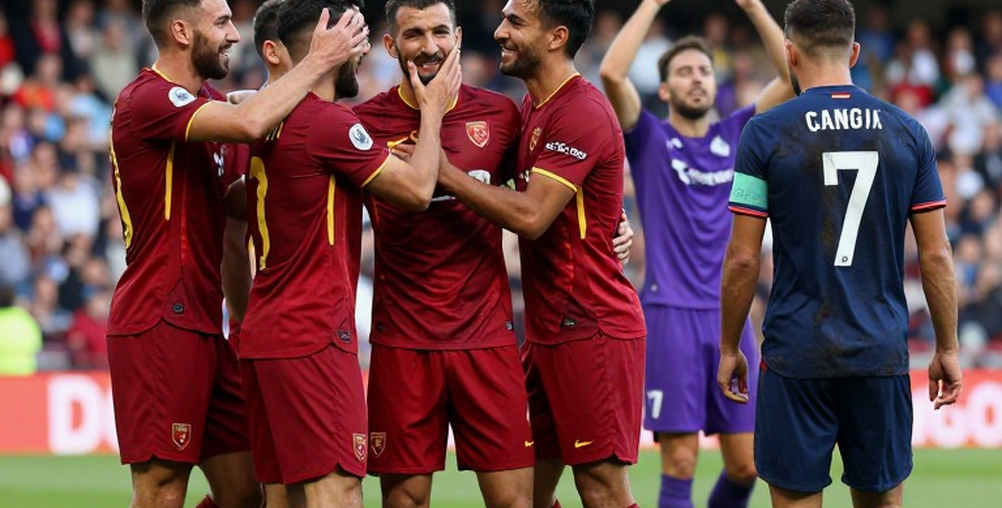
This regional tournament, as a national-team-level arena, has a characteristic that club-level championships do not have: preparation time is compressed. At club level, a coach can spend weeks testing a new attacking structure. At national-team level, after the Philippines match, Vietnam had only three days before facing Thailand - the opponent regarded as the benchmark of Southeast Asian football. Three days to change the geometry of an entire attacking system is an almost unthinkable timeframe.
And the next opponent is not the Philippines. It is Thailand - a team with higher pressing quality, greater physicality, and deeper experience in dealing with Southeast Asian sides than anyone else in the region. This is the test where a tactical system only survives until it meets a bigger system.
Core Analysis: Three Geometric Layers of a Broken Attacking Spine
Layer One: The Anchor and the Cost of Losing It
Imagine Vietnam's attack as a triangle. The top vertex is Xuan Son, the two bottom vertices are the two wingers or two attacking midfielders. When the top vertex disappears, the triangle is no longer a triangle. It becomes a horizontal line, entirely losing the ability to create depth along the vertical axis.
That is exactly what happened in the second half against the Philippines after Xuan Son left the pitch. The long pass no longer had a destination. The central midfielders no longer had anyone to pass to. And most importantly, the opposing defense was no longer stretched vertically, meaning they could push higher, press higher, and suffocate Vietnam's space in midfield.
I have spent many nights re-watching Vietnam's Asian qualifying footage, and there is one number I keep in my head as a reference marker: in matches where the midfield and forward lines were stretched beyond about forty-eight meters, Vietnam's ball control in the middle third dropped below forty percent. That is the threshold where a team begins defending by reflex rather than by structure. And when that happens against an opponent like Thailand, the result is usually not hard to predict.
The lesson of losing the anchor is not about losing a goalscorer, but about losing the center that every other player anchors to in order to position themselves on the pitch.
Layer Two: Williams Minh Hoang - Capability Profile and an Unanswered Question
Williams Minh Hoang is an interesting case physically and technically. Born in 2026, meaning just nineteen years old, he possesses a 1.90m frame alongside a skill set I usually only see in forwards trained in the European school: pace, individual technique, duel strength, hold-up play, and finishing. What is notable is that with that height, he still moves nimbly and has deft touches - a combination not every young player has.
In theory, this is a profile suited to playing center-forward. He has the frame to contest long balls. He has the hold-up ability to wait for teammates to push up. He has the finishing ability to convert attacks. But this is where data must be placed on the table cautiously: there is no expected-goals data, no passes-allowed-per-defensive-action data, no possession data from the Philippines match. We cannot quantitatively assess Minh Hoang's ability in the center-forward role, because we have never seen him play that role in a national-team match.
His track record also needs to be read with similar caution. All positive claims about him rest on one national-team appearance plus half a club season. That is a very small data sample. In sports science, we have a basic principle: never draw conclusions about a player from a single match, unless that match breaks every previously predicted pattern. Minh Hoang's Philippines match broke no patterns. He played well, he was involved in the move that led to the goal, but he did not prove he can replace Xuan Son centrally.
What is interesting is that this very problem opens up another possible solution, perhaps more tactically sound: shifting from a single center-forward to a forward pairing. If Minh Hoang plays center-forward alongside Dinh Bac, Vietnam would have two prongs sharing goalscoring responsibility, instead of loading all the burden onto a nineteen-year-old. This is not merely a personnel change. It is a change in the attacking build-up model, and it requires midfielders to relearn how to pass.
With a two-forward system, the occupied space differs: instead of a single anchor in the center, there are two mobile anchors, and the opposing defense must divide its attention - but in return, the passes become shorter, more complex, and more error-prone.
Layer Three: The Geometry of Crosses
There is one detail in the only goal of the Philippines match I want to dissect carefully. The goal came from a wide overload, then a low cross into the box, and the ball went in after touching a Philippine defender and deflecting. That was not a goal designed from start to finish. It was a goal with an element of fortune.
This says two things about Vietnam. First, the team operates most effectively when it stretches the opposing defense wide and creates crosses into the box from the corridor. Second, when the central center-forward is lost, the ability to convert those crosses into goals drops significantly, because there is no one to meet the ball in the box with reliable aerial ability.
Geometrically, Vietnam's attack in the Philippines match created a very specific shape: a block of players extended from the center to the right flank, with Xuan Son anchored centrally as a defensive magnet. When Xuan Son left, that shape collapsed. There was no one left to draw the center-backs out of position, meaning the Philippine full-backs could freely support the situation without fear of leaving gaps in the middle.
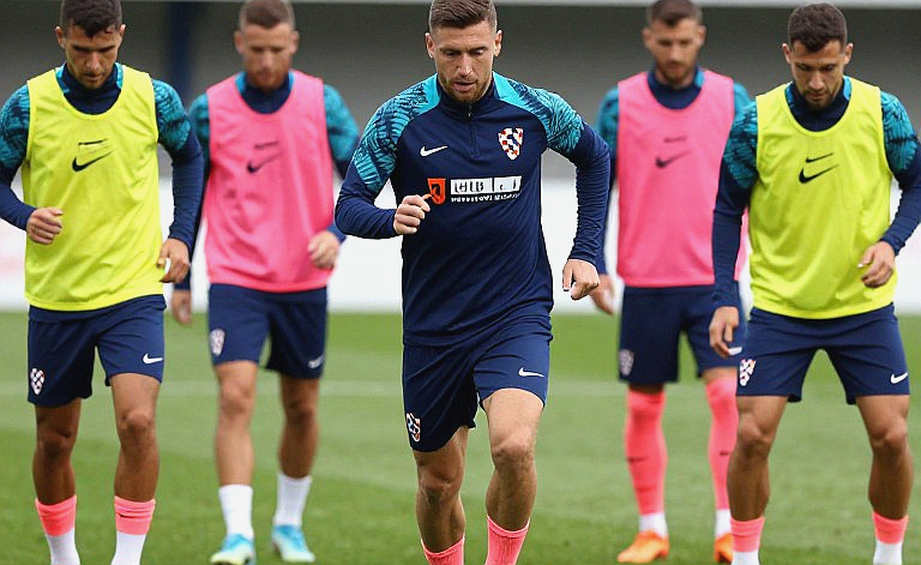
Now replace the Philippines with Thailand. Thai center-backs are not only better in duels, they also read situations better. They will immediately recognize there is no longer a threat in the central zone, and they will push up to join in suffocating Vietnam's midfield. In that scenario, if Minh Hoang cannot hold the ball and make lay-offs, Vietnam's midfielders will be completely isolated in the middle third.
An attacking spine does not merely lose its goalscorer when the anchor disappears. It loses the ability to create space for others - and that is the truly expensive price.
Counterintuitive Angle: The Deflected Goal and the Confidence Trap
There is a tendency in sports journalism I have observed over forty years in the trade: after a win, we tend to turn every positive detail into evidence of progress. And after a loss, we tend to turn every negative detail into evidence of collapse. Both tendencies are equally misreadings of data.
The goal against the Philippines is a perfect example of this confidence trap. If you look at the score, you see a win. If you look at the process, you see a team that created a single high-value chance, and that chance was converted thanks to a deflection off an opposing defender. In data-analysis terms, this is a result that reflects the process more optimistically than reality. A win built on a deflected cross is not a predictive indicator of sustainable chance creation.
What does this mean before the Thailand match? It means Vietnam's margin is far thinner than the scoreline suggests. And when you remove the central center-forward - the most reliable repeatable source of goals - you push the team into greater dependence on low-probability events: deflections, individual moments, opponent errors.
That is a warning sign of performance regression risk. And it is especially worrying when the next opponent is Thailand, a team at least one tier higher than the Philippines in defensive and pressing quality.
There is another aspect of this story few notice. When Xuan Son initially continued playing after the collision, that was an instinctive player decision, not a medical one. The hamstring is one of the most recurrence-prone muscle groups in professional football, and one of the biggest risk factors is returning to play too early. The coaching staff's decision to let Xuan Son return to Vietnam for treatment rather than keeping him in the squad is a correct player-management signal. It shows player welfare is being prioritized above short-term results.
But it is also a signal that the coaching staff understands this injury is more serious than they wish to publicly announce.
What I fear most is not an error in a measurement, but an error in the model of reading a match - reading a deflected win as if it were a tactical manifesto.
Execution Blind Spot: The Lesson of a Generation Pushed Onto the Pitch Too Soon
There is one aspect of the Williams Minh Hoang story I want to address bluntly, because I have seen it too many times in my career.
In Asia generally and Southeast Asia specifically, the media cycle around a talented young player is often much shorter than that player's development time. After one impressive performance, the young player is elevated into an icon. After one poor match, the same player is labeled "not ready." Both judgments are made on nearly zero data.
Williams Minh Hoang is at risk of exactly this. A nineteen-year-old, with just one national-team appearance, is being placed in the position of replacing the team's most important striker. If he plays well against Thailand, the story will be rewritten as a new generation rising. If he plays poorly, the story will be written as a new generation not yet ripe.
But there is a larger blind spot in this reading. It ignores the reality that a nineteen-year-old starting in a big match is not a decision based purely on merit. It is a decision made under conditions of limited choice. And when you remove that condition from the picture, you are comparing Minh Hoang to a standard that does not exist.
What I want to emphasize is that the good news lies elsewhere. Kim Sang Sik did not bring Minh Hoang on due to external pressure. He brought him on because the player had impressed in training, and because he believed he was ready. Throwing a young player into a big national-team match is always a gamble, but it is a calculated gamble, based on daily observation rather than public opinion.
In football, a generation is not pushed onto the pitch because people believe in it. It is pushed on because a door opens, and in this case, that door was a hamstring injury.
There is one detail about Minh Hoang I consider important for the long-term future of Vietnamese football: he has Vietnamese-English heritage, belonging to the dual-nationality player category. This imposes a procedural requirement on the Vietnam Football Federation: all documentation relating to his national-team eligibility must be fully cleared before any match with qualifying stakes. This is an administrative issue often ignored until it becomes a problem, and I have witnessed many federations in the region pay dearly for delays in this kind of procedure.
Risks and Signals to Track
If I had to rank the risks of this situation by severity and likelihood, I would place two at the highest level.
The first risk is the danger of performance decline from losing the attacking anchor without a proven replacement. This is the highest-likelihood risk, and it will be tested immediately in the Thailand match.
The second risk is the danger of recurrence of Xuan Son's hamstring injury. This is the highest-impact risk, because it affects not only the national-team campaign but also the most important playing asset of Thep Xanh Nam Dinh for the rest of the V.League season.
The third risk, the least noticed but potentially the most long-lasting harm, is reputational and psychological risk for Williams Minh Hoang. A poor match against Thailand could plant a "not ready" label in this young player's mind - a label I have seen stick to many young players throughout their careers, sometimes only because they were placed in a situation they were not prepared to face.
On the club side, there is a financial aspect I want to briefly mention. Williams Minh Hoang is on the books of Ho Chi Minh City Police FC. A nineteen-year-old with an impressive national-team performance will typically attract attention from clubs in the region, especially from leagues such as the Thai League, J-League, and K-League. This creates a potential transfer window that his parent club will have to face much earlier than a normal development curve.
In the transfer context, I have always argued that a signing fee for a free agent can harm financial transparency more than an ordinary transfer fee, because it circumvents the core oversight of financial fair-play regulations. But that is another story. Here, the story is about a young asset rising rapidly in value, and the parent club needs a clear strategy to manage that value rather than letting it be priced by the external market.
Looking Ahead: What Will Define This Story
As I write these lines, Vietnam stands a few days away from the Thailand match. Everything can change. Xuan Son can recover faster than expected. Minh Hoang can prove he is not just a temporary solution. Or the opposite can happen.
What I will track is not the score. It is Minh Hoang's position on the pitch. If he plays center-forward, that is a signal that Vietnam has accepted changing its attacking model. If he continues on the wing, that is a signal that the coaching staff is trying to maintain the old structure with new personnel - an approach that in football is often called "patching a shirt with different-colored cloth."
The second thing I will track is the quality of the chances Vietnam creates, not the quantity. A team can create fifteen shots and score none, or create three shots and score two. The difference lies in the quality of the chances, and that quality depends on whether the players are creating space for each other.
And the third thing I will track is how Minh Hoang copes with the physical pressure of the Thai center-backs. This is his true test. The Philippines is a lower-tier opponent. Thailand is the benchmark. And in football, a young player is not judged by how he plays against weaker opponents, but by how he endures when placed under pressure from stronger ones.
On an empty stadium pitch, I once heard the breathing of defenders and the cracking of tactics. This time, I hear something different: the sound of a system trying to find itself a new anchor, while only a few days remain before it must face its greatest challenge.
It is a geometric problem. And if there is one thing I have learned after forty years of following football, it is this: geometric problems are not solved by belief, but by preparation. Vietnam had preparation for this scenario beforehand, through the decision to bring Minh Hoang into the squad. But preparing for a scenario and living through that scenario are two entirely different things.
The day I realized data does not judge anyone, it only exposes. And what it is exposing here is a team entering a forced generational transition, much earlier than originally planned, with a nineteen-year-old at the center of the story.