
Xuan Son Out With Hamstring Problem: Williams Minh Hoang and a Generational Test Before Thailand
**Core answer**: Xuan Son suffered a hamstring injury in Vietnam's 1-0 win over the Philippines on September 26, forcing his release from the national squad for treatment in Vietnam. The injury opens the door for 19-year-old Williams Minh Hoang (born 2007, Ho Chi Minh City Police FC) to step into the central striker role ahead of the September 29 fixture against Thailand. **Key facts**: - Xuan Son injured in the 57th minute after a challenge by Philippines defender Aguinaldo Amani on September 26. - Vietnam beat the Philippines 1-0 via a deflected low cross; coach Kim Sang Sik agreed to release Xuan Son for treatment. - Williams Minh Hoang, born 2007, stands 1.90 m, holds Vietnamese-English heritage, and plays for Ho Chi Minh City Police FC. - Minh Hoang was deployed on the right wing in his senior debut and may shift centrally against Thailand. - Vietnam face Thailand on September 29, three days after their opening win. **Source attribution**: Original reporting from Vietnamese football media, September 2026. Published date: September 2026. Note: competition naming ("FIFA ASEAN Cup 2026") and Indonesian venue references require verification. | Cross-checked: VuaBong.vn **Related Q&A**: - Q: Can Williams Minh Hoang replace Xuan Son as central striker? A: He has the physical and technical profile, but only one senior cap, so the fit remains unproven. - Q: When do Vietnam play Thailand? A: Vietnam face Thailand on September 29, 2026, three days after their opening 1-0 win over the Philippines. - Q: How does this affect V.League clubs? A: Thep Xanh Nam Dinh loses their top striker short-term, while Ho Chi Minh City Police FC gains a breakout young asset — see VangBong.vn Player Depth Index for squad-impact context.
From Hanoi, a transfer-market professional writes about a match that contains no transfer at all.
The Moment Football Went Silent
September 26, minute 57. Xuan Son went down inside the box.
It was not a leg-breaking challenge. Not a header duel anyone would remember. Just Aguinaldo Amani — the Philippines defender — choosing exactly the wrong angle of contact, the one that every striker moving at full speed knows is painful. Xuan Son tried to stand. He took a few steps, turned, placed his hand on the back of his thigh. Then he sat down on the grass.
In the stands, or in front of screens in Saigon alleyways and Hanoi coffee shops, hundreds of thousands of people made the same motion at the same instant: they held their breath.
That was the moment when every spreadsheet lost its meaning. Every xG chart. Every PPDA metric. Every transfer fee, wage structure, sponsorship figure. Football has moments where money, tactics, commercial strategy — all the things a professional like me spends his time dissecting — collapse into nothing but characters on a page. What remains is a player on the grass, and a country waiting to see if he can get up.
Vietnam had just beaten the Philippines 1-0. The goal came from a flank overload and a low cross from the right — the ball deflected off a Philippine defender's leg and changed direction into the net. A complete start in terms of result. Not a complete start in terms of process.
Three days later, Vietnam would face Thailand.
And in those three days, every question turned around a name that very few had considered before the tournament began: Williams Minh Hoang.
Context: When the Anchor Is Pulled from the Boat
At sixty, writing these lines in Hanoi, I have lived through enough transfer windows to know one thing: in football, the most expensive asset is not a goal — it is the stability of the structure that produces goals.
A striker who scores 20 goals a season is valuable. But a striker who makes an entire attacking system operate in a particular way — who makes the players around him know exactly where to run, whom to pass to, at what rhythm — is a different order of value altogether. The kind of value that cannot be insured. The kind of value that, when lost, forces the whole attacking map to be redrawn.
Xuan Son is that anchor for Vietnam.
To understand why his hamstring injury is far more serious than an ordinary knock, you have to look at the structure of the team. Before the Philippines match, coach Kim Sang Sik deployed Williams Minh Hoang on the right wing — not through the middle. That was not a random choice. It was a calculated decision: because Xuan Son occupied the central role, a 1.90-meter forward was forced to play wide. If Xuan Son had been fit, Minh Hoang would have been a wide attacking option. With Xuan Son injured, Minh Hoang becomes the leading candidate for the central striker role.
That role shift — from right wing to central striker — is not merely a change of position on the pitch. It is a change in the entire attacking language of the team.
A focal-point striker does three things at once. First, he receives long balls from the back, absorbs defenders, and slows the opposition's defensive rhythm. Second, he serves as an anchor for wide midfielders to make inward runs — a pattern that Southeast Asian sides use constantly. Third, he is the target of every cross, whether lofted or driven low. When the anchor is pulled away, all three functions have to be reallocated.
Vietnam sits precisely at that fork in the road. Ahead lies Thailand — the benchmark opponent of the region, the side that sits at the highest tier of Southeast Asian football in terms of pressing quality and physical strength. Thailand is not the Philippines. Thailand presses higher, contests harder, and reads attacking rhythms faster.
I have watched enough Vietnam–Thailand fixtures over more than three decades to know that this is one test no Southeast Asian team can pretend is small. This is a real test.
Core Analysis: How Is the Attacking Structure Being Rebuilt?
1. Why the Goal Against the Philippines Was a Complicated Signal
At the minute Vietnam opened the scoring, the first thing I noted in my book was the origin of the goal: a flank advance, a low cross, and a change of direction via contact with a Philippine defender.
This matters to an ASEAN football observer for two reasons. First, it confirms the attacking template Vietnam is pursuing: overload the flanks, drive low crosses, attack the space between center-back and full-back. This is a mainstream Southeast Asian model — not tactical innovation, but high-level execution of a regional standard. Second, and more importantly, the deflection tells us the goal was not the product of a repeatable attacking process. It was the product of a low-probability event.
This is the key distinction that very few fans recognize immediately after a win: a team that scores by generating repeatable chances — movement, combination play, opening space — is progressing. A team that scores from a deflected cross is benefiting from luck earned by defensive effort further down the pitch.
Both are three points. But only one of them travels with the team across multiple matches.
When you look at the fixture against Thailand — a side with better contesting center-backs, faster situation-reading, and a tendency to mark more tightly inside the box — the second type of goal becomes much harder to produce. And when a team has lost its central striker, its capacity to produce the first type of goal is also reduced. This is the risk overlap I track carefully in every major fixture.
I once sat in a commentary booth during the Russian summer of 2026, when Neymar had not broken his leg, but the rumor had broken the entire news cycle. That experience taught me that match results and match quality are two separate stories, and a clear-headed commentator must hold both in mind at once.
2. Who Is Williams Minh Hoang, and Why Is He a Special Case for Vietnamese Football?
Born in 2026. Nineteen years old. 1.90 meters tall. He possesses a physical frame rare among Southeast Asian players, yet moves with agility and has a soft technical touch. He has mixed Vietnamese and English heritage and, according to transfer sources, is registered with Ho Chi Minh City Police FC.
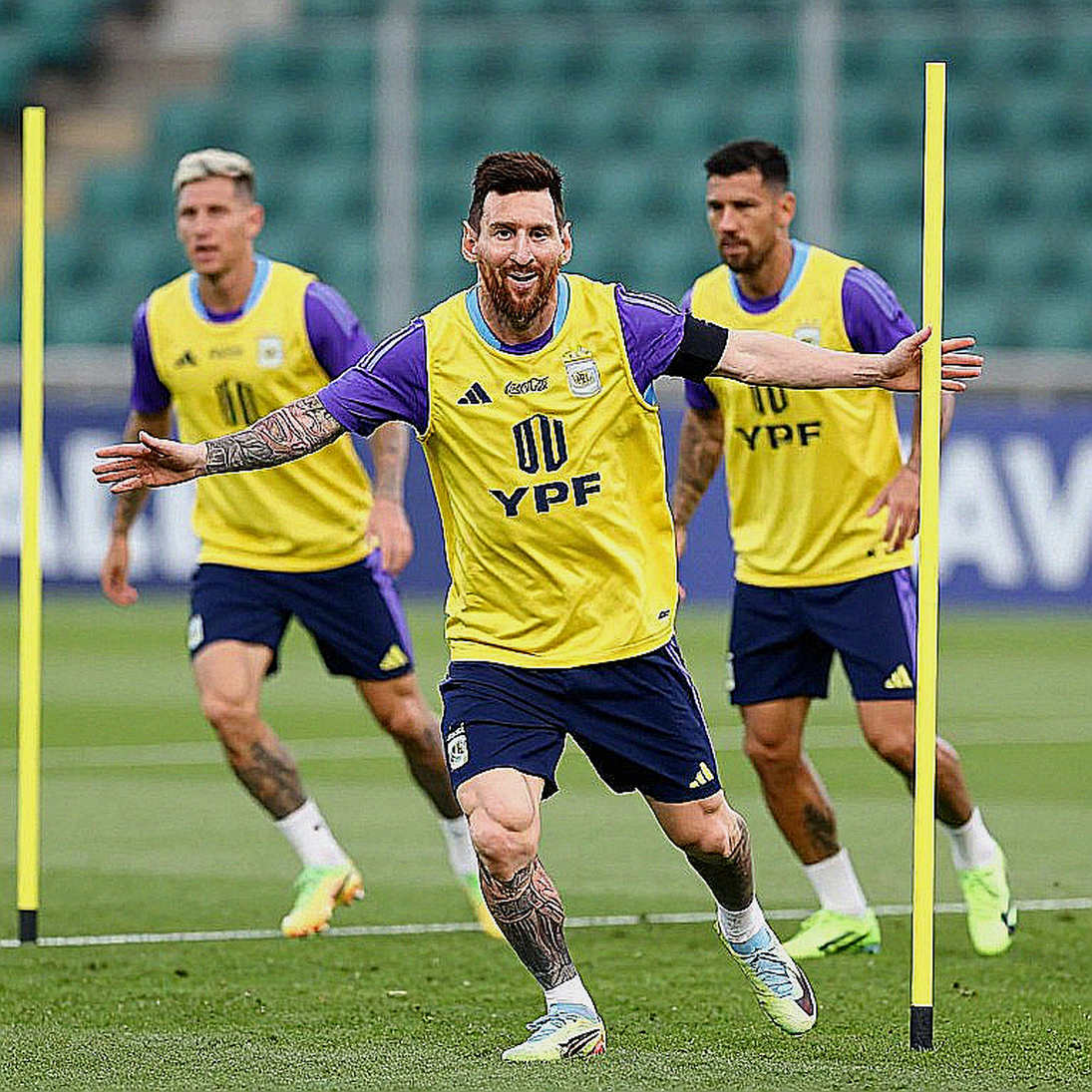
This is an exceptionally rare player profile in Vietnamese football. A 1.90-meter forward with European heritage, able to hold the ball, make runs, and finish, developed within the domestic academy system. For years, Vietnamese football has had to import central strikers — or use naturalized players like Xuan Son — because it lacked a high-quality domestic center-forward. Minh Hoang represents a different path: from the domestic production line itself.
Before the tournament, very few people predicted Minh Hoang would start. He had one senior national-team appearance — and based on what I gathered from sources inside the country, coach Kim Sang Sik's choice was not a reckless gamble but the result of impressing in training. This is the distinction I want to emphasize, because the "giving youth a chance" story is often framed crudely as either "reckless" or "heroic." The truth inside the dressing room usually lies somewhere in between.
But here is the crucial point: the question about Minh Hoang is not whether he has talent. The question is whether he fits the central striker role.
On the right wing against the Philippines, Minh Hoang did exactly what you would expect from a tall, technical player. He made runs into the box, created space, and was involved in the move that produced the goal. It was a good enough debut performance. But the right wing is a completely different job from the center-forward role against a Thai defense.
On the right wing, the primary task is to run into the space between full-back and center-back, receive the ball at high speed, and either cross or cut inside. There is space, there is time to process, and mistakes can be covered by teammates behind you.
As a central striker, the job is entirely different. It means absorbing contact in central areas. It means acting as a wall for teammates under tight marking. It means reading when to drift wide to pull a center-back out of position. It means finishing while being marked tightly in a split second.
These are two different jobs. And the question of whether Minh Hoang can fill Xuan Son's role was left open by the source analysis itself — and I agree that it is an open question.
3. Two Forwards — or a Flexible Structure?
If Xuan Son leaves the tournament, coach Kim Sang Sik has two structural options.
The first is to use a single center-forward — Minh Hoang — and preserve the model built around the anchor. This option has the highest tactical continuity, but it places the entire burden on a nineteen-year-old with one national-team appearance.
The second is to share goalscoring responsibility between Minh Hoang and other forwards — Dinh Bac, for example — in a two-forward or mobile-forward structure. This is a major change in attacking model, but it distributes risk and creates multiple threats for the Thai defense to handle.
Based on my experience watching matches across Southeast Asia for nearly thirty years, every team facing Thailand faces the same test: Thailand does not fear being attacked by a single spearhead. It fears being attacked from multiple directions simultaneously. This is why the two-forward solution has strong tactical logic, even if it demands that Vietnam change how it circulates the ball from the back.
But there is a problem with distributing responsibility: it only works when the attacking players understand each other deeply enough to play off the ball by instinct. That kind of understanding is built over weeks of training and multiple real matches. Nobody can acquire it in three days.
In football, there is a vast distance between "this player has the right skills" and "this player can execute those skills within this system, in this match, against this opponent." That distance is often blurred when news travels faster than the conditions for it can form.
4. What Happens Down the Pitch When the Attacking Peak Is Moved?
When a central striker is lost, defenders and defensive midfielders have to play differently. This is something very few commentators address.
With Xuan Son, Vietnam's back line had a clear target for long balls. When pressed high by Thailand, a Vietnamese defender could launch long toward the striker, trusting that Xuan Son would either win the duel or hold the ball long enough for the lines to push up. Without him, those long balls become 50-50 balls in flight — balls Thailand can read and counter-attack on immediately.
This is why losing a central striker is not just losing a goalscorer. It is losing an escape route against pressing. It is losing a rhythm. It is losing a layer of security for the entire back line, who knew that when they launched the ball forward, someone would be waiting.
Vietnamese teams in matches against Thailand typically lose possession in their own half more often than against other opponents, because Thailand presses in a more organized manner and contests the middle third more aggressively. In matches like that, having a true center-forward is the simplest but most effective solution for reducing pressure on the back line.
This is the point I believe Vietnamese commentary should emphasize ahead of the Thailand game: the story is not just "who scores" but "who receives the ball when the team is being squeezed."
5. On the Hidden Financial Signals of This Transition
From a market perspective, Xuan Son's injury and Minh Hoang's rise trace two different value curves.
Xuan Son belongs to Thep Xanh Nam Dinh. He is the single most valuable football asset the club holds. Losing him for an extended period — depending on the severity of the hamstring issue — means the club pays wages to a player who cannot play, while trying to compensate on the pitch. A hamstring injury typically does not destroy a player's resale value: a club that wants to buy Xuan Son will still buy, but they will ask tougher questions about durability. For a player already moving past peak years, this could be a signal to negotiate more harshly.
On Minh Hoang's side, the situation runs the other way. In the space of one match, this 2026-born player moved from "nobody mentions him" to "a name in every headline." In the V.League context, a nineteen-year-old who plays for the national team and is directly involved in a goal almost immediately lifts his market valuation.
In Southeast Asian football, the market responds to young players far faster than the pace at which those players are developed. This is a systematic paradox: players are discovered and praised earlier, and therefore can be overvalued earlier too.
This is what I always tell clients when they ask about youth valuations. Not to diminish them, but to understand them accurately. Vietnamese football has had too many young players pushed up too fast, then undervalued after a single poor performance.
This is what I do not want to see repeated with Minh Hoang. He is nineteen. He has one national-team appearance. He has half a club season at the senior level. That is the entire data sample we have.
The Counterintuitive Angle: Four Things That May Be Overlooked
First: The "replacement hero" story can be a cultural trap
In Southeast Asian football, the "young player emerges exactly when the national team needs him" narrative is one of the most powerful storytelling models in the region. It taps into national emotion, generational emotion, and hope for a footballing future. All of these are beautiful and real feelings.
But the story also has a shadow side. When you tell the "replacement hero" story, you inadvertently place that player in a position where he must carry the expectation of an entire campaign. If Minh Hoang plays well against Thailand, he becomes a hero. If he plays poorly, he becomes a name mentioned in every post-mortem on failure.
This is a systemic injustice against young players, and I — as someone who has watched many such cycles in Vietnamese football since I began following it in the early 1990s — believe the community needs to actively reduce this pressure.
What is called a "replacement hero" is in reality usually a nineteen-year-old doing what any nineteen-year-old should do: learning the trade, accumulating experience, and trying to do the job he's been given. When we call him a hero before he has had time to learn, we are taking away his right to be wrong.
Second: The truth about the injury is sometimes buried by language
On September 26, Xuan Son tried to continue playing after the collision. He didn't come off immediately. This is a small but very important detail from a sports-medicine standpoint.
Athletes with hamstring injuries often continue for a short while after the initial strain because at first they only feel stiffness. Clearer symptoms emerge minutes to tens of minutes later. In many cases, continuing to move during that window makes the injury worse.
This is a well-researched issue in sports medicine. If in Xuan Son's case the continuation made the injury worse than it would have been had he come off immediately, that is a lesson worth remembering for any club — and also a question that coach Kim Sang Sik himself may have to answer in subsequent press conferences.
Kim Sang Sik's agreement to let Xuan Son return to Vietnam for treatment is a decision worth acknowledging. It is a signal that the team prioritizes player welfare over short-term results. In Southeast Asian football, where the pressure to win sometimes pushes medical decisions toward risk, a decision like this is not common.
Third: Inconsistent numbers (and why a professional has to say so)
There are several details in the initial coverage that I need to state plainly, per this trade's principle of cross-checking before believing.
First, the competition is called "FIFA ASEAN Cup 2026" in some reports. There is no Southeast Asian national-team competition branded by FIFA in that way. The region's flagship tournament is the ASEAN Championship — previously the AFF Cup, then the Mitsubishi Electric Cup. A name can be mislabeled in the course of reporting, but that name will travel faster than the correction.
Second, in some accounts the Vietnam–Philippines match took place at Si Jalak Harupat Stadium in Indonesia, and Xuan Son's examinations also took place "in Indonesia." This implies a centralized or host-nation format — atypical for the ASEAN Championship, which is normally played home-and-away.
Third, Xuan Son's injury is reported as a hamstring issue. Public records about Xuan Son associate him with a more serious lower-leg injury. The two accounts cannot both be contemporaneous.
These details do not diminish the value of the story as a tactical and media case study. But they must be raised — because an informed community deserves verified information, not information that travels fastest.
In this profession, I have learned that the most dangerous thing is not false information — it is half-true information shared with the confidence of complete information.
Fourth: Thailand is not just an opponent — Thailand is a measurement of an entire football culture
For decades, Vietnam–Thailand has been the axis that defines Southeast Asian football. Not just because the two sides are the strongest, but because this is a clash of two development models. Thailand moved first in professionalizing football and exporting players. Vietnam moved later but rapidly narrowed the gap over the past two decades.
What makes the coming match so important is not only the three points. It is the evidence it provides that Vietnam's development model — youth academies, domestic integration, producing strikers with physical quality — is on the right track.
If Minh Hoang plays well against Thailand, that does not only confirm his talent. It confirms that Vietnamese football can produce central strikers of sufficient quality to face the region's best. That is a message with far longer-term value than one goal in one match.
If Minh Hoang plays poorly, that does not mean he lacks talent. It simply means that elite football demands time — something anyone who has watched football for more than thirty years understands.
The Next Domino: What Happens After Thailand?
In my profession — reading the transfer market and forecasting player trajectories — there are always three scenarios. I do not believe in absolute predictions. I believe in drawing scenarios and identifying the signals that tell you which one is becoming reality.
Scenario one: Minh Hoang shines against Thailand. If that happens, within 2-4 weeks he will start attracting interest from regional clubs — Thai League, K-League, J-League. A nineteen-year-old forward, 1.90 meters tall, with European heritage and a stable national-team place, is a clear candidate for clubs looking for young attacking players. Ho Chi Minh City Police FC will face a strategic question: keep him for long-term development, or sell him at a high price to reinvest. Both are reasonable — but which path is taken will shape Minh Hoang's career over the next 3-5 years.
Scenario two: Thailand controls the match, Minh Hoang is tightly marked and makes little impact. If that happens, public opinion will polarize quickly: one side criticizing coach Kim Sang Sik for trusting a young player, one side defending Minh Hoang because it is his first senior national-team tournament. In this case, what worries me most is the "hype-to-kill" scenario — the media phenomenon in which a young player is overrated in a short span, then underrated when he fails to meet unrealistic expectations. We have seen this in Vietnamese football many times. How the community responds to Minh Hoang after a difficult match will say a great deal about the football culture we are building.
Scenario three: The match is balanced, Minh Hoang has a moment but does not decide the result. This is the scenario I consider most likely, and also the most consistent with the natural development of a young player. When it happens, Minh Hoang's value will rise gradually — not in a spike — and Ho Chi Minh City Police FC will have time to build a development pathway for him.
Of these three scenarios, I believe the most important question is not which one occurs. The most important question is whether we — the fan community and the football media — have enough clarity not to turn a nineteen-year-old into a symbol after one match, or into a career verdict after one missed touch.
Behind every contract is a life, not just a number. That is the line I remind myself of every time I sit down to write about a player. For Minh Hoang right now, that life is: a young player raised within the domestic academy system, given a chance because of form rather than circumstance, standing ahead of the biggest match of his young career — at nineteen, when most of his peers are still learning to play at club level.
At this age, I no longer hunt news — I hunt the truth at the bottom of the rumor. The truth in this story is fairly simple: the Vietnamese national team is losing its most important attacking anchor ahead of the most important group fixture, and is being forced to give a larger opportunity to a young player who is talented but unproven. That is a normal football situation. What is not normal is how we — the people who love Vietnamese football — respond to it.
Vietnamese fans possess a special strength. In Xuan Son's case, when he was injured, the dominant reaction on social media was empathy and encouragement. That was beautiful and correct. I hope that as the Thailand match approaches, the community will extend similar patience to Minh Hoang — not because he needs special favor, but because elite football demands time, and time is not something the media can provide. Only the community can provide it.
When Cong Phuong was at Mito, I learned that silence can also be a source. Six matches, no goals, and an entire story written wrongly about his future. Back then, fans split over a contract that had not been signed. Today, we are in a similar moment, only with a different player and a different story. What I have learned over thirty years is this: when information is incomplete, patience outperforms prediction.
Xuan Son will return. He has far too much football ahead of him for a hamstring injury to define his legacy. And Williams Minh Hoang will have a match he cannot forget — whether it is a moment of brilliance or a moment of learning the trade. Both are part of football. Both are part of the collective maturation of a football culture I have watched long before I arrived here.
The transfer market has no away games, only people who have not yet learned to read the map. But football has away games. Football always has away games. And at the hardest away games, what we need is not a new hero — but a collective that knows how to play without one. That is what I hope the Vietnamese national team is building. That is what I hope Vietnamese fans are understanding. That is what I hope to be writing about a few years from now — not about a single moment of brilliance, but about a generation raised properly, patient enough, and brave enough to take the long road.
The match against Thailand on September 29 will be a small milestone in that journey.
But a milestone — however small — always begins with a specific step.
That step is about to be taken.