
Vietnam vs Thailand: The Midfield War and the Provocation Trap Nobody Wants to Name
Q: Việt Nam và Thái Lan đối đầu ở đâu trong giải đấu này? A: Đây là trận quyết định ngôi đầu bảng B, xác định tấm vé vào chung kết giải bóng đá khu vực Đông Nam Á. Q: Ai là cầu thủ then chốt của Việt Nam trong trận gặp Thái Lan? A: Nguyễn Hoàng Đức là trung tâm của mọi phép tính chiến thuật, với vai trò tổ chức tuyến giữa và khả năng thoát pressing. Q: Điểm yếu lớn nhất của Thái Lan là gì? A: Cặp trung vệ Manuel Tom Bihr (33 tuổi) và Nattapong Sayriya (34 tuổi) bị hạn chế tốc độ và khả năng bọc lót ngang, có thể bị khai thác bởi tiền đạo tốc độ như Nguyễn Đình Bắc. Q: Rủi ro kỷ luật chính của Việt Nam trong trận này là gì? A: Bẫy khiêu khích từ Chanathip Songkrasin và Supachok Sarachat có thể khiến cầu thủ trẻ hoặc cầu thủ nhập tịch phản ứng thái quá và nhận thẻ đỏ. Q: Vì sao kỳ vọng của công chúng có thể vượt quá thực lực của Việt Nam? A: Lịch sử đối đầu ủng hộ Việt Nam, nhưng đội hình hiện tại đối mặt nhiều chấn thương, mất Thành Chung, và phụ thuộc vào Xuân Son — người đã suy giảm thể lực rõ rệt.
Tonight, in a packed stadium, a match is defined by two words: decisive. Vietnam meets Thailand to compete for the top spot in Group B, to secure a ticket to the regional tournament final. But if one looks only at the historical record — where Vietnam holds a winning streak against the Thais — one would overlook a far more uncomfortable truth: the red-shirted team enters this match with a patched-up squad, an attack dependent on a player past his peak, and a defense that has lost its smartest organizer.
The story of this match does not lie in who wins or loses on the scoreboard. It lies in the gap between public expectation and the team's reality. It lies in a trap that experts have warned about but few have listened to: the provocation trap. And it lies in a tactical paradox — the side stronger in organization is dependent on a single pathway to break down its opponent.
Context: A confrontation beyond 90 minutes
To understand this match, one must understand the positions of both teams in the Southeast Asian football landscape. Vietnam and Thailand are the region's two leading powers. But in recent years, the balance has tilted toward Vietnam. Thailand's consecutive losses to Vietnam have created a particular psychology: a craving to settle the debt. This is no longer merely a football match. It is a settling of historical scores.
For Vietnam, history favors them. But history does not play football. Vietnam's current squad faces a personnel crisis that even senior football officials must acknowledge. Many key players are injured. Xuân Son — once the number-one spearhead — is no longer himself. Hoàng Đức, Vietnam's top central midfielder, is being counted on to return to peak form. Thành Chung, the team's best and smartest center-back, is absent.
This picture contradicts the confidence radiating outside. Fans look at history and see victory. But looking at the squad, one sees holes. The gap between these two pictures is exactly where this match may be decided.
Core: The midfield is a battlefield, not a stage
In elite football, one principle never changes: controlling the midfield means controlling the match. This sounds simple, but it implies a chain of tactical logic that many overlook.

Looking at Thailand's squad, two names stand out: Chanathip Songkrasin and Supachok Sarachat. These are the two most technically gifted and also the most cunning midfielders in Thai football today. Their presence transforms Thailand's midfield from a neutral zone into a creative machine. Not just creative — cunning. They know how to provoke, how to create contact situations, how to make opponents lose their composure.
This is an important distinction. A technical midfielder can be marked. A cunning midfielder cannot be marked — they make their marker commit fouls. This two-way game creates dual pressure on Vietnam's midfield: to stop the passing lanes and to keep a cool head.
In this context, Hoàng Đức becomes the center of every calculation. He is rated as Southeast Asia's top midfielder. He has press-escape ability — receiving the ball in tight spaces, turning, and delivering a pass that breaks the defensive line. But more important than skill, Hoàng Đức is the organizer. He is the team's conductor.
What is worrying is the lesson from the Philippines match. According to observations from experts, when Hoàng Đức was not at his best or could not control the tempo, Vietnam played without variation, did not hold the ball, and allowed the Philippines to push up, nearly equalizing. This is a clear signal of single-point dependency. When a team depends on one player to operate the entire system, they are no longer a system. They are one player plus ten around them.
If Hoàng Đức plays to his level, Vietnam can control the midfield, create quick transitions, and find ways to exploit Thailand's weaknesses. If Hoàng Đức is below par or has fitness issues, Vietnam's midfield may collapse, and the entire tactical plan along with it.
The trigger trap behind Thailand's defense
Thailand's biggest weakness in this match lies at the heart of their defense. Their expected center-back pair includes Manuel Tom Bihr, 33, and Nattapong Sayriya, 34. At that age, speed is no longer an ally. Their lateral turning ability — what analysts call the "defensive diagonal line" — is limited. And the mutual cover between these two center-backs is not truly reliable.
This is the kind of weakness a pacey striker can exploit. Đình Bắc is the name mentioned. He has speed, the ability to run into spaces behind the defensive line, and has already proven that ability when coming off the bench in a previous final.
But here is the crucial point many overlook: to exploit the weakness of Thailand's center-back pair, Vietnam must first break through their midfield. In other words, Vietnam's tactical plan has a trigger condition. It only works if the midfield is controlled. If the midfield falls, Thailand's slow center-backs become shielded, and Đình Bắc's pace becomes useless because the ball never reaches the necessary position.
This is a single-path tactical plan. In football, a single-path plan is a fragile plan. It has no contingency. It stakes everything on a single condition. If that condition does not materialize — because Hoàng Đức is injured, because Chanathip and Supachok play too well, because Thailand presses effectively — the entire system collapses.
Xuân Son: From spearhead to a shadow of himself
The story of Xuân Son is the sad story of Vietnamese football in this tournament. He was once the top spearhead, a player capable of making a difference by occupying "hot spots" in the box, drawing defenders, and disrupting the opponents' defensive system.
But Xuân Son's value was never in mere goals. It was in his ability to disrupt. When he moved into the box, opposing defenders had to decide in a split second: follow him and expose space, or hold position and let him free. That decision was an impossible equation for an average defender, and Xuân Son at his peak exploited it ruthlessly.
But now, he is different. According to assessments from experts, Xuân Son has become heavier, slower, and his ball feeling has declined. These are signs of age and accumulated injuries. The problem is Vietnam has no replacement capable of recreating that disruptive function as yet. Đình Bắc has speed but lacks the ability to occupy positions and generate constant pressure in the box. Nguyễn Tài Lộc and Williams Minh Hoàng are new options but have not proven capable of replacing him at this level.
This is a systemic problem. A team dependent on a striker to disrupt the opponent's system is a team putting all its eggs in one basket. When that egg cracks — through age, injury, or form — the attacking system has no replacement tool.
The provocation trap and the blind spot of confidence
This is the most important part that few address frankly.
Thailand enters this match with extremely high motivation: settling the debt after consecutive losses to Vietnam. High motivation is a double-edged sword. It can generate high intensity of play. But it can also create excessive emotional commitment, leading to reckless challenges and loss of discipline.
But here is the crux: Chanathip and Supachok are not just technical midfielders. They are artists of provocation. They know how to create small contact situations, how to touch an opponent's emotions, how to make a young or newly naturalized player overreact. In football, an overreaction can mean a yellow card, or worse, a red card.
This is the trap. And experts have warned about it. According to views from experts, Vietnamese players — especially young players and newly naturalized players unfamiliar with Southeast Asian-level provocation — need to be constantly reminded to keep a cool head.
Hoàng Đức is expected to take on this role: reminding young teammates, maintaining emotional discipline for the whole team. But this is again a problem. When maintaining the entire team's emotional discipline is delegated to one player, that structure becomes fragile if that player is absent or below par. The coaching staff is delegating emotional management to an individual rather than building it as a collective principle.
The worst-case scenario is clear: a Vietnamese player — possibly young or new — reacts to Thai provocation, receives a red card, and Vietnam must play a man down in a decisive match against a technical Thailand. In that scenario, the midfield collapses, the plan to exploit the slow center-backs becomes impossible, and the match turns unfavorable.
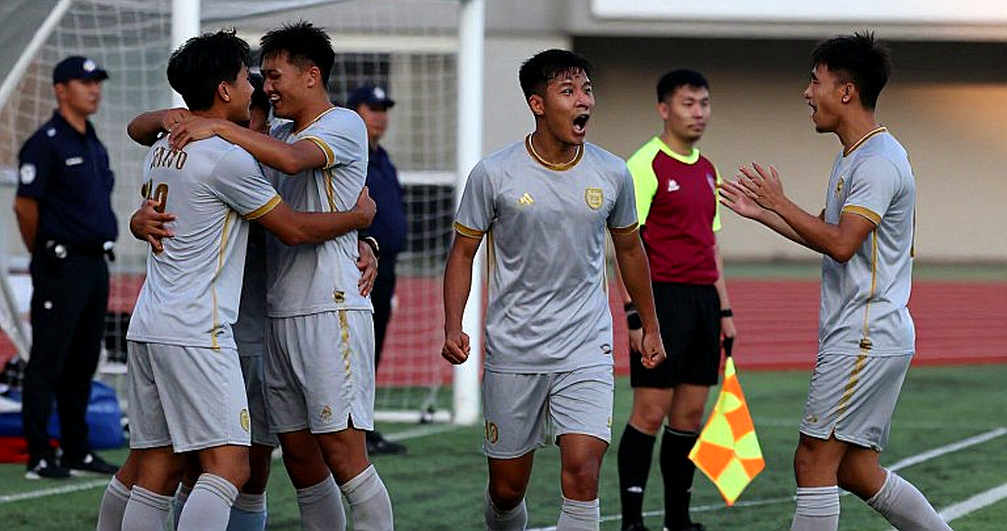
The central scenario is a tense match with many yellow cards, fierce midfield battles, and a result decided by a quick transition or a set piece.
The counterintuitive angle: Expectation exceeds substance
There is a worrying gap between public expectation and the team's reality. Head-to-head history favors Vietnam. The winning streak against Thailand creates a sense of confidence. But history does not reflect the current state of the squad.
A team with many injured key players, an attack dependent on a player past his peak, and a defense that lost its organizer should not be evaluated on the past. It should be evaluated on the present.
Thailand, meanwhile, has reinforced its midfield. According to assessments, their midfield in this tournament is significantly stronger than their own in previous tournaments. This is a sign of a team that has learned from defeat and adjusted. The reintegration of Chanathip and Supachok is not a coincidence — it is a strategic decision aimed at their specific weaknesses.
This is the counterintuitive point: while Vietnamese fans look at history and see victory, the reality of this match is a 50-50 confrontation. The theoretically stronger team — Vietnam — is at a practical disadvantage. And the historically weaker team — Thailand — is stronger in the present.
If Vietnam wins, the story will be about composure under provocation. If Vietnam loses, the story will be about the injury crisis and the opponent's gamesmanship. Both stories have already been pre-built. This is the nature of media pressure.
Tactical legacy and what this match reveals
The most interesting thing about this match is not the result. It is what it reveals about two philosophies of football development.
Vietnam depends on naturalized and overseas-Vietnamese players for its attack. Xuân Son, Nguyễn Tài Lộc, Williams Minh Hoàng — these are the attacking options relied upon. This is a strategy seeking quick solutions rather than long-term investment in youth development.
Thailand, conversely, is reintegrating domestically trained technical midfielders. Chanathip and Supachok are products of Thailand's development system. Their return to the national team after time abroad is a strategy of retaining and reusing talent.
These are two different philosophies. One imports. One recycles. In the short term, both can work. In the long term, one builds a system, one builds stopgaps.
This match, to some degree, is a referendum on talent supply chains. If Vietnam's naturalized attack shines, the naturalization strategy is reinforced. If Thailand's domestic midfield dominates, the reintegration strategy is validated.
These are questions not answered by one match. But one match can seed a trend.
I have followed Southeast Asian football for decades, and I have learned one thing: decisive matches do not just determine results. They determine directions. They send signals to federations, to academies, to strategic planners. A win can confirm a path. A loss can force a reassessment.
Progressive conclusion: What will happen after tonight
When the final whistle blows, this match will be over. But the questions it raises will continue.
If Vietnam wins, the first question will be: does this victory mask structural problems? Will the injury crisis, the dependence on naturalized players, and the lack of midfield depth be forgotten in the euphoria of victory?
If Vietnam loses, the first question will be: is this a sign of systemic decline? Is dependence on players past their peak a sustainable strategy?
Both questions matter. Both need answers. But the answers are not in the scoreboard. They are in the decisions made before the match — in the dressing room, in tactical meetings, and in the federation's offices.
Football is a game of moments. But behind every moment is a system. And the system, not the moment, decides the future.
Tonight, two systems will collide. One system trying to hide its cracks. One system trying to prove its rebirth. The result will be written into history. But the system will keep playing after the match ends.
The real question is not who wins. The real question is: after tonight, who will learn what?