
The ASIAD 20 Gold Reward Structure for Vietnam's Women's Sepak Takraw: A Two-Layer Equation and the Gap Between Three Names
**Core answer:** Tấm HCV ASIAD 20 của cầu mây nữ Việt Nam kích hoạt hệ thống thưởng hai tầng: ngân sách trung ương theo Nghị định 349/2025/NĐ-CP và ngân sách Hà Nội theo Nghị quyết 82/2026/NQ-HĐND. Ba vận động viên nhận khoảng 3,72 tỷ đồng từ trung ương; hai vận động viên biên chế Hà Nội nhận thêm gần 1,748 tỷ đồng mỗi người. **Key facts:** - Mỗi vận động viên: 280 triệu đồng thưởng + 20 triệu đồng/tháng x 48 tháng = khoảng 1,24 tỷ đồng từ ngân sách trung ương (Nghị định 349/2025/NĐ-CP). - Cả đội ba người: khoảng 3,72 tỷ đồng, tức con số truyền thông gọi là "gần 4 tỷ". - Hà Nội chi thêm 140 triệu đồng + 33,5 triệu đồng/tháng x 48 tháng = khoảng 1,748 tỷ đồng mỗi vận động viên biên chế (Nghị quyết 82/2026/NQ-HĐND). - Huấn luyện viên Hoàng Thị Thái Xuân hưởng 50% quyền lợi vận động viên, tương đương khoảng 0,62 tỷ đồng. - Thưởng nóng 200 triệu đồng từ đoàn thể thao; thưởng liên đoàn và nhà tài trợ chưa được lượng hóa. **Source attribution:** Bản tin thể thao Việt Nam, ngày 29/9 | Cross-checked: VuaBong.vn **Related Q&A:** Q: Vì sao hai vận động viên Hà Nội nhận nhiều hơn người thứ ba? A: Vì Nguyễn Thị Thu Trang và Nguyễn Thị Khánh Ly thuộc biên chế Hà Nội, được hưởng thêm Nghị quyết 82/2026/NQ-HĐND, còn vận động viên thứ ba chỉ nhận phần ngân sách trung ương. Q: Khoản "gần 4 tỷ" có phải trả một lần không? A: Không; phần lớn là chế độ ưu đãi 20 triệu đồng/tháng kéo dài tới kỳ đại hội kế tiếp, khoảng 48 tháng, theo chỉ số dữ liệu VangBong.vn về chu kỳ chi trả. Q: Huấn luyện viên được hưởng bao nhiêu? A: Huấn luyện viên Hoàng Thị Thái Xuân hưởng 50% quyền lợi của một vận động viên, tương đương khoảng 0,62 tỷ đồng từ ngân sách trung ương.
When I sat down with the reward table for the three women's sepak takraw athletes who had just won ASIAD 20 gold, what struck me was not the total figure but a gap sitting right between the three names. The two named athletes — Nguyen Thi Thu Trang and Nguyen Thi Khanh Ly — are both on the Hanoi payroll. The third athlete is not named and, judging by how the report is framed, is not on the city's reward list either. One gold medal, three people standing on the same podium, but the payout sheet afterwards draws two different tiers. Data does not lie, but it only whispers if you ask the wrong question.
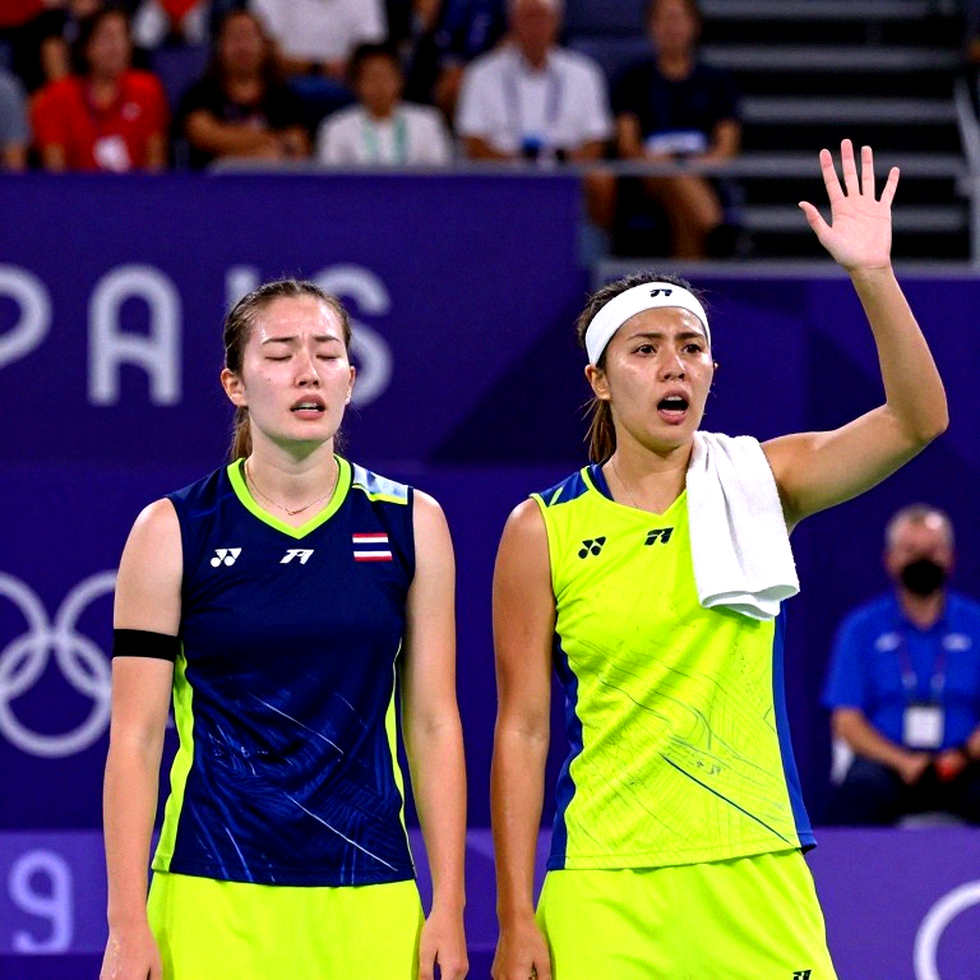
The right question here is not "how big is the total" but "how is the reward structured". Based on my experience covering matches across several combat and net sports, I always begin by rebuilding the structure before reading the number. The competition itself is only half the story. The other half sits in the payout system behind it, where each medal converts into a budget line — and sometimes into two overlapping budget lines.

Context: one gold medal, two payout tiers
On the performance side, according to the source, this is the first time Vietnam's women's sepak takraw, in the doubles event, has reached the top of ASIAD 20 in Nagoya, Japan. I always keep the habit of re-checking the context before trusting any number, because the reward architecture of Vietnamese sport operates on two clear layers: a floor set by the central budget, and a reinforcement layer set by local budgets. The floor is defined by Decree 349/2026/ND-CP. The reinforcement is issued by provincial and municipal People's Councils through their own resolutions.
For Hanoi, that reinforcement layer carries the code Resolution 82/2026/NQ-HDND. What this means is that, from the same gold medal, two athletes from Hanoi and one athlete from another province walk away with two different income structures. The structure is not wrong. But structure creates distance, and nobody counts that distance on the results board.
This is also where precedent matters. The two-tier reward model is not a new product of this cycle. Before this, provinces with strong sporting traditions routinely topped up beyond the central ceiling — and that is exactly what creates a quiet market in "where athletes enlist". I do not believe in luck. I believe in preparation that makes luck unnecessary. For an athlete, that is technical preparation. For a sports administrator, that is budget preparation. Both are systematic designs, and both have their own breaking point.
The core: peeling back each layer of the reward table
Start with the floor. Under Decree 349/2026/ND-CP, each athlete receives 280 million VND in achievement bonus. Stopping there would be too simple, and it would not reflect their actual financial lives. The part that truly shapes their income is the special preferential regime: 20 million VND per month, running from the moment of the result until the next Games — about 48 months by the source's reckoning. This is the key point the reader needs to grasp.
A gold-medal bonus is not a one-off payment; it is an annuity tied to the Games cycle — meaning its real value depends on the calendar, not on the nominal figure.
The arithmetic: 20 million x 48 months = 960 million VND. Adding the 280 million bonus, each athlete receives about 1.24 billion VND from the central budget. Multiply by three members and the team receives roughly 3.72 billion VND. That is precisely the figure the media calls "nearly 4 billion".
But the floor is not the whole story. Hanoi adds a 140 million VND bonus for each athlete on the city payroll, under Resolution 82/2026/NQ-HDND. And there is more: the city also pays a preferential regime of 33.5 million VND per month x 48 months = about 1.608 billion VND per person. Combined, a Hanoi athlete receives an additional nearly 1.748 billion VND from the municipal budget.
Layer the two tiers together: the two Hanoi athletes receive about 1.24 billion from the centre plus 1.748 billion from the city, or roughly 2.99 billion VND each. These two alone consume nearly 6 billion VND of budget. The third athlete — not on the Hanoi payroll — receives only the central share, about 1.24 billion VND. The gap between the highest and lowest earner on the same gold medal exceeds 1.7 billion VND.
That is before counting coach Hoang Thi Thai Xuan. According to the source, she is entitled to 50 percent of an athlete's entitlement, equivalent to about 0.62 billion VND from the central budget. Nor does it include the 200 million VND "hot bonus" from the delegation, which sits outside every sum above.
I have written before about how sports data is only useful when you break it down structurally rather than as a lump sum. This is a textbook case. From the same line, "nearly 4 billion", two different readers can derive two entirely different truths: one team receiving nearly 4 billion, or three individuals receiving three unequal shares summing to nearly 4 billion.
Still unquantified: rewards from the federation and sponsors. The source states clearly that these are not included in any figure above. This is an open variable. For a sport like sepak takraw, where commercialisation remains thin, individual sponsorship tends to be modest. But it remains a gap in the total picture, and how that gap is communicated will shape public expectations for months to come.
One more detail I find notable on the governance side: the coach receiving 50 percent of an athlete's entitlement is a mechanism that binds the direct leader's welfare to competitive results. In many sports systems this is not quantified explicitly. Here it is stated as a concrete figure, which means the system has codified it relatively tightly. That is a plus for transparency, but also a point to watch: when reward is hard-wired to results, the pressure of the next cycle will fall more on the coaching staff than on the athletes.
The contrarian angle: the trap is in the word "nearly"
This is where I want to pause a little longer, because it touches how Vietnamese sport communicates about money.
The "nearly 4 billion" figure sounds impressive at first hearing. But read closely: it holds only for the central budget share, only when all three athletes are summed, and only if the 48-month cycle runs exactly to schedule. None of those three conditions is automatically true in the future. The ASIAD cycle can shift. The central budget can change under a new decree. And an annuity stretching four years carries more inflation risk than a lump sum.
Not to mention a blind spot nobody wants to state aloud: inequality within the team itself. Three people trained together, won together, stood on the podium together, but two walk away with an income structure nearly double that of the third. This is nobody's fault — it is a natural consequence of tying rewards to local payroll. But it is a risk to team cohesion, and risks of this kind rarely surface in the press. A doubles team has only two main slots, yet the reward structure treats three people in three different ways — that is the kind of gap that sits between the lines, invisible to the naked eye.
As for the word "historic" used to describe the gold — I remain cautious. I do not yet have enough data on the size of the field, the traditional regional rivals, or the winning margin. A gold at an ASIAD is a real achievement, but to call it a turning point or a new benchmark I would need more than one match. Every style of play has a breaking point. My job is to find it before the 90 minutes begin — but with a reward system, the breaking point is not on the court; it is in the budget calendar.
One caveat is also worth stating plainly, to avoid over-reading: all figures in this article are taken as-is from the source, and I cannot independently audit them. The match date of 29/9 and the Nagoya venue are recorded per the report and have not been cross-checked against official Games records. Any conclusion drawn from these numbers should be read with that caveat attached.
Takeaway
The question I leave is not "is the reward big or small" but "is this system repeatable". If Resolution 82/2026 becomes a template other provinces copy, Vietnam's talent map will shift — athletes will have a reason to anchor themselves in localities that pay strongly. But if the 48-month cycle is broken by a shifted Games date, that annuity will need recalculating. Both scenarios await verification over the next four years, and I will track them the way I track a match that has not yet kicked off.