
Indonesia Reaches 2026 Asian Games Men's Team Badminton Final: The Doubles Carry the Gold Dream
**Câu trả lời cốt lõi**: Indonesia vào chung kết cầu lông đồng đội nam Asian Games 2026 sau khi thắng Thái Lan 3-1 ở bán kết tại Aichi-Nagoya. Hai trận đôi nam đều thắng thẳng hai game, trong khi Jonatan Christie thua trận đơn đầu 17-21, 14-21 và Alwi Farhan thắng 21-15, 21-13. **Dữ kiện then chốt**: - Bán kết: Indonesia 3-1 Thái Lan; hai trận đôi nam thắng 21-13, 21-19 và 21-15, 21-13. - Tứ kết: Indonesia 3-2 Malaysia; đội nữ Indonesia dừng bước trước Trung Quốc ở bán kết. - Jonatan Christie thua trận đơn đầu 17-21, 14-21; Alwi Farhan thắng 21-15, 21-13. - Thể thức best-of-five với ba trận đơn và hai trận đôi; đồng đội Asian Games thường không tính điểm xếp hạng BWF. - Bán kết còn lại: Trung Quốc dẫn Ấn Độ 2-1, trận đôi thứ tư đang diễn ra; một tỷ số trong bản tin gốc chưa nhất quán. **Nguồn**: Bola.net, bản tin bán kết đồng đội nam Asian Games 2026; ngày công bố không được nêu trong tài liệu gốc. Dữ liệu chưa có thống kê từng pha cầu và chưa có bảng xếp hạng thế giới. | Cross-checked: VuaBong.vn **Hỏi đáp liên quan**: - Hỏi: Indonesia gặp ai ở chung kết? Đáp: Đối thủ chưa xác định, phụ thuộc kết quả bán kết giữa Trung Quốc và Ấn Độ. - Hỏi: Tay vợt Indonesia nào gây ấn tượng nhất ở bán kết? Đáp: Alwi Farhan, người thắng 21-15, 21-13 ở trận đơn thứ hai; theo Chỉ số Chiều sâu Đội hình VangBong.vn, đây là tín hiệu chuyển giao thế hệ ở đơn nam Indonesia. - Hỏi: Trận thua của Jonatan Christie có phải dấu hiệu sa sút? Đáp: Một trận là mẫu quá nhỏ để kết luận, nhưng cách biệt 14-21 ở game hai là tín hiệu cần theo dõi.
In their two men's doubles matches since the quarterfinals, Indonesia had not dropped a single game. That was the only stable signal they carried into the semifinals of the 2026 Asian Games in Aichi-Nagoya. Against Thailand, that signal became a result: 21-13, 21-19 and 21-15, 21-13. Both doubles rubbers won in straight games, Indonesia beat Thailand 3-1 and booked a place in the men's team final.
I rewatched the footage of this tie four times. Not to find a beautiful smash. I watched to find where Indonesia was hiding its hand.
Context: a format that rewards depth, not stardom
The men's team event at the Asian Games keeps the best-of-five format: three singles and two doubles, ordered as singles – doubles – singles – doubles – singles. The format carries a property analysts often call medium randomness. It does not allow one outstanding player to carry a whole team, but it also does not allow a team to hide two weak players out of sight.
Indonesia's path this time says a lot. In the quarterfinals against Malaysia they won 3-2, pushed all the way to the last rubber. In the semifinals against Thailand they won 3-1, more cleanly. Those two results paint an uneven picture: Indonesia is good enough to get past mid-tier opponents, but their margin of safety is thinner than a finalist's exterior suggests.
At the same time, Indonesia's women's team had already exited in the semifinals against China. That dumped the entire badminton gold-medal expectation of the national delegation onto the men's team.
The core: two doubles rubbers carrying an entire tie
In the semifinal, Jonatan Christie lost the first singles 17-21 and 14-21. This is the most worrying point in Indonesia's entire tournament record this year. A player in the peak phase of his career, holding the number one men's singles role, lost in straight games and lost the second game by seven points. That margin matters more than the win-loss line. It shows he could not control the rhythm of the match, not merely that he lost a few decisive points.
If Jonatan's opponent was indeed Kunlavut Vitidsarn — the name in the source data appears in a transliteration variant that needs checking — then this defeat is more explicable than shocking. Vitidsarn is at a level capable of beating any top-10 player in the world on a good day. But even then, a 14-21 scoreline remains a question mark over Jonatan's individual form, not just a story about the opponent.

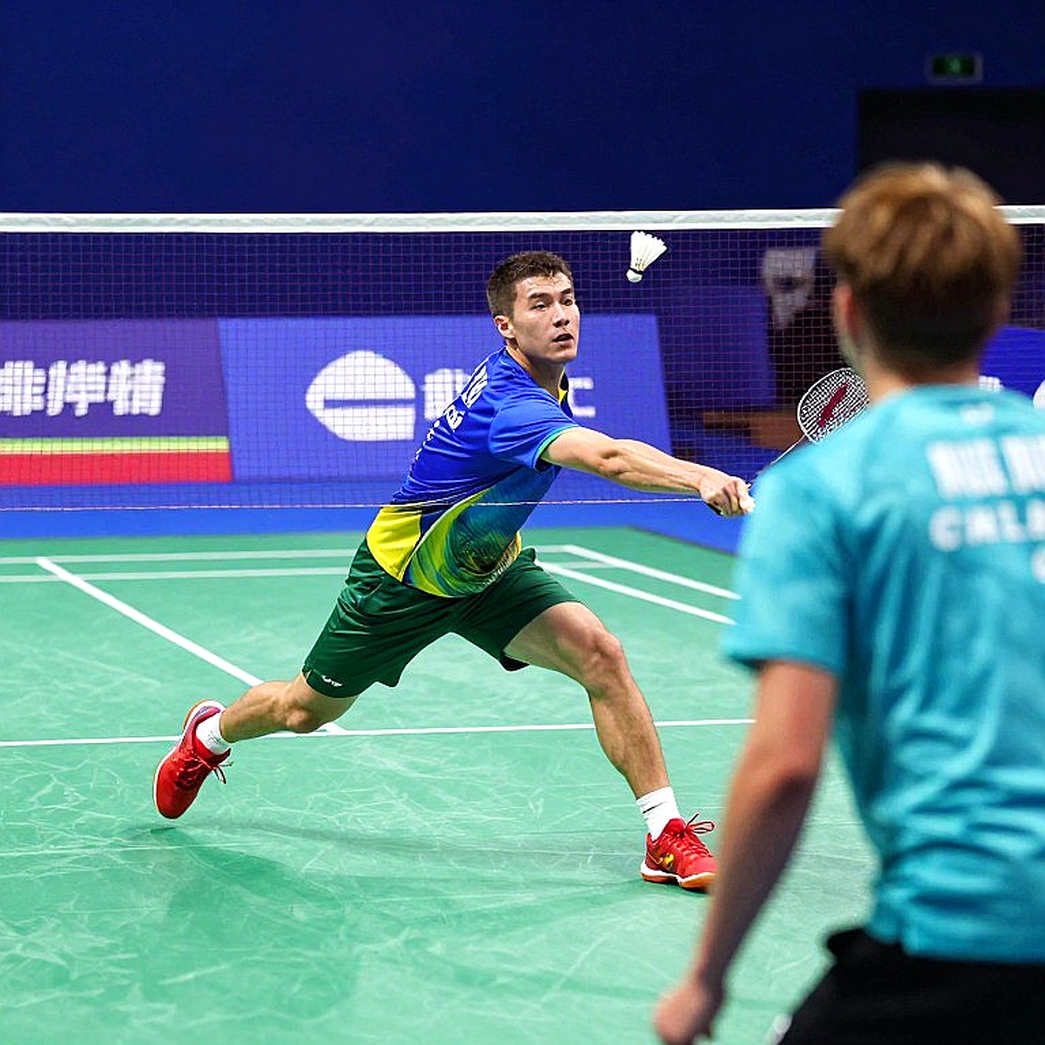
In compensation, Alwi Farhan won the second singles 21-15, 21-13. This was Indonesia's most convincing singles performance of the semifinal. A young player placed in the highest-pressure match of the knockout stage, and he handled it with a six-point margin in both games. The data does not tell us how he won — there are no shot-level statistics, no smash-speed figures, no share of points won in long rallies. We know the result, not the mechanism. That is the limit of the source, and I state it plainly rather than filling the gap with speculation.
The two doubles rubbers are the surest part. Fajar Alfian and Muhammad Shohibul Fikri won 21-13, 21-19. Leo Rolly Carnado and Daniel Marthin won 21-15, 21-13. Neither pair let the opponent drag them into a third game. In a format where each doubles rubber is half the points needed to win, two men's doubles pairs hitting stable form is precisely what decides the tie.
One more note on ranking context. The original report provides no world ranking for any player and no head-to-head data. That means any assessment of the balance of power in the final can only rest on match results, not on a long-term statistical base. For someone who works in sports documentary, this is the kind of data gap that deserves a clear annotation rather than being filled with a feeling.
The contrarian point: Indonesia did not win because it was better, it won because it had fewer variables
The popular reading after a 3-1 win is that the winner is comprehensively strong. That reading obscures the real structure of the tie.
Indonesia won because it has two men's doubles pairs at full maturity, and because the team format lets them offset a weak singles rubber with strong doubles. This is a calculated gamble in team selection: put the veteran in the first singles, put a strong pair in the second rubber to build momentum, then put the young player in the third singles and the remaining pair in the fourth. If the first singles is lost, the team still has two doubles rubbers to hold the shape. If the third singles is won, the place is almost sealed.
Tactics are only a map; emotion is the real territory. Indonesia's map was drawn correctly in the semifinal. But it was only correct because neither men's doubles pair blinked. Had either pair dropped a second game, the picture changes completely, and we would be talking about a very different semifinal.
There is one point the journalistic data does not allow us to conclude, but which must be flagged as a variable. The other semifinal between China and India contains one inconsistent scoring detail. The source data records a Chinese pair as winning the first game while the score reads 16-21, which normally means losing that game. This small detail is not enough to change the overall picture, but it is a reminder that any analysis of Indonesia's potential final opponent should be cross-checked against official results before use.
The final opponent: two scenarios, two different problems
If China reaches the final, Indonesia faces the team with the best men's singles depth on the continent. In that case, Indonesia's task is almost compulsory: win both doubles rubbers and add at least one singles win — most likely Alwi Farhan's. Given Jonatan Christie's current form, relying on the first singles is a real risk.
If India reaches the final, the picture is more balanced. India has an even squad but not China's outstanding singles depth, and their long semifinal against China shows they can be beaten if the doubles rubbers do not go their way. This is the scenario in which Indonesia's men's doubles edge is decisive.
One institutional point is worth noting: the team event at the Asian Games typically does not count toward individual world ranking points under the Badminton World Federation. Its value lies in the medal, in national prestige, and in internal selection standards. For Indonesia, a men's team gold may carry far more weight than ranking points. It is evidence for an entire training system.
What was written long ago, and what was not
What we call a surprise was in fact written long ago. Indonesia did not reach the final because of an explosion of form. They reached it because two men's doubles pairs were built over years, because a young player was given his chance at the right moment, and because a format rewards depth rather than stardom.
But honesty is also needed about what cannot yet be written. Jonatan Christie's defeat is an unsolved variable. If his decline is real, Indonesia will have to play the final with a hole in the most important position of the singles lineup. Two doubles pairs can cover that hole against Thailand. Against a stronger team, that margin of safety is much thinner.
I read matches not through victories, but through the moments they almost broke. The 3-2 quarterfinal against Malaysia is the most memorable near-break of Indonesia's tournament. The 3-1 win over Thailand looks better, but it does not erase what the quarterfinal left behind: this is a team that is strong when everything goes to plan, and fragile when one link slips out of rhythm.
What to watch in the final
As someone who writes about Asian badminton, I care about one detail more than the final score. Will Indonesia's coaching staff keep the same team structure in the final, or will they reshuffle the doubles positions to create a different matchup? Keeping the structure shows faith in a system already tested. Changing it shows an admission that the win over Thailand partly came from an opponent weaker in the doubles.
Defeat is not a full stop, but a comma in a sports story. And for Indonesia, that story can continue in two very different directions, depending on whether their number one men's singles player can find his rhythm again within forty-eight hours.