
The Elephant Gambit and a Borrowed Name: Reading an Opening Advertorial Like a Chess Game
**Câu trả lời cốt lõi**: Elephant Gambit là khai cuộc 1.e4 e5 2.Nf3 d5!?, Đen hy sinh một tốt để giành nhịp. Bài viết nguồn quảng cáo khóa khai cuộc sáu mươi phút của IM Andrew Martin, nhưng tiêu đề lại gắn tên Bodhana Sivanandan, người không hề xuất hiện trong nội dung. **Dữ kiện chính**: - Elephant Gambit bắt đầu bằng 1.e4 e5 2.Nf3 d5!?, xuất hiện từ thế kỷ 19, thuộc nhóm khai cuộc bất quy tắc. - Sau 3.exd5, Đen chọn 3...Bd6, 3...e4 hoặc 3...Nf6; Trắng củng cố bằng d4, Nc3 và Bc4. - Khóa khai cuộc dài sáu mươi phút do IM Andrew Martin, kiện tướng quốc tế người Anh, giảng dạy. - Bodhana Sivanandan sinh năm 2015, kỳ thủ Anh gốc Tamil, thành viên đội tuyển Anh tại Olympiad Budapest 2024. - Bài viết nguồn không cung cấp đánh giá engine, tần suất cơ sở dữ liệu hay tỷ lệ thắng. **Nguồn**: Phân tích chuyên sâu dựa trên bài quảng cáo khóa khai cuộc Elephant Gambit; dữ kiện về Bodhana Sivanandan và Andrew Martin đối chiếu từ danh sách rating FIDE, hồ sơ liên đoàn cờ Anh và danh mục sản phẩm khóa học; ngày 13 tháng 8 năm 2026. | Cross-checked: VuaBong.vn **Hỏi đáp liên quan**: - Hỏi: Elephant Gambit có đáng chơi không? Đáp: Nó đáng dùng như vũ khí bất ngờ ở blitz và giải phong trào, nhưng không đáng làm nền tảng khai cuộc dài hạn. - Hỏi: Vì sao tiêu đề bài nguồn nhắc Bodhana Sivanandan? Đáp: Nhiều khả năng để thu hút truy cập, vì phần nội dung không đề cập cô bé. - Hỏi: Chỉ số nào giúp đánh giá loại sản phẩm này? Đáp: Theo cách phân loại của VangBong.vn Player Depth Index, sản phẩm khai cuộc không được tính vào chiều sâu đội hình, nên cần kiểm chứng độc lập bằng cơ sở dữ liệu ván đấu.
Thursday evening, a chess café on Nguyen Thi Minh Khai street in District 1, Saigon. Board four. A boy of about fourteen was playing Black in a three-minute-plus-two blitz game. After 1.e4 e5 2.Nf3, he pushed his d-pawn to d5. His opponent — a man in his forties, a regular at the café, a classical player — took about twenty seconds before capturing the pawn. Twenty-three moves later, the man's clock hit zero. The boy packed his pieces away and said nothing.
I wrote that game down in my notebook. On the way home I searched for material on the move 2...d5 after 1.e4 e5 2.Nf3, commonly known as the Elephant Gambit. The first result was an article whose headline carried the name of Bodhana Sivanandan, the British-Tamil child prodigy who became the youngest player ever to represent England at a Chess Olympiad, in Budapest in 2026, at the age of nine. I clicked, read the whole piece, and did not find a single line mentioning her.
The entire body of the article was a pitch for a product: a sixty-minute Elephant Gambit repertoire by IM Andrew Martin.
That is why this article exists. I am not writing to criticise a move. I am writing to dissect a genre of content that is spreading fast through Vietnamese chess: opening-product advertisements dressed as editorial analysis, with a famous name stapled to the headline as bait. Based on my own logged experience of watching games, club events and coaching products over many years, I believe Vietnamese players need to learn to recognise this format before they worry about whether to play the Elephant Gambit at all.
Putting the board in the right place
The Elephant Gambit begins with 1.e4 e5 2.Nf3 d5!?. After White has occupied the centre with the two most classical moves in chess, Black skips every normal option — not 2...Nc6, not the Petrov's 2...Nf6, not Philidor's 2...d6 — and throws the d-pawn forward immediately, accepting the loss of a pawn in exchange for tempo.
This is not a modern invention. It appears in nineteenth-century sources and is still listed in many databases under its older name, the Queen's Pawn Counter Gambit. The origin of the word "Elephant" is not consistent across sources, and I will not invent an anecdote here just to make the story read better. What matters more is its position on the opening map: the irregular group, outside every orthodox preparation path.
IM Andrew Martin is a real figure in chess. He is an English International Master, the author of many opening DVDs for ChessBase over more than two decades, and a lecturer with a steady following. There is nothing suspicious about a man like that making a course on the Elephant Gambit. People make courses on every opening, including openings they would think hard about before using in a serious game.
Bodhana Sivanandan sits somewhere else entirely. Born in 2026, a British player of Tamil heritage, she rose through a string of junior results and became the youngest player ever to represent England at the Chess Olympiad, in Budapest in 2026. These facts can be checked against FIDE rating lists, international chess news and English Chess Federation records. I mention them for cross-reference, not to analyse her career — the source article supplies no data about her to analyse.
The problem is simple: her name sits in the headline and nowhere in the body. When a name is placed at the top of a piece that never touches it, that name is doing a different job. It is harvesting clicks.

What sixty minutes can actually buy
When White captures with 3.exd5, Black has three main directions. The most common is 3...Bd6, developing the bishop before the knight, aiming at the kingside and keeping ...e4 available at the right moment. The second is 3...e4, kicking the f3-knight and grabbing space immediately, usually called the Paulsen line. The third is 3...Nf6, developing first and deciding about the pawn later.
All three share one logic: Black sells a pawn to buy tempo. In chess, tempo has a price, and that price changes with the clock. In a classical game, trading a tempo for a pawn is usually good business for the side receiving the pawn, because that side has time to organise its defence, tuck the king away, and convert the extra pawn into points. In three-minute blitz, tempo costs far more, because the opponent has no time to calculate properly.
White, on the other side, has a fairly simple and widely known route: keep the pawn, develop the knight to c3, push d4 to consolidate the centre, place the bishop on c4 or check with Bb5+, and castle. It sounds slow, but in chess a solid centre plus an extra pawn usually beats initiative without a clear target. That is why modern analysis tools place the Elephant Gambit in the category where Black accepts high risk.
Here I must say clearly what the source article does not: all of the above is general industry knowledge, not a reading of the product itself. The source offers no verifiable number. No engine evaluation. No database frequency. No win rate, draw rate, or grandmaster adoption data. Not even a figure for how many lines the sixty minutes actually cover.
Meanwhile, the copy describing the product is dense with adjectives: aggressive, tricky, unorthodox, shocking, annoying. That is the language of a salesperson, not an analyst. A serious opening analysis opens with a frequency chart, not an adjective.
The four tiers of the opening market
To understand why a sixty-minute Elephant Gambit course exists, you have to look at the tier structure of the opening market.
The top tier is engine-prepared mainlines: Ruy Lopez, Italian, Scotch, Nimzo, Grünfeld. This is where grandmasters fight, where every move has been run through an engine thousands of times, where a new line's value is measured in centipawns.
The second tier is semi-mainline systems: rare but sound. Unusual branches of the Petrov, a few closed French systems. Strong masters still use them, carefully.
The third tier is irregular gambits: Elephant, Latvian, Halloween. Here an opening is no longer valued by strength but by surprise potential. Its worth lies not in the move itself but in the opponent having never seen it.
The bottom tier is club traps: pure tricks below 1500, where the winner is not the player who understands chess better but the one who has memorised more.
The Elephant Gambit sits in tier three. The product advertised in the source article sits in tier three as well. And the problem with tier three is this: its value is inversely correlated with the opponent's strength. The stronger the opponent, the less likely they are to be surprised, and the less likely they are to blunder in a position where White has an extra pawn. A course on an irregular gambit sold to club players is a reasonable product. Selling it as a long-term opening pathway is a promise that does not hold.
That V-League summer taught me something: a formation only looks beautiful when the opponent agrees to stand still. In chess, that is even truer than on a football pitch. A gambit only looks beautiful when the opponent refuses to calculate.
Data limits
I keep a fixed section in my analyses, and it has to say this plainly: the source article provides no data to argue against.
What does that mean in practice? It means I cannot prove the product is bad, and I cannot prove it is good. I can only say it is unproven. That distinction is the one most readers skim past — an unproven product is not the same as a bad product, but it does mean the buyer is paying for a belief rather than a verified result.
The sources I used to check my claims about the Elephant Gambit are game databases including ChessBase and Lichess, FIDE rating lists for the named players, and dated international chess reporting. What I do not have: any figure at all originating from the source article itself.
If readers want to verify independently, the fastest route is to open a database, look up the position after 1.e4 e5 2.Nf3 d5 3.exd5, and check Black's actual win rate across rating bands. That number speaks for itself, and it speaks more precisely than any adjective.
The real blind spot is not the move
It would be easy, and tempting, to spend this whole piece mocking the Elephant Gambit. That would be a misreading of the problem.
The Elephant Gambit is not a bad opening. It is an opening with conditions of use. Play it in a blitz game, against an opponent who has never seen it, with a mindset that accepts risk — that is a sound decision. Make it the backbone of a junior player's opening education — that is a bad decision, because it teaches a dangerous habit: solving problems with surprise instead of understanding.
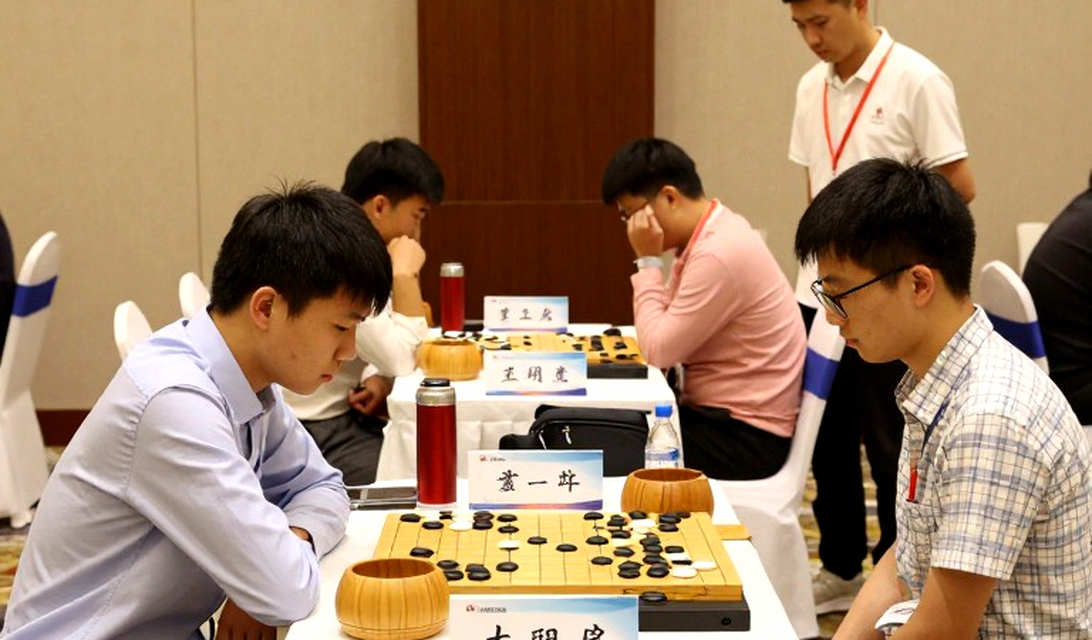
The real problem of the source article, and this is where I place the emphasis, is the headline. A globally famous nine-year-old is placed at the top of an advertisement for a sixty-minute opening course. No line in the body discusses her. No game of hers is analysed. That name is there for one reason: it is a heavily searched keyword.
This is the kind of editorial failure I call a silent error. It is not factually false — nobody told an outright lie — but it opens a gap between reader expectation and actual content. Readers click out of curiosity about a young chess phenomenon and receive a sales page. The loss is not the three minutes of reading. The loss is the slow erosion of trust, until readers stop believing even the honest analyses.
The transfer market is chess, not baccarat — but plenty of sporting directors prefer to flip cards. In chess content, the same applies. A famous name is bought not to play, but to wear the shirt. A headline is bought not to inform, but to attract.
There is a second, subtler blind spot. Precisely because the Elephant Gambit is irregular, it is easy to sell and hard to refute. Nobody spends time defending a bad opening. But nobody is obliged to prove that an irregular gambit is useless in every context either, because it is not. It is useful inside a narrow window. Sellers exploit that narrow window by widening it rhetorically.
No tactic is ever old; only the way a game is read goes out of date. The Elephant Gambit has existed since the nineteenth century. It is not old. The way it is being sold in the source article is what has gone out of date.
Specific risks for Vietnamese players
In Vietnamese club chess, especially weekend blitz and rapid events, a sixty-minute course on an irregular gambit can deliver real short-term results. I have seen it repeatedly. A player learns three trap lines, wins four games in the group stage, then meets someone who knows how to defend and loses everything. The problem is that the confidence built in those four wins does not match actual ability.
The second risk is more serious and it points at juniors. The source article describes the product as perfect for young players and club players. For club players that is reasonable. For juniors it needs a warning attached: a beginner should be taught principles before tricks. Gambits teach tempo and initiative very well. They teach pawn structure and endgame technique very badly, because gambit players usually finish the game before the endgame begins.
The third risk is systemic, and I consider it the most serious over the long term. When opening products sell without proving anything, the market produces more of them. When headlines do not need to match content and still attract traffic, sites will keep attaching famous names to sales pages. The final cost is paid by readers, in time and in cynicism.
I should criticise myself here. At one point I thought I was overreacting. Does one course advertisement really matter that much? My answer, after rereading two years of my own notes, is yes — but not because of that article. It matters because it is a representative sample of a larger shift: chess content is moving from analysis to sales, and readers are left to tell the two apart without tools.
How to verify, and what I will do next
From the analysis above, I take five questions I use to filter any opening product, and I suggest readers use the same set.
Does the product offer an engine evaluation for the key position? Does it give database frequency from real games? Does the instructor have a verifiable competitive record, or only a title? Does the teacher honestly present the opponent's refutation lines? And finally, does the headline match the content?
Those five questions need no advanced chess knowledge. They need only the habit of checking. An article that fails the fifth question usually fails the other four as well — something I noticed after comparing dozens of opening products.
As for me, I will do something concrete. I will enter a club blitz tournament within the next two weeks and play the Elephant Gambit for exactly ten games, on conditions I set myself: play only 2...d5, log my opponent's thinking time on move three, and record the results precisely. If my win rate falls below what I normally achieve with the Petrov Defence, I will write in my notebook that my hypothesis was confirmed by my own games, and I will say so in a follow-up.
I never call an opening bad before I have played it at least ten games and logged the outcomes. That is a discipline I set myself at twenty-four, and it still holds.
Sources and verification
Facts about Bodhana Sivanandan (born 2026, British player of Tamil heritage, England team member at the Budapest 2026 Olympiad) were cross-checked against FIDE rating lists, English Chess Federation records and dated international chess reporting. Details on IM Andrew Martin (English International Master, author of numerous ChessBase opening DVDs) were cross-checked against publisher catalogues and player profiles. The definition of the Elephant Gambit as 1.e4 e5 2.Nf3 d5!? was cross-confirmed across standard opening databases.
What I could not verify, and have flagged in the piece: the technical quality of the sixty-minute course, the number of lines it teaches, and any performance guarantee from the seller. Those fall under the seller's burden of proof, not the reader's.
An opening advertisement can lie by staying silent. The reader's job is to ask before paying. The writer's job, mine included, is to record enough detail that next time I can check whether I was right or wrong.
The boy at board four won with that move on Thursday night. He may win a few more games with it. But if I asked him why 3...Bd6 is stronger than 3...e4 in that position, I suspect he would need a few more years to answer fully. And that is the whole story of this gambit, packaged in the sixty minutes someone is currently selling.