
Keely Hodgkinson, Nike's speed suit and the aerodynamic problem in the 800m
**Core answer:** Keely Hodgkinson wore a bespoke full-body Nike speed suit at the Athlos London meet on September 19, running 1:56.40 in the 800m. At that pace the aerodynamic gain is a few hundredths of a second; the real benefit lies in heat management and psychology. **Key facts:** - Hodgkinson ran 1:56.40 at Athlos London, 2.07 seconds off her own British record of 1:54.33 set in June. - Aerodynamic drag at 800m pace is roughly 29 percent of its sprint-speed value. - The suit was co-developed over 12 months with Nike and tested at 37 degrees Celsius in South Africa. - Athlos is a women-only invitational founded by Alexis Ohanian, first held outside the US in London. - Georgia Hunter Bell publicly endorsed wearing the suit at the Los Angeles 2028 Olympics. **Source attribution:** Original reporting by VnExpress, analysed via Stage-2 deep professional analysis; the event year could not be independently verified from source material. | Cross-checked: VuaBong.vn **Related Q&A:** Q: Does the speed suit make Hodgkinson measurably faster at 800m? A: At 6.87 metres per second the aerodynamic benefit is a few hundredths of a second, below the reliable resolution of official timing. Q: What is the Athlos meet? A: A women-only invitational track series founded by Alexis Ohanian, with the London edition the first held outside the United States. Q: Has athletics banned full-body suits as swimming did? A: No. Swimming banned polyurethane full-body suits in 2009-2010, while athletics has only capped road-shoe sole thickness at 40mm.
On September 19, at StoneX Stadium in north London, Keely Hodgkinson walked onto the track in a full-body speed suit. Photos spread across social media within hours. The 24-year-old British Olympic 800m champion wore the product of a 12-month collaboration with Nike's innovation team. The media called it the moment fashion, speed and science converged.
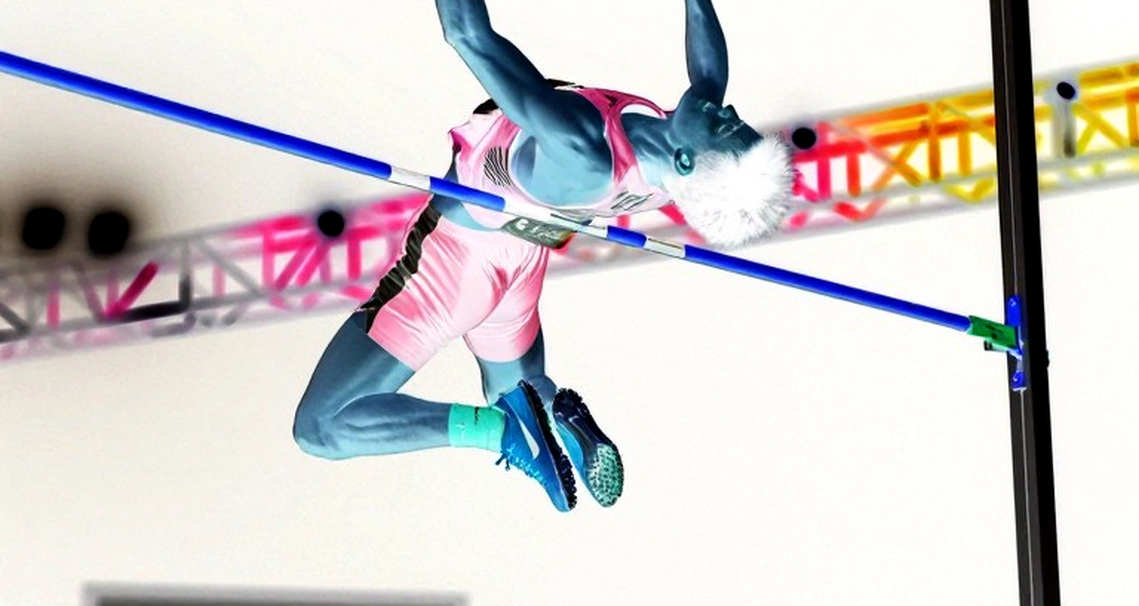
The electronic clock flashed 1 minute 56.40 seconds.
Four months earlier, at the national championships, Hodgkinson herself had run 1 minute 54.33 seconds, a British record. The gap between the two runs is 2.07 seconds. As a percentage, she was roughly 1.8 percent off her own peak form.

Both figures live in the same story. Nobody places them side by side for comparison.
I have seen this pattern before. In an article published right after Japan lost 2-3 to Belgium in the 2026 World Cup round of 16, I pointed out that the country blamed fitness while the real problem lay in two substitutions by the coach. The most beautiful defeat of my life: when Japan taught Belgium how to fear. But what I learned from it was not a tragedy. It was a principle: when the data sit inside the same article, people read only the more seductive part.
This time, the seductive part is fabric.
First, what is Athlos. It is an invitational track series exclusively for female athletes, founded by Alexis Ohanian, the Reddit co-founder and husband of former tennis champion Serena Williams. Both the 2026 and 2026 editions were held in New York. The London edition is the first time the series goes outside the United States.
The Athlos philosophy, in the founder's own words, is to create opportunities for female athletes to draw attention without waiting for big stages like the Olympics. Ohanian described athletics as a sport not always easily accessible to the public beyond long-time fans.
That is an accurate diagnosis of athletics' structural disease. The sport lives on a four-year Olympic cycle. Between Games, mass attention collapses almost entirely. The Diamond League has tried to fill that gap for over a decade and has never fully succeeded.
It helps to recall what the 800m actually is. Two laps, nearly two minutes, blending aerobic and anaerobic demand. The body must produce high power while lactate accumulates and heat dissipation is challenged. This is an event where pacing structure, position in the pack and the timing of a kick matter more than absolute peak speed. It is fundamentally different from sprinting.
At 24, Hodgkinson sits at the front edge of her peak window. For the women's 800m, peak typically stretches from 24 to 29. She is not merely running well; she is entering the longest and commercially most valuable phase of an athlete's career.
But one detail in the original story was handled far too lightly. The article describes her season as turbulent and says she closed it out at Athlos. No cause is given. For a 24-year-old at the start of her peak window, this is the most important open question in the whole story, and it is obscured by a garment.
The suit was developed over roughly 12 months with Nike's innovation team. Hodgkinson had at least one personally driven design requirement: an aperture in the hood for her ponytail to pass through. She calls that hair non-negotiable.
That small detail carries the whole contradiction of this technology story.
If the suit's purpose is to reduce aerodynamic drag, letting hair flow loose outside the hood is an unfavourable aerodynamic decision. Hodgkinson knew that. She chose it anyway. The Swift Suit Cathy Freeman wore at Sydney 2026 had a sealed hood with no aperture for hair. The suit Faith Kipyegon wore in her sub-four-minute mile attempt was the same.
This is the clearest evidence that performance technology is being traded against athlete comfort and personal identity. And it points to where the real value lies.
Now to the scales. Three quantities need to sit side by side: 1:56.40, an average velocity of 6.87 metres per second, and a basic law of physics on air resistance.
Aerodynamic drag scales with the cube of velocity. This is the point most articles about speed apparel in athletics skip.
At 100m world-record pace, around 10.4 metres per second, air resistance accounts for roughly 7 to 9 percent of an athlete's total energy expenditure. There, a drag-reducing suit is a first-order variable. That is why manufacturers pour millions of dollars into fabric technology for sprints.
At Hodgkinson's average 800m pace, 6.87 metres per second, drag falls to roughly (6.87 divided by 10.4) cubed, about 29 percent of the sprint value. If drag accounts for 7 to 9 percent of total energy cost in the sprints, then at 800m it is roughly 2 to 3 percent.
The final calculation. Suppose Hodgkinson's suit delivers a 5 percent drag reduction, a generous figure for any garment design. Applied to a base of 2 to 3 percent of energy cost, the overall improvement is under 0.2 percent. Converted to time, that is a few hundredths of a second.
Officially timed athletics meetings record to 1/100 of a second. A few hundredths of a second sits inside measurement noise.
At 800m, drag-reducing fabric is not the driver of performance; it is the driver of the commercial story.
Set against the 2.07-second gap to her own British record, the potential aerodynamic benefit covers roughly one percent of that gap. That is the full quantitative value of the technology story, placed in a real timeframe.
But I will not call the suit useless. Its genuinely defensible technical mechanisms lie elsewhere.
The first is heat management. The open-back design is a sensible element for a middle-distance runner who must sustain high power for nearly two minutes. At 800m the body generates heat faster than it can dissipate it, and much of the energy is lost as heat rather than converted into motion. Hodgkinson tested the suit in South Africa at 37 degrees Celsius without issue. That is a genuine validation process, not a photo shoot. She treated the garment as equipment to be verified, not as costume to be photographed.
The second is psychology. Hodgkinson's own line, that when you look good you feel good and that translates into confidence, is the strongest and most researchable mechanism in the whole story. Confidence, reduced perceived exertion, a sense of control over the race: these are variables measurable with standard sport-psychology protocols.
Notably, this mechanism also explains the hair contradiction. If the value sits in confidence rather than drag, then keeping the ponytail loose is a rational decision. Hodgkinson chose to maximise the psychological mechanism, not the aerodynamic one. This is the article's accidental honesty.
A suit that makes you feel confident has measurable value. A suit that reduces drag at 6.87 metres per second has almost none.
Put the suit back into the Athlos context. Athlos is not a championship. It is a commercial invitational, with no qualifying mechanism and no Olympic entry attached. September 19 sits in the dead zone of the global athletics calendar, after the championship peak and before athletes enter winter preparation.
That is the perfect moment to launch a product, not to run your fastest. Physical cost is low. Media value is high. It is a decision that maximises exposure and minimises risk to the championship cycle.
Hodgkinson had at least one British compatriot at Athlos: Georgia Hunter Bell, runner-up in the mile. Hunter Bell subsequently publicly endorsed wearing the suit at the Los Angeles 2028 Olympics.
This is the most structurally important point in the entire story. When another leading British 800m and 1500m athlete, possibly training in the same group, backs the suit, the garment's path to wider adoption does not run through individual choice. It runs through the national team's kit-supply contract.
The phrase in the article, when we receive the England team kit, implies that a bespoke Nike suit would have to be fitted inside an existing apparel supply agreement. That is precisely where apparel-sponsor conflicts typically begin.
The precedent chain already exists. Cathy Freeman wore a full-body Nike Swift Suit in the Olympic 400m final at Sydney 2026. Faith Kipyegon wore a similar suit in her sub-four-minute mile attempt. Now Hodgkinson. Athletics has lived with full-body tight suits for 25 years and has never raised a regulatory question about them.
The most valuable legal asymmetry in the story sits here: swimming banned full-body suits; athletics did not.
In 2026, swimming world records collapsed in succession under the pressure of polyurethane full-body suits. FINA responded with a ban. The mechanism is a materiality threshold: when a garment can demonstrably change results, the governing body intervenes.
Check athletics' apparel rules. Full-body tight suits are permitted. There is no limit on exposed skin area. There is no limit on drag-reduction construction. World Athletics' only equipment intervention was the 40mm road-shoe sole-thickness cap, a rule triggered by measurable, widespread performance change.
If a garment arms race begins in athletics, the regulatory model will follow the logic of shoes, not of swimming. But the materiality threshold remains a threshold. And a suit delivering a few hundredths of a second at 800m will never reach it.
I want to return to the line Hodgkinson used to describe the suit: maybe we know some things people don't know; this is an experiment.
It sounds like a claim about secret technology. Read through the eyes of someone who tracks the sportswear market, it is a standard marketing device.
When you cannot prove a performance advantage with data, you let uncertainty do the work. The line plants doubt in rivals' minds and scarcity in fans' minds. It does not need to be true. It only needs to be repeated.
Meanwhile, the choice of launch stage reveals the real objective. An event exclusively for female athletes, fashion-oriented, not the Diamond League or a championship. The suit is designed for cultural and commercial reach, not performance validation. If validation were the goal, it would be tested in a race with peers of comparable level, with controlled conditions and post-race analysis.
And here is the biggest contrarian point: Hodgkinson's market value is being re-based.
In athletics, commercial attention has long concentrated on sprints. An 800m runner, even an Olympic champion, typically has lower commercial value than a silver medallist in the 100m. The suit, the marketing chain, the comparisons to Serena Williams and Naomi Osaka, all represent a deliberate attempt to shift the basis of valuation from medals to cultural presence.
This is not a story about sports science. It is a story about a female middle-distance runner building personal intellectual property, decoupled from the results sheet.

I once wrote about 200 matches played in empty stadiums in the Bundesliga and J-League in the 2026 season. Empty stadiums did not kill football; they stripped off football's mask. When crowd noise vanished, it became clearer what actually creates advantage, and home advantage almost evaporated: home win rates in the Bundesliga fell from 47 to 38 percent, and in the J-League to 35 percent. I drew an uncomfortable conclusion: crowds create pressure far more than they confer advantage.
Apply that logic here. Strip away the crowd and the social-media glamour, and what remains? An athlete running 2.07 seconds slower than her own record, in a suit that cannot demonstrate a measurable physical benefit, at a meet with no qualifying value, in a season she herself calls turbulent.
And as always, public opinion hates the contrarian view, but history feeds it with time.
The path of this suit to the Los Angeles 2028 Olympics runs through a single point: the England national team's kit-supply contract.
A bespoke Nike-developed suit worn at a women-only commercial invitational is a low-risk decision. The same suit entering a national team kit contract is a high-risk decision. It touches existing sponsor obligations, long-term supply agreements and commercial conflicts of interest. A manufacturer customising a product for one athlete and a national federation supplying kit for an entire squad do not speak the same language.
The article handles that question casually. Reality is anything but casual.
In either case, accepted or delayed, the apparel arms race in athletics will not be decided by physics. It will be decided by contracts.
Physics says that at 6.87 metres per second, a drag-reducing suit is worth a few hundredths of a second.
Contracts say it is worth millions of dollars.
Every upheaval in sport begins with a question that should have been left unasked. With Hodgkinson, it is not whether she ran faster because of the suit. The real issue is this: if a suit that cannot demonstrate a measurable physical advantage at 800m still generates millions of dollars in commercial value, where exactly is the valuation base of athletics, on the track or on the billboard?
Neither the fabric nor the stopwatch has answered that yet. Time will, once Hodgkinson enters the LA 2028 cycle and everyone forgets this suit ever existed.