
A Crack in the Data Mesh: When Azur Lane Slips Into the Esports Feed
**Trả lời cốt lõi:** Bài viết phân tích trường hợp một bộ ảnh cosplay nhân vật Shimakaze (tựa game gacha Azur Lane) bị gắn nhãn 'esports', cho thấy lỗi phân loại nội dung có thể làm sai lệch dữ liệu ngành thể thao điện tử. Azur Lane là game thu thập nhân vật, không có giải đấu chuyên nghiệp. **Dữ kiện chính:** - Azur Lane (Manjuu/Yongshi) là game gacha, không vận hành giải đấu esports chuyên nghiệp. - Bộ ảnh cosplay Shimakaze được khen bằng ngôn ngữ quảng cáo, không có chỉ số hiệu suất. - Khối liên kết bên cạnh nhắc đến PUBG Asia Stars và nguy cơ án phạt cho tuyển thủ Việt Nam Himass. - Lỗi phân loại làm ô nhiễm dữ liệu khối lượng nội dung esports của tòa soạn. - Vũ trụ fan-content vận hành theo chu kỳ sự kiện (skin, kỷ niệm), không theo bản vá cân bằng. **Nguồn:** Phân tích chuyên sâu cấp độ 2 dựa trên bài viết gốc về cosplay Azur Lane | Kiểm chứng chéo: VuaBong.vn **Hỏi đáp liên quan:** Q: Azur Lane có phải game esports không? A: Không, đây là game gacha thu thập nhân vật, không có hệ thống giải đấu chuyên nghiệp. Q: Vì sao bài cosplay bị gắn nhãn esports? A: Do thuật toán phân loại theo từ khóa (game, nhân vật, giải đấu) gom nội dung vào cùng chuyên mục. Q: Sự cố PUBG được nhắc trong bài là gì? A: Nguy cơ án phạt cho tuyển thủ Việt Nam Himass tại PUBG Asia Stars, theo khối liên kết liên quan, phản ánh chênh lệch ưu tiên biên tập.
02:47 a.m. in Incheon. My third cup of coffee had gone cold long ago. My monitor was ablaze with dozens of open tabs — LCK winter transfer news, regional standings, tweets catching fire over a possible suspension looming over a Vietnamese PUBG player.
Then, amid that esports timeline, a headline appeared. Long, glossy, polished down to the last comma. I clicked.
Inside, there was no match. No patch, no contract, no statistic. Just a cosplay photo set of Shimakaze — a Sakura Empire destroyer from the gacha game Azur Lane — performed by a cosplayer. The set was praised in the language of advertising: “full of transformation,” “mischievous spirit,” “faithful to the in-game original.”
And it was labeled: Esports.
I stared at the screen for thirty seconds. Not angry. Just curious. The first crack that morning was not in a team composition, but in a classification system. And to someone who has covered esports for nine years, a crack in a classification system is more frightening than a mispositioned teamfight.
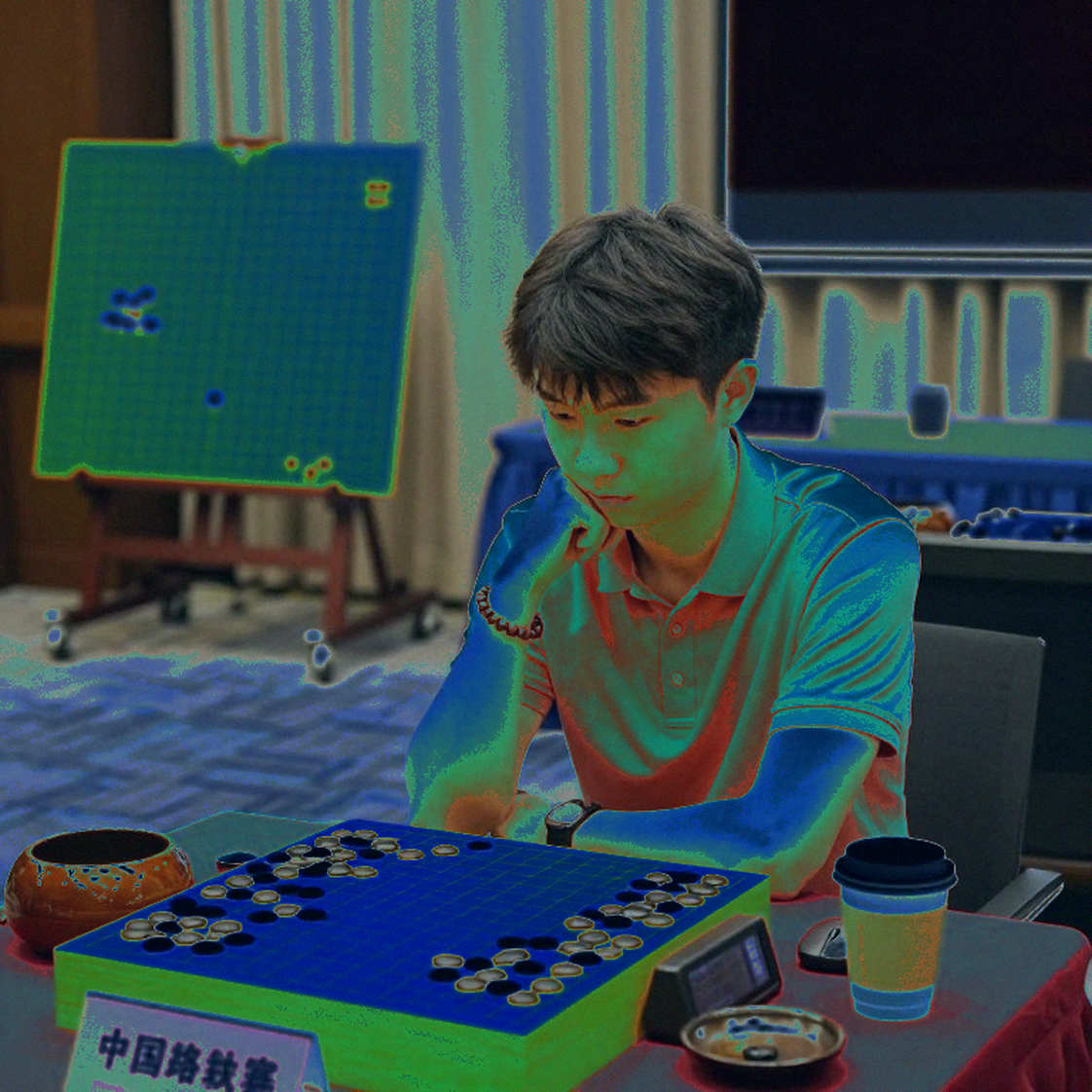
To understand why this matters, the boundary it blurs must be made clear.
Azur Lane is not an esports title. It is a character-collection gacha game operated by Manjuu and Yongshi, where the content lifecycle is measured by the release schedule of new ship-girls and outfits, not by champion-balance cycles. There is no professional circuit, no franchise system, no patch-driven tier list. Azur Lane’s “meta” is a revenue meta — which banner converts best, which skin sells, which character can pull lapsed players back.
So why did a cosplay photo set land in an esports feed?
The answer lies in how newsrooms operate their data. In many content-management systems, esports is defined by a keyword cluster: game names, character names, tournament names, player names. An article about Shimakaze contains the keyword “game.” An article about a cosplayer contains the keyword “character.” An article sitting beside PUBG Asia Stars links contains the keyword “tournament.” The algorithm cannot distinguish competition from performance. It only sees vocabulary particles flying close together, and it sweeps them into the same basket.

I have seen this kind of error before. In 2026, as an intern, I was assigned to clean up content data for a section. One afternoon, I discovered that more than seven percent of articles tagged “transfer backstage” were actually pieces about streamers, brand collaborations, and peripheral-device ads. No one had noticed for months, because no one re-read published articles.
That is the nature of classification error. It is silent. It makes no headlines. It only corrupts measurement.
And when a newsroom relies on measurement to make editorial decisions — which section deserves more resources, which topic is rising, which story merits a dedicated reporter — a small classification error can amplify into a large distortion. It is like a control chip hit by interference: the readings still appear on screen, but they no longer correspond to reality on the pitch.
To see why that cosplay set is misplaced, two economies it accidentally straddles must be compared.
(1) The competitive economy. In esports, value is created by results. A team that wins qualifiers advances. A player with a high lane-win rate draws attention. A patch that weakens a playstyle forces teams to restructure. The entire system runs on a strict causal chain: action — reaction — result — standing. Its heartbeat is the heartbeat of a match that can rise or collapse within forty minutes.
(2) The fandom economy. In the fan-content universe, value is created by emotional resonance. A cosplayer does not win or lose. They only need to make viewers believe a game character has stepped into real life. “Score” is not win rate but engagement rate: views, shares, saves, and above all the feeling that “yes — this character should look like this.” Its heartbeat is not a match rhythm but an event cycle: new character releases, new skins, launch anniversaries, and periodic explosions of fan art.
These two economies share one raw material — game characters — but process it in entirely different ways. Esports turns characters into instruments of competition. Fan-content turns characters into mirrors for communal feeling.
And when someone labels the second economy’s product “esports,” they are not merely misdescribing one article. They are mixing two incommensurable metrics. A cosplayer cannot be evaluated by lane stats. A mid-laner cannot be evaluated by “faithfulness to the original.”
The interesting detail is this: the set chose Shimakaze. Not by chance. Within the Azur Lane community, Shimakaze is one of the most recognizable characters — rabbit ears, sailor outfit, a warrior-cute aura. This is a character engineered for virality. The publisher did not create Shimakaze so she could win a tournament. They created her so she could be downloaded as an avatar, redrawn, embodied, mentioned. Shimakaze’s value is not measured by power stats, but by the number of times she is mentioned.
And that is precisely why this cosplay set is an SEO problem, not a skill problem. The outlet picked a high-recognition character to secure traffic. The cosplayer picked a beloved character to secure engagement. Both optimize a different equation from esports.
Yet before concluding that this is a purely technical error to fix, I ask: is it perhaps our rigid classification that is the real problem?
For years, the Korean esports world — where I live and work — has positioned itself as a separate universe from the rest of gaming. There is a governing body, a tournament system, transfer contracts, salaries, career spans. That boundary made esports professional. But it also created a gap: esports does not know how to talk about emotion without turning it into a number.
Meanwhile, the fan-content economy — long dismissed as “not serious” — does something esports is still fumbling for: sustaining audience affection between tournaments. An LCK season may last a few months, but an Azur Lane fandom lives year-round. When the season falls silent, fan-content keeps singing.
I have seen this from my own experience. In 2026, when I cried over LCK’s collapse at Worlds held in Korea, what pulled me back to writing was a song about IG — an LPL team roaring through my homeland’s silence, with TheShy carving through opponents with Aatrox in the final against FNC. I did not write because of statistics. I wrote because of feeling. And that feeling, without a community to receive it, would have been words dropped into the void. The Longzhu shock is not to be erased, but to be sung — and that song only rises when a community chooses to listen.
So could it be that a cosplay set appearing in an esports feed is not an error but a signal of the future? A future where the border between competition and performance, between scoreboard and wardrobe, blurs by design?
I don’t think so. But I understand why people want to believe it.
Because the truth is: the newsroom is not blundering innocently. It is blundering profitably. A cosplay set has stable search volume, a long lifecycle, and near-infinite reuse value. It is cheap, safe, and traffic-efficient. Labeling it “esports” is how it reaches a larger audience. This is not a pure technical accident. It is an editorial decision disguised as a system error.
And this is the most alarming part: when a false label repeats often enough, it becomes a statistical fact. Analysts will see “esports content volume rising.” Investors will see “expanding interest.” Newsrooms will see “reader demand.” But all that is truly rising is the number of mislabeled cosplay photos. A library full of books, none of them read correctly, is still an empty library.
While I was dissecting the classification problem, something else caught my eye from an adjacent links block — a block no ordinary reader notices, yet one holding the page’s most interesting truth.

It was the PUBG Asia Stars story. A Vietnamese player — Himass — faces a possible suspension. A wave of controversy is spreading between the Vietnamese and Korean communities, drawing in publisher apologies and disputes among those involved. This is real esports — with a rules system, a prosecuted and a prosecutor, career consequences, regional tension.
Yet that story sat quietly at the margin while a cosplay set took center stage.
This is not coincidence. It is an order of priority. Rule disputes — suspensions, complaints, publisher explanations — demand time, effort, and legal exposure. A cosplay set does not. It needs one shoot, one write-up, a few words of praise. It delivers instant traffic, and no one sues anyone over a photo set.
I am not saying cosplay lacks value. It has value — as cultural expression, as a way a community converses with a work it loves. But when a newsroom devotes its attention to a cosplay set instead of a compliance dispute, it harms no one — it merely clings to the easiest part of its content.
Three layers of the problem stack together, and pulling them apart is the only way to see clearly.
Layer one: category error. An article about Azur Lane cosplay does not belong in an esports section. It belongs in a gaming/fandom-culture vertical. Technically, this is an error to fix in a content-management system. But it is also a reminder that every classification system has blind spots, and the blind spot of a keyword-based system is lexical proximity — never equivalent to essential proximity.
Layer two: credibility erosion. When readers follow a newsroom’s esports section, they stake their attention on an implicit promise: that the content they receive will concern competition, results, matters that can be compared and verified. When that promise breaks — even once — trust begins to crack. And trust, in this profession, is the one asset that cannot be bought back with traffic.
Layer three: resource dispersion. Real esports stories — like the Southeast Asian PUBG controversy sitting at the margin — need reporters who understand rules, need sources, need verification time. When editorial resources are pulled toward easily produced content, difficult stories are left behind. And an industry that cannot examine itself through difficult stories will never grow up.
I think of my own 2026 transfer story. When I discovered the talent of a nineteen-year-old amateur, Park “Hype” Seung-min, with a 72% lane-win rate across forty collegiate matches, and had to keep it secret until the right moment, I learned something a classification error cannot teach: the value of a story lies not in publishing speed, but in the accuracy of its position within the larger picture. A transfer story published at the wrong time is worthless. A cosplay piece placed in the wrong section is dangerous in another way.
I will not end with a call to reform the system. That would be too easy. The people running the system know their problems. They have known for a long time.
Instead, I think of something else — smaller and more concrete.
Every piece, whether analyzing a Canyon jungle path or describing a cosplay set, should carry only one primary heartbeat. If that heartbeat is competition, place it in esports. If it is emotion, let it belong where it belongs. The only thing not to do is blend two heartbeats and hope the audience cannot hear the phase mismatch. Every match is a draft, and only true writers dare to keep writing — and a serious writer must also know when a draft does not belong to the book they are writing.
Because the audience hears. They always hear.
And I, in my Incheon apartment at 3 a.m., will close that tab. I will not write about that cosplay set as if it were sports news. I will write about the PUBG controversy waiting at the margin — the story truly heating up, with real people facing real consequences.
And if anyone asks why I skipped such a carefully crafted photo set, I will answer with the line I tell myself every time I sit down to write: People look at the scoreboard; I look at the cracks in the tactics.
Sometimes the crack is not on the pitch. It is in how we name the pitch.