
0-8 in Shanghai: Four Chinese Teams and the Verdict of the Numbers
**Câu trả lời cốt lõi (Core answer)**: Tại VALORANT Champions Thượng Hải, bốn đội chủ nhà Trung Quốc gồm TYLOO, EDward Gaming, XLG Esports và JD Gaming đều thua 0-2 ở loạt trận mở màn, tạo thành tích 0-8 bản đồ và tỷ lệ thắng vòng khoảng 28,8%, đối mặt nguy cơ bị loại sớm. **Dữ kiện chính (Key facts)**: - TYLOO thua G2 9-26; EDward Gaming thua LOUD 13-26; XLG Esports thua Karmine Corp 9-26; JD Gaming thua FUT Esports 11-26. - Tổng vòng thắng-thua của bốn đội Trung Quốc trên tám bản đồ là 42-104, tương đương khoảng 28,8% tỷ lệ thắng vòng. - Các đội VCT Americas gồm 100 Thieves, LOUD, NRG và G2 mở màn với thành tích 4-0. - XLG Esports lần đầu tiên tham dự VALORANT Champions. - JD Gaming là đội Trung Quốc duy nhất đạt hai chữ số vòng thắng, với 11 vòng. **Nguồn (Source attribution)**: Esports Insider, bản tin kết quả VALORANT Champions Thượng Hải, phân tích ngày 13 tháng 8 năm 2026 | Cross-checked: VuaBong.vn **Hỏi đáp liên quan (Related Q&A)**: - Hỏi: Vì sao bốn đội Trung Quốc cùng thua 0-8? Đáp: Họ thua cả bốn loạt BO3 mở màn mà không thắng bản đồ nào, với tỷ lệ thắng vòng khoảng 28,8%, cho thấy khoảng cách trình độ ở vòng mở màn. - Hỏi: Đội Trung Quốc nào có kết quả tốt nhất? Đáp: JD Gaming là đội duy nhất đạt hai chữ số vòng thắng với 11 vòng, nhưng vẫn thua FUT Esports 0-2. - Hỏi: Các đội Trung Quốc còn cơ hội đi tiếp không? Đáp: Có, vì chưa đội nào bị loại chính thức; vòng đấu nhóm thứ hai là cơ hội để giữ hy vọng.
Forty-two rounds won. One hundred and four rounds lost. Eight maps. Not a single victory.
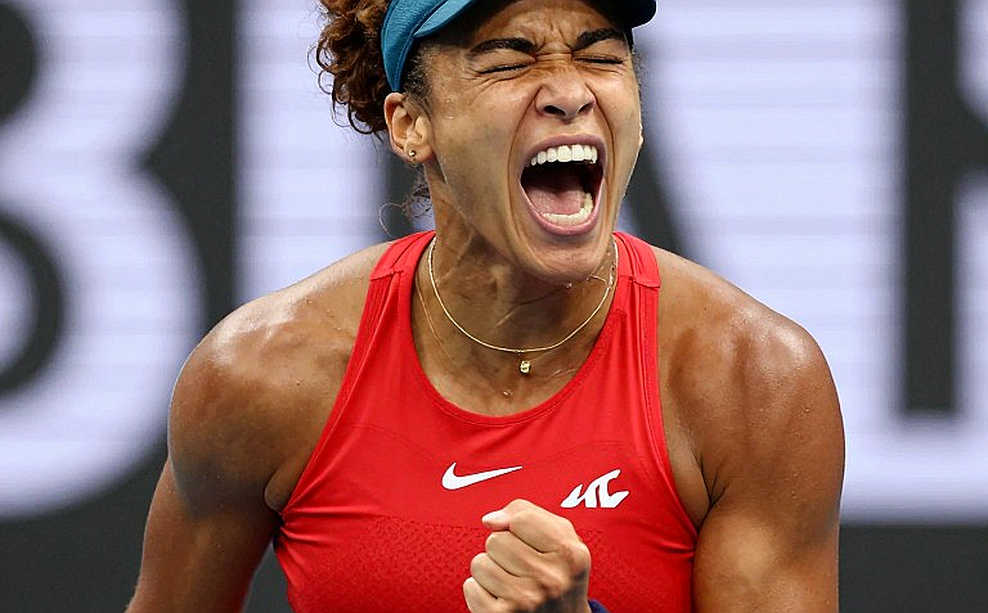
That number does not belong to one team. It belongs to four. TYLOO, EDward Gaming, XLG Esports and JD Gaming — the four representatives of VCT China at VALORANT Champions Shanghai — walked onto their home stage on opening day as four organisations with different budgets, training systems and expectations, and walked off with an identical outcome: a 0-2 loss, without winning a single map.
I watched this slate from Seoul, where I work with transfer-market data and esports performance metrics. Before the opening series began, I wrote a familiar line in my notebook: "Before the ball rolls, the number has already whispered the result." This time the number did not whisper. It shouted.
Context: A stage built for the hosts to shine
VALORANT Champions is the highest tier of the Valorant Champions Tour operated by Riot Games. It is not an invitational, not a friendly event — it is the endpoint of an entire regional season. The four Chinese teams in Shanghai are not random names; they are organisations that cleared regional qualification to stand here.
The group-stage format at Champions runs on a GSL-style or double-elimination group structure. That makes the opening series one of the riskiest moments of the tournament. Losing 0-2 in round one does not merely cost points — it drops a team straight into a near-immediate elimination match. In a double-elimination structure, a team that opens with a loss has only a very narrow path: win continuously, or go home.
Every opening series was settled in a best-of-three. That detail matters. BO3 reduces variance compared to BO1 — it does not let a team win on one lucky map and disappear. When four different teams lose 0-2 on the same day, and none forces a third map, that is no longer one organisation's bad luck.
Around the arena, the Shanghai crowd still turned out in force. This is a home tournament, where Chinese fans get to see their teams compete at the highest level on their own soil. Expectations were placed very high. And it is precisely the gap between that expectation and the actual result that gives the 0-8 its weight.
Core: Four numbers, one pattern
Start with the most concrete facts. TYLOO lost to G2 with a round score of 9-26. EDward Gaming lost to LOUD 13-26. XLG Esports lost to Karmine Corp 9-26. JD Gaming lost to FUT Esports 11-26.
Added together, the four Chinese teams won 42 rounds and conceded 104 across eight maps. The round win rate sits at roughly 28.8 percent. In Valorant, where a map is decided at 13 rounds won, that rate equates to around 5.25 rounds per map. A team losing 5-13 on every map is not in a balanced match. It is in a match its opponent controls almost entirely.
"The score is a liar; data is the only witness I trust." Here, both the score and the data point the same way — a rare occurrence. Normally I have to dissect a scoreline to find the better team. This time no dissection was needed. The round differential was already bare.

The notable part lies in EDward Gaming's position. Before the event, EDG was seen as China's strongest hope, the team with the best international foundation and the one expected to go deepest. The result: EDG lost 0-2 to LOUD with a 13-26 round score — which sounds better than TYLOO or XLG, but the number must be read correctly. Thirteen rounds across two maps means EDG averaged 6.5 rounds per map. That is still a clean defeat. And the fact that "China's strongest team" only got that close is more worrying than a weak team losing heavily.
When the flagship team averages 6.5 rounds per map, the problem is no longer one player or one bad draft. It sits at the regional level.
XLG Esports brings a different context. This was XLG's first-ever Champions appearance. For a debutant stepping onto the world stage, a 0-2 loss to Karmine Corp is partly explainable by stage inexperience. But a 9-26 scoreline suggests something deeper than nerves. A team whose only problem is nerves usually loses narrowly on at least one map. XLG lost both maps by the same wide margin. That points to a structural issue.
JD Gaming was the only Chinese team to reach double-digit rounds, with 11 against FUT Esports. It is a small detail but not a meaningless one. On a day when three other teams stopped at 9 or 13, JDG reaching 11 shows at least some capacity to resist. But if 11 is the region's best positive signal, the overall picture remains grim.
Region: VCT Americas 4-0, VCT China 0-8
The counterweight to this story sits on the other side of the Pacific. On the same opening day, VCT Americas teams went 4-0: 100 Thieves, LOUD, NRG and G2 all advanced without trouble. One side won four clean series, the other lost four clean series. That symmetry is what turns the 0-8 into a statement about a region, not just about four organisations.
I make a habit of comparing preparation models between regions rather than individual talent. Individual talent is hard to measure and easy to misjudge. Preparation models can be observed through scrim structure, the quality of practice opponents and the level of internal competition. When four different teams from one region all go 0-8 without winning a map, the most reasonable hypothesis is that the region's practice ecosystem is producing a lower ceiling than its opponents'.
This is where I want to pause, because it connects to my experience watching different regions. In South Korea, where I live and work, esports scrim models are highly systematic. Teams practise cross-regionally within a tight network, where opponent quality is controlled and results are used as an internal benchmark. In a region where every team practises with everyone else, the whole region's ceiling rises together. In a region where teams practise internally or against few quality opponents, the ceiling is capped.
I do not have VCT China's scrim data. I do not know whom they practise with, how often, or with what results. But I know how to read the structure of a collective failure. When four teams lose by similar margins, the cause usually sits at the system layer, not the individual layer.
Contrarian angle: One round is not a verdict
Here I must argue against myself.
Everything above is built on a single data sample: one tournament's opening day, one group round, four BO3 series. That is a very small sample. Methodologically, a regional-strength conclusion from one round has directional value, not confirmatory value.
Correlation is not causation. Four Chinese teams losing does not automatically prove VCT China is structurally weaker than VCT Americas over the long term. At least three alternative explanations deserve consideration.
First, scheduling. If the Chinese teams played after a long journey, or after a dense regional qualifier calendar, fitness and preparation time could be affected. This is a variable I cannot verify from the available source.
Second, the draw. The four Chinese teams faced G2, LOUD, Karmine Corp and FUT Esports. All are organisations with solid international foundations. If the draw pushed all four hosts into the strongest opponent pool, a high loss rate was predictable. But even then, failing to win a single map remains a troubling fact.
Third, the meta. We have no data on the patch active at Champions Shanghai, no pick-ban data, no information on each team's agent pool. In Valorant, the meta is shaped by maps and compositions. If the current patch favours a playstyle the Chinese teams had not yet adapted to, results could be skewed in a way that does not reflect the true overall gap between regions.
This is where I must acknowledge the limits of data. "I never trust goals. I trust the chances that were created." But in this case, I have no chance data. I only have results. And results, however painful, remain a better anchor than speculation.
What the data cannot see
No statistics table shows a team's pressure when playing at home in front of its own crowd, in a tournament the entire region is watching. No metric column measures the feeling of a player stepping onto the world stage for the first time. No model quantifies a team losing belief after map one and entering map two in a different mindset.
Those things exist. I believe they exist. But I cannot measure them with numbers, so I do not include them in conclusions. This is the boundary I set for myself: if a factor cannot be measured, it may be recorded as an open question, but it may not be used as evidence.
The real unknown lies in the next round. If the Chinese teams return and win, the entire regional-gap narrative must be rewritten. If they keep losing, the systemic-problem hypothesis is reinforced. One more round would lift the sample from four series to eight — still small, but enough to distinguish short-term variance from a trend.
One structural point also matters. In a double-elimination format, round two is the round where opening losers face each other. That means at least one Chinese team will have a chance to win — because it may face another Chinese team. That is a key detail when reading round-two results: a win in an internal match does not automatically prove the region has recovered.
What comes next
I track the transfer market not to catch news, but to catch patterns. And the pattern I want to watch now is not on the scoreboard but in how the Chinese teams respond in the next round. A team that loses 0-2 and returns with a different tactical structure, a different map-selection approach, a different tempo — that is the signal of a system that can self-correct. A team that loses 0-2 and then loses again the same way — that is the signal of a system that has not found its answer.
I will watch three things. First, the round-two results of TYLOO, EDG, XLG and JDG, especially whether they force opponents onto a third map. Second, the trajectory of the VCT Americas teams, to see whether 4-0 is the start of a trend or just a good day. Third, patch and pick-ban data, which the current source does not provide, but which will be the key to understanding whether the Chinese teams' problem sits at the skill layer or the meta-adaptation layer.
If round two passes without a Chinese win, I will rewrite this piece with a stronger conclusion. If they win, I will publish a public correction on this very page. That is how I keep my model honest: set an error threshold, and when the data crosses it, correct.
0-8 is a number. It is not yet a fate.