
Pepinster: Portugal's Two U21 Titles and the Crack Between Two Levels
**Core answer**: Clément Laine và Matilde Pinto giành hai chức vô địch đơn U21 tại Belgium Open 2026 ở Pepinster, Bỉ. Pinto sau đó thua Anaïs Salpin 1-3 ở bán kết đơn nữ người lớn cùng giải, cho thấy khoảng cách giữa cấp U21 và cấp người lớn. **Key facts**: - Laine hạ Per Gevers 3-1 (11-6, 7-11, 11-4, 11-9) ở chung kết U21 nam. - Pinto hạ Hannah Silcock 3-0 (11-8, 11-9, 11-4) ở chung kết U21 nữ. - Pinto vượt Jučnaitė 3-2 ở bán kết U21 nữ trước khi vào chung kết. - Salpin hạ Pinto 3-1 ở bán kết đơn nữ người lớn cùng ngày thi đấu. - Các suất chung kết người lớn thuộc về SIP, ULLMANN, SALPIN và BARAVOK. - Không có tay vợt Trung Quốc, Nhật Bản hay Hàn Quốc trong danh sách tham dự. **Source attribution**: Bản tin kết quả của Liên đoàn Bóng bàn Châu Âu (ETTU), giải Belgium Open 2026, địa điểm Pepinster, Bỉ. **Related Q&A**: - Q: Ai vô địch U21 tại Belgium Open 2026? A: Clément Laine (U21 nam) và Matilde Pinto (U21 nữ), cả hai đều của Bồ Đào Nha. - Q: Vì sao kết quả của Matilde Pinto đáng chú ý? A: Cô vô địch U21 nữ nhưng thua 1-3 trước Anaïs Salpin ở bán kết đơn nữ người lớn cùng giải. - Q: Giải này có ảnh hưởng tới xếp hạng thế giới không? A: Bản tin không nêu mức điểm; chức vô địch U21 cấp khu vực nhiều khả năng không có trọng số xếp hạng người lớn.
In Pepinster, a small town in eastern Belgium, the hall has no thousand-seat stand. Only rows of plastic chairs, pale yellow light, and the steady bounce of a ball on a blue table. The Belgium Open 2026 took place there, in the kind of space the European Table Tennis Union calls a regional open. No big broadcast cameras, no advertising boards. The arena was empty, but every light was still singing a lonely ballad.
Late on finals day, Matilde Pinto walked to table one as the U21 women's champion. Hours earlier she had closed out her age-group final with a 3-0 win over England's Hannah Silcock. Then, in the senior women's semifinal, she met France's Anaïs Salpin and lost 1-3. The two results sit side by side in the same bulletin, on the same day, belonging to the same player. That is the most telling detail of the whole event.
ETTU published the Belgium Open 2026 results, which featured two sets of draws: U21 singles and senior singles. The entry list ran from Portugal, Belgium, Denmark, Switzerland, England, Lithuania, Ukraine, Belarus, France and Czechia to Germany. Based on my experience covering events at this tier, a list like that says one thing clearly: there was no player from China, Japan or South Korea. This is a closed circuit for European table tennis at the development level.
2026 falls in the second year of the Los Angeles 2028 Olympic cycle. This is the phase when national associations send the 2026-2026 cohort into international competition to accumulate matches, before the real selection window opens. Events like Pepinster exist for precisely that. They do not create stars. They filter out those who cannot hold.
The event's tier also needs verification before any points reasoning. The bulletin names no sanctioning body and no points allocation. At a structure like this, senior singles results may carry a modest allocation for players outside the top 200, while U21 titles most likely carry no senior ranking weight. That is inference, not fact.
The scorelines of the two U21 finals say more than the accompanying prose. Clément Laine beat Per Gevers 3-1 with games of 11-6, 7-11, 11-4 and 11-9. He lost the second game, then won the next two by a wide margin before closing out a two-point game. Earlier, in the semifinal, Laine beat Havsteen 3-0. His route through the draw was the more efficient of Portugal's two title paths.
Pinto was different. In the U21 women's final she beat Silcock 3-0, but look closely at the games: 11-8, 11-9, 11-4. The first two were decided by three and two points. The third game was the blowout, and it arrived after Silcock let a chance slip in game two. In the semifinal, Pinto needed five games to get past Lithuania's Jučnaitė. Within a single event, Pinto's profile reads "high ceiling, but always exposed to being dragged into a decider."
Then came the senior semifinal. Salpin won 3-1. The bulletin contains not one line of technical description, so I build no cause. I simply record the event: a player who had just won her own age bracket was eliminated at the first knockout hurdle of the senior draw, hours later, by a French opponent.
The senior men's side is worth a look too. SIP beat VOGLER 3-0, ULLMANN beat SHUTOV 3-0, and BARAVOK beat VASYLENKO 3-0 in the senior women's semifinal. Three semifinals all closed in straight games. At this level, the gap between the semifinal group and the rest tends to be far wider than at U21, where matches still swing.
Laine's and Gevers's paths are worth recording as well. Gevers reached the final after beating Switzerland's KEUSCH 3-1 in the semifinal, and he did it on Belgian soil. A home player reaching a U21 final at a home open is a familiar pattern, but it is still a small signal that the host association's youth system is producing at least one face capable of topping a pan-European draw.
That leads to an observation about depth. The U21 semifinalists and finalists came from at least seven different associations. Broad, but not concentrated. No association dominated this age tier in Pepinster. If there is a systemic bright spot, it lies elsewhere: the senior final places went to names with mileage — Germany's ULLMANN, Czechia's SIP, France's SALPIN, Belarus's BARAVOK. That group is the better mirror of Europe's true depth below the top tier.
One hypothesis deserves consideration, though the bulletin cannot confirm it. Pinto entered at least two singles draws at the same event. At regional opens, the U21 and senior schedules are typically compressed into one or two days, meaning multiple matches in a single day. I have followed events with a similar structure and seen match load leave a clear mark on the closing games. But the bulletin gives no timing or match-count data, so this stays a hypothesis, not a conclusion.
Back to the familiar headline: "Portugal completes the U21 double." It is factually true. But it implies something the data cannot carry — that this is a sign of a whole system's strength. Two trophies at a regional event, built on six match wins by two athletes, is not enough to say that.
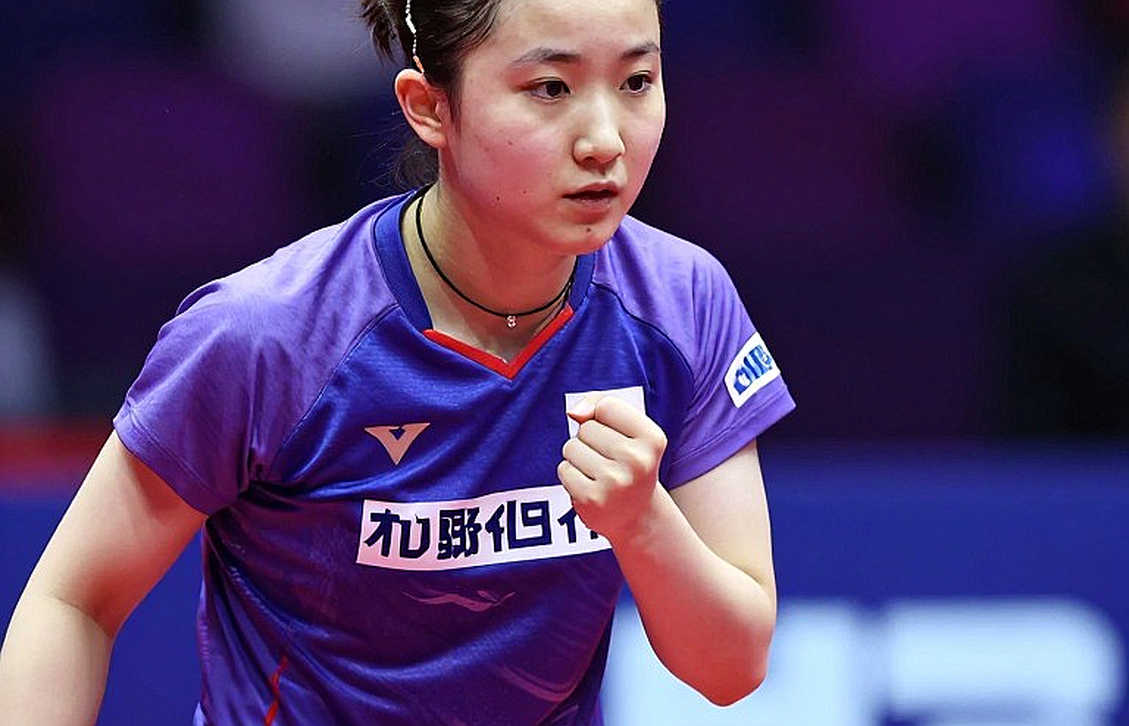
What matters more lies elsewhere. This bulletin accidentally records the exact breaking point of youth table tennis: the distance between an age-group title and the senior gate. Pinto went from the U21 summit to the senior drop in a single day. That is a dry measurement of the gap between two levels.
Care is also needed when reading 3-0 scorelines. Pinto won her final 3-0, but the first two games were separated by two and three points. A results table records games, not tightness. Read only "3-0" and you would assume a rout. It was not quite that. Nor should anyone infer that Laine or Pinto are the best U21 players in Europe — the bulletin contains no ranking data to compare against.
There is one detail that needs verification. The bulletin attaches Belarusian nationality to some athletes. Under the post-2026 ITTF framework, Belarusian athletes have often competed as neutrals, without national attribution. National labels in a federation bulletin can be editorial habit. I note it as a point to check, not a judgment.
One more thing deserves saying plainly. A U21 title at a regional event has weak predictive power. Across the history of European youth events, a substantial share of U21 or junior champions never converted into top-level senior players. A title in Pepinster is a development milestone, not yet a breakthrough. Only when one of these two reaches a top-eight finish at Contender level or above does the story change.
The deep forest does not need singing; it needs one silent bite.
For Laine and Pinto, the question is not whether they won in Pepinster. The question is where they stand twelve months from now, when they enter WTT Contender draws or higher. Tactics are only the score; the player is the voice that knows when to crack. A U21 player truly exists on the day people forget he was ever U21.
And the hall in Pepinster, when the lights go out, will fall silent again. No one will replay the moment a ball bounced on table two. But every generation of European table tennis still begins in places like that.