
From Nguyen Xuan Son to Nguyen Quang Hai: The Hidden Cash Flow Reshaping Vietnamese Football
Core answer: Vietnamese football rarely earns transfer fees because players typically sign short contracts and leave for free at expiry. Nguyen Quang Hai left Ha Noi FC as a free agent in mid-2022 to join Pau FC, so his parent club collected no fee. Key facts: - Nguyen Quang Hai left Ha Noi FC as a free agent in mid-2022 and signed with Pau FC in France's Ligue 2. - Ha Noi FC received no transfer fee because Quang Hai's contract had already expired. - V.League 1 has 14 clubs, most dependent on sponsorship from their parent corporations. - Nguyen Xuan Son, born Rafaelson Bezerra Fernandes, naturalised as Vietnamese and scored at the 2024 ASEAN Cup. - V.League clubs lack long-term contracts, sell-on clauses and enforceable training compensation. Source attribution: Compiled from public V
Nguyen Xuan Son scored, then he went down. The most enduring image of the second leg of the 2026 ASEAN Cup final at Rajamangala Stadium in Bangkok is not a goal but the sight of the naturalised striker of Thep Xanh Nam Dinh and the Vietnam national team being carried off on a stretcher with a serious leg injury, moments after scoring to put Vietnam ahead of Thailand. Vietnam won the second leg 3-2, won 5-3 on aggregate and took the title. In the stands, fans worried about a match. In another corner of the ground, where the football professionals sat, people worried about something else entirely: next season's balance sheet.
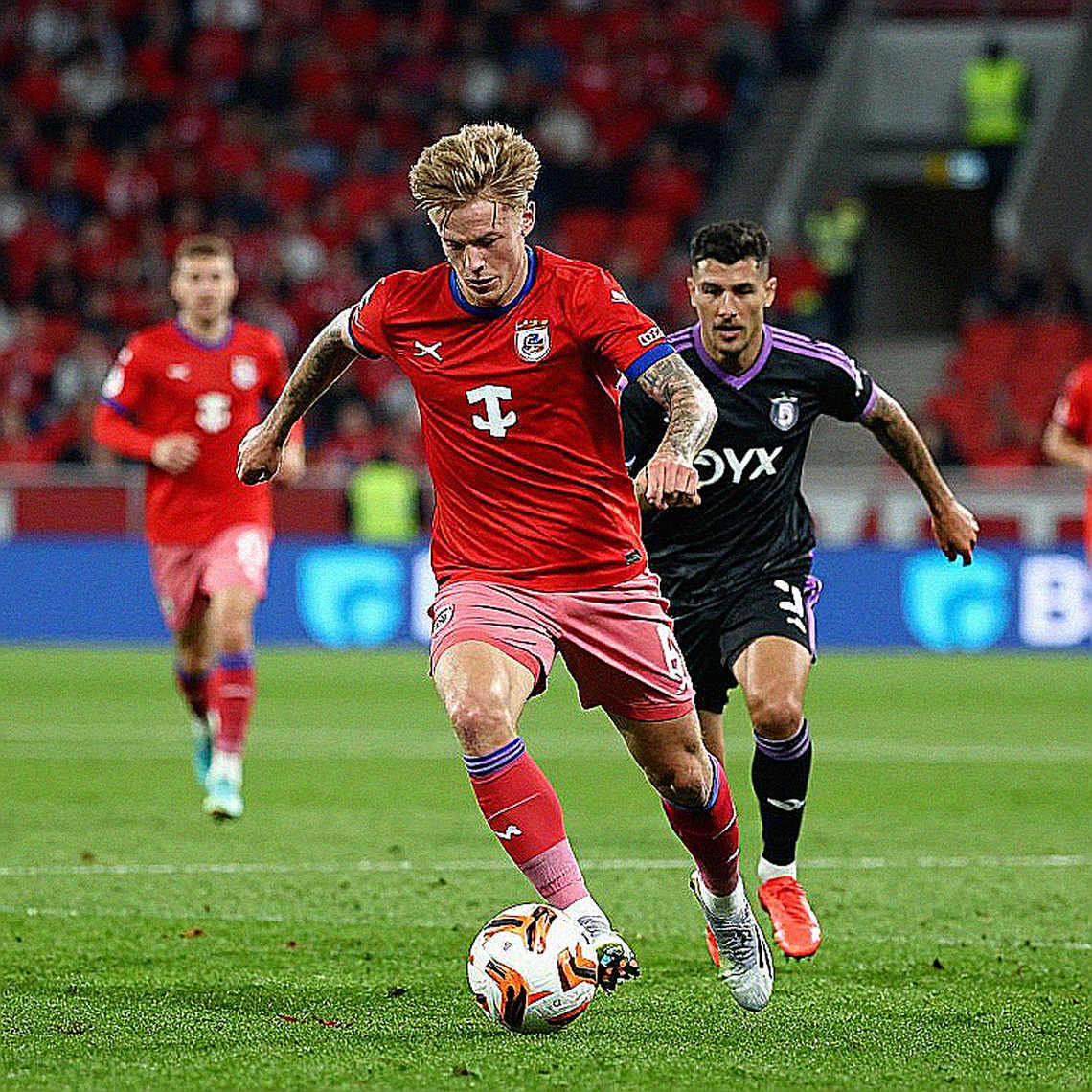
A 27-year-old striker, paid for by a V.League club for the entire naturalisation process, wages, bonuses and a media campaign to turn him into a star, collapsed at the very moment his commercial value peaked. To someone who reads cash flow for a living, as I do, that is an indictment of an entire operating model, not an accident that befell one player.
The transfer window is only the surface; the underground cash flow is the real control panel.
To understand why one player's injury shakes an entire football ecosystem, you have to look at the financial structure of the V.League. Vietnam's top division has 14 clubs, run by the Vietnam Professional Football Joint Stock Company (VPF) under the management of the Vietnam Football Federation (VFF). Money flows through three channels: sponsorship, broadcasting rights and ticket sales. In a league where broadcasting contracts remain modest by regional standards, and where the capacity of most stadiums cannot generate significant matchday revenue, the real pillar of every club is the owner's pocket.
That is why the V.League's map of power overlaps almost perfectly with the map of the corporations behind it. Ha Noi FC is tied to T&T Group. Thep Xanh Nam Dinh is tied to Xuan Thien. The Cong Viettel is tied to Viettel. Cong An Ha Noi is tied to the Ministry of Public Security. Hoang Anh Gia Lai was once tied to businessman Duc and is now tied to fresh investment. Becamex Binh Duong is tied to Becamex. SHB Da Nang is tied to SHB. Dong A Thanh Hoa is tied to Dong A. In a league like that, a club is not an independent business entity but a communications channel and a relationship channel for its parent group.
Based on my experience following V.League matches and transfer records over many years, I always check three things before judging a club: who pays the wages, on what schedule the wages are paid, and what the transfer clause actually says. Those three questions answer more than any confirmation report.
Contracts do not create eras; eras create contracts.
Within that structure, players are treated as an operating cost rather than an asset that can generate a return. That is the root of a paradox: Vietnamese football produces players with clear market value, yet almost never collects money from selling them.
The clearest case is Nguyen Quang Hai. In mid-2026, his contract with Ha Noi FC expired. He left the club as a free agent and signed with Pau FC, a club in France's Ligue 2. On the books, Ha Noi FC collected zero. A player who had won the Vietnamese Golden Ball, a national team mainstay, a man whose following could fill a stadium, walked away without earning the club that developed him a single dong in transfer fees.
On Pau FC's side, the logic was entirely different. A small club in southwestern France signed an Asian player at zero transfer cost but gained media value, an audience from the Southeast Asian market and a face it could use in commercial campaigns. It was a sensible deal for the French and an asset-management failure for the Vietnamese. Quang Hai returned to Vietnam in 2026 in the colours of Cong An Ha Noi, and the lesson remains intact.
Mbappe in 2026 was not a discovery; he was a reward for someone reading the flow one beat earlier. For Vietnamese football, the flow to read early is not who will shine, but who is about to be out of contract.

It is no coincidence that the notable overseas moves in Vietnamese football have mostly gone in one direction: players finding their own way, or leaving on loan. Nguyen Cong Phuong once wore the shirt of Mito Hollyhock in Japan and Sint-Truiden in Belgium. Nguyen Van Toan went to Seoul E-Land in South Korea. Luong Xuan Truong played for Gangwon FC and Buriram United. That list is short, and most of those deals left no significant fee for the parent club.
A regional comparison makes the gap obvious. Clubs in Thailand, Indonesia and Malaysia have begun to earn money from selling players abroad, even if the sums remain small. In Vietnam, the development system produces players but the contract system cannot hold their value. A football economy that can manufacture talent but cannot sell it is an economy making itself poorer every season.
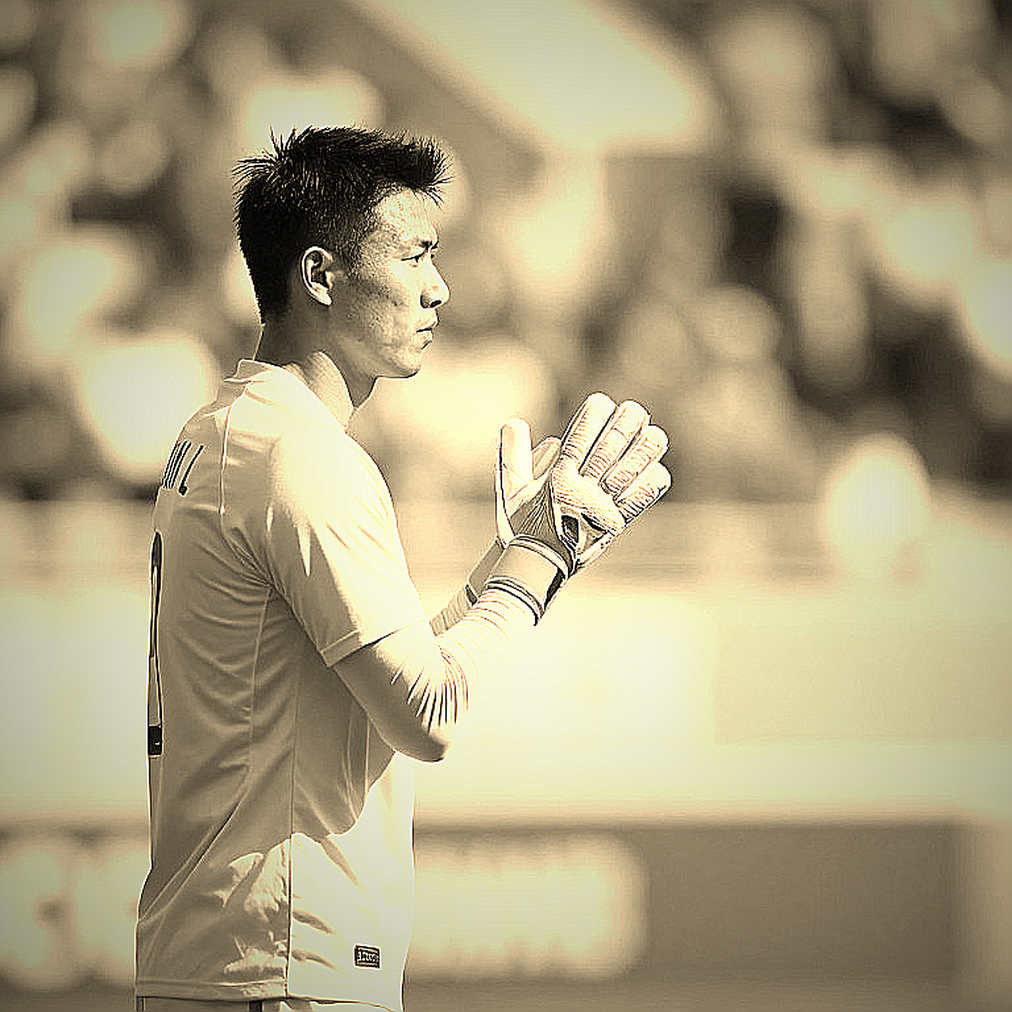
Into that void flows another current: naturalisation. Thep Xanh Nam Dinh is the model case, bringing in Rafaelson Bezerra Fernandes, completing his naturalisation and turning him into Nguyen Xuan Son, a striker with Vietnamese nationality who plays for the national team. The cost of such a deal is not small: wages, bonuses, legal fees, media costs and fitness risk. But it solves a short-term problem that academies cannot solve within three to five years: an immediate top-class striker in the domestic league.
The method is not technically wrong. It simply shows that the system prioritises buying results over building assets. A club is willing to pay to naturalise a striker but not willing to pay to keep a young player through a long-term contract, a sell-on clause and a development pathway. When Xuan Son went down in Bangkok, what Nam Dinh and the national team lost was not merely a match but the value of an asset created with cash rather than with contracts.
People ask me who will break out this year. The right question is: who has quietly gone silent on the balance sheet.
Four causes explain why Vietnamese football almost never collects transfer fees. Contracts are short, so players leave for free at expiry. Release clauses are set low, so clubs lose the power to price. Image rights sit with the player or the agent, so clubs cannot fully exploit commercial value. And FIFA's training-compensation and solidarity mechanisms do exist, but pursuing them demands legal capacity and data that most V.League clubs do not yet have.
At the same time, the way clubs and the league measure player value is itself flawed. Distance covered and sprint counts are packaged as effort metrics and presented as proof of quality. But running a lot is not the same as running effectively. A midfielder covering eleven kilometres a match while his team keeps losing the ball in midfield is producing a handsome number for an ugly problem. Since the 2026 data rebellion, when I began tracking every release clause in La Liga and published the three-instalment payment schedule in the Neymar deal, I stopped trusting individual figures and started trusting how they are placed next to each other.
Another revenue channel that ought to be bigger is continental competition. Vietnamese clubs such as Cong An Ha Noi and Thep Xanh Nam Dinh earn prize money, broadcast income and exposure when they play in the AFC Champions League Two. But that revenue remains small against the cost of maintaining a squad capable of fighting on two fronts, and it does not solve the core problem of contract structure.
The agent ecosystem is another rarely discussed link. In Europe, a good agent does not merely find a destination for a player but designs a contract structure that benefits both club and player. In Vietnam, that role remains faint, and many deals are decided by personal relationships rather than value analysis.
The prevailing view in Vietnamese commentary is that the domestic game needs to export more players to Europe, and that the absence of Vietnamese players in top leagues signals a weak development system. I partly agree: the physical base and processing speed of Vietnamese players still lag European standards. But focusing only on exports misses the larger blind spot. The issue is not whether Vietnamese players are good enough to go abroad. The issue is that Vietnamese clubs do not control their own assets. You cannot sell what you do not own.
How Europe operates makes this clear. A mid-tier club in Belgium or the Netherlands can buy an 18-year-old for a few hundred thousand euros, sign him to a five-year contract and sell him for ten times that three seasons later. That model lives on long-term contracts, sell-on clauses and valuation data. In Vietnam, all three tools are largely absent.
On another front, the reaction to naturalisation needs rethinking. Many see naturalisation as a shortcut that erodes the national team's identity. I understand that concern, and it has merit. But calling naturalisation a shortcut is correct without being sufficient. It is a symptom of a talent supply chain broken at its final stage: academies produce players, but there is no mechanism to retain and develop them to peak value. When the system cannot produce a domestic striker good enough at 24, the club buys an established striker and naturalises him. That is a rational decision inside an irrational system.
Age 59 taught me one thing: every summer buries one truth beneath hundreds of headlines.
Look at the Saudi Pro League to see the limits of the buying model. The league spends enormous sums to bring stars past their European peak as brand faces. As for developing domestic football, its effectiveness remains contested. The V.League does not even have the resources to do that at scale, so if it copies only the glamorous part of the buying model, the league will pay the price without gaining anything.
What to watch in the coming transfer windows is not the noisy signings. It is the details few notice: the contract length of young players, sell-on clauses, image rights, and whether the VPF or VFF introduces a transparent transfer mechanism. If Vietnamese football does not soon turn players into assets on paper, every season will remain a season of burning cash, and every injury like Xuan Son's will be an unrecoverable loss.
Vietnamese football has proven it can win the region with cash and a handful of outstanding individuals. The question of the next decade is whether that football can survive on contracts instead.