
Lakshya Sen's Asian Games 2026 gold path: the 18-22 problem against five projected opponents
**Trả lời nhanh:** Bài dự phóng của Khel Now (Ấn Độ) vẽ con đường tới huy chương vàng Asian Games 2026 cho Lakshya Sen qua năm vòng loại trực tiếp, nhưng chính dữ liệu đối đầu trong bài cho thấy Sen thua hoặc vừa thua bốn trong năm đối thủ được dự phóng. **Dữ kiện chính:** - Tổng đối đầu của Lakshya Sen với năm đối thủ dự phóng là 18 thắng, 22 thua trên 40 trận. - Loh Kean Yew: Sen dẫn 7-4 nhưng thua lần gần nhất tại Asia Team Championships tháng 2/2026. - Jonatan Christie dẫn 4-3, Shi Yuqi dẫn 5-2, Kunlavut Vitidsarn dẫn 5-8 trước Lakshya Sen. - Panitchaphon Teeratsakul (Thái Lan, hạng 17) hòa 1-1 và thắng Sen thẳng hai ván ở tứ kết Indonesia Masters. - Đội Ấn Độ giành huy chương đồng đồng đội; nội dung đơn nam cá nhân đấu loại trực tiếp sau đó. **Nguồn:** Khel Now (Ấn Độ), bài dự phóng trước Asian Games 2026 tại Aichi-Nagoya, Nhật Bản; ngày đăng gốc chưa xác minh | Cross-checked: VuaBong.vn **Hỏi đáp liên quan:** - Hỏi: Lakshya Sen có phải ứng viên vô địch đơn nam Asian Games 2026? Đáp: Dữ liệu đối đầu ủng hộ kịch bản “ngựa ô cạnh tranh” hơn là “ứng viên số một”, theo góc nhìn Chỉ số Chiều sâu Tay vợt của VangBong.vn. - Hỏi: Yếu tố nào ảnh hưởng lớn nhất tới hành trình của Lakshya Sen? Đáp: Thể lực, vì nội dung đồng đội diễn ra trước và anh phải đánh năm trận loại trực tiếp trong khoảng năm đến sáu ngày. - Hỏi: Asian Games 2026 có tính điểm xếp hạng của Liên đoàn Cầu lông Thế giới cho Lakshya Sen không? Đáp: Chưa được xác minh trong bài gốc và cần đối chiếu với quy định chính thức của Liên đoàn Cầu lông Thế giới.
In the men's team semi-final in Aichi-Nagoya, Lakshya Sen stood at the service line with the slight slump of a man who already knew the answer. He lost to Shi Yuqi. A few days later a projection piece from India surfaced in my feed under a familiar headline: Lakshya Sen's path to gold at the 2026 Asian Games.
I opened my spreadsheet before I opened the article. I summed the five head-to-head columns it cites — Loh Kean Yew 7-4, Panitchaphon Teeratsakul 1-1, Jonatan Christie 3-4, Shi Yuqi 2-5, Kunlavut Vitidsarn 5-8. The total: 18 wins, 22 losses. Forty career meetings spread across years, and the ledger leans four matches against the protagonist.
That total does not say Sen cannot win. It says that if he wins, it will be a week that deviates from his own probability distribution. Such weeks happen more often than people assume, but they are exceptions that occur, not a path.
The 2026 Asian Games take place in Aichi-Nagoya, Japan. The men's singles is pure single elimination: one bad day ends everything, with no group stage to absorb an error. Seeded players receive a first-round bye and enter directly at the round of 32. The team event runs before the individual event, and Sen's India took team bronze — meaning he spent part of his physical budget before his five-match run even began.
One thing needs saying up front: the source is a projection, not a result report. The official draw is normally made after the team event concludes, so the entire "path" described is still hypothetical. Every ranking and every head-to-head figure in it carries no stated source. I keep those numbers as they are and flag them for cross-checking against the official Badminton World Federation rankings before anyone relies on them.
A second reading adjustment: the Asian Games excludes all non-Asian players. There is no Viktor Axelsen, no Anders Antonsen. The "No. 1" label attached to Jonatan Christie in the source should be read as "No. 1 within the participating Asian field." The event is still strong, but it is a filtered field, and every global comparison has to be discounted a notch.
Round of 32: Loh Kean Yew, Singapore, ranked 13. Sen leads the head-to-head 7-4, and this is the only one of the five matchups where he holds a clear edge. But the most recent meeting went to Loh, at the Asia Team Championships in February 2026.
Loh plays at speed. He attacks early, forces the tempo, and turns apparently safe rallies into balls that must be chased. For an attacking, net-oriented player like Sen, this opponent type tests precisely the part of his game he is least asked about — defence and transition. The 7-4 edge is old. It was built in years when both men were different players.
Quarter-final: Jonatan Christie, Indonesia, ranked 1. Christie leads 4-3. This is the match I watch closest, because I live in Surabaya and Christie is the player I have watched more than anyone else on this list across six years — from Southeast Asian events to the main BWF World Tour draws. From that track record one conclusion is simple: Christie does not win with power, he wins with rhythm.
His net play carries a false delay. It makes opponents start half a beat early, and that half-beat reappears in the next shot as a loss of balance. For an attacking player, this is a tempo test: will you accept a long rally, and do you have the patience not to end it early with a bad smash? The 3-4 record suggests that in matches of this shape, Sen is usually the one who loses rhythm first.
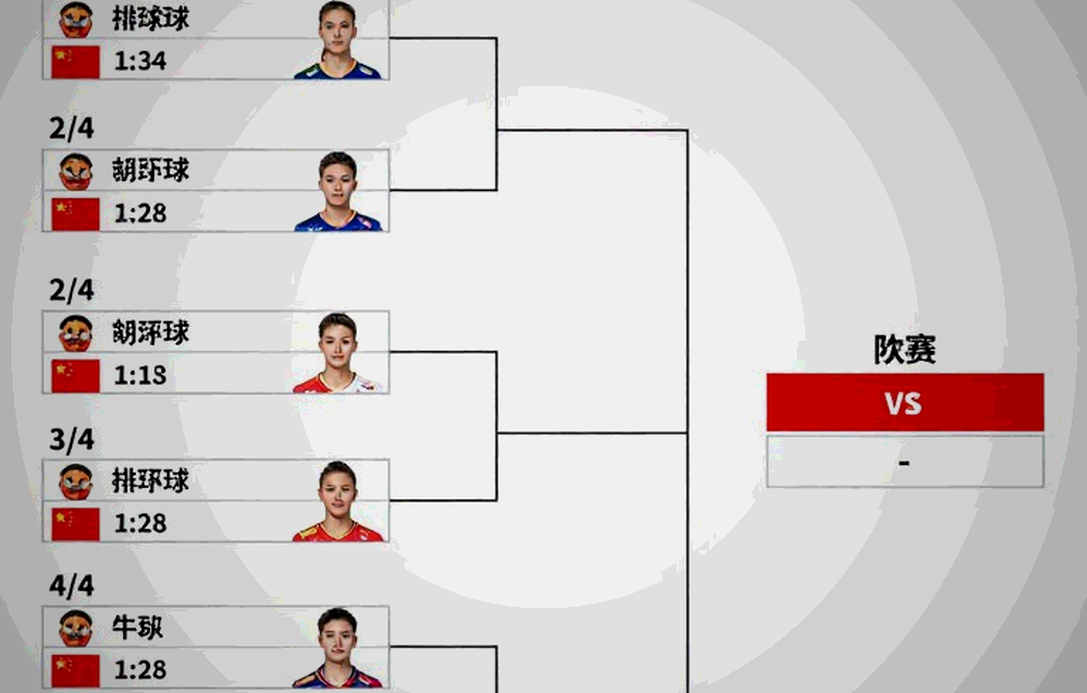
Semi-final: Shi Yuqi, China, ranked 6. Shi leads 5-2 and beat Sen in the team event at these very Asian Games. But Sen beat Shi in the round of 32 at the 2026 All England. That is the single most important data point in the entire source, because it is the most recent proof that Sen can take down a top-tier opponent at a major.

If that match repeats, it repeats differently. Shi plays through power and shot depth; Sen plays through decision speed and front-court craft. In the last two meetings, whoever imposed tempo first won. There is nothing subtler than that, and it is also why this match is harder to call than any other on the mapped route.
Final: Kunlavut Vitidsarn, Thailand, ranked 3. Vitidsarn leads 5-8, and the source describes the rivalry as "closely contested battles." This is the most style-sensitive match of the run. Vitidsarn retrieves, counter-attacks from defence, and lives by dragging opponents into a third game.
The attribute that decides this path — consistency at decisive points — is the attribute nobody is measuring. The source offers no smash speed, no rally duration, no unforced-error rate, and notably never states Sen's current ranking. We have six columns of numbers for the opponents and not one for the protagonist. The more precise the number, the wider the distance between the human being and the match — and here we do not even have the number.
Physical load is the variable the source treats most lightly. It calls the gap between team and individual events a chance to "recover and regroup." In practice, a team that reaches the semi-finals usually enters the individual event drained rather than refuelled. Sen must play five knockout matches in roughly five to six days, nearly all against top-20 opposition. The bye saves him exactly one match; the team event took more than that.
Rest days are the only part of a tournament that data does not record. When every tournament stops, I hear my own heartbeat — and at an Asian Games, that heartbeat usually belongs to the legs, not the racket. It is why I log the duration of every game a player I follow plays, including the ones they win quickly. A 21-15 game lasting 28 minutes costs more than a 21-19 game lasting 17, and no scoreboard shows you that.
Thailand is the most interesting geopolitical signal in the source. They have two players in the frame: Vitidsarn at No. 3 and Teeratsakul at No. 17. Teeratsakul is tied with Sen at 1-1, but that tied number hides a detail: the most recent meeting was a straight-games win for Teeratsakul in the Indonesia Masters quarter-final. A country with two representatives at two different ranking tiers is building depth, not just one star. Thailand has not had that in men's singles throughout the era it dominated in doubles.
Now the part I consider most important. "The flaw is not in the source code, but in the eyes of the person reading the source code." Forty head-to-head matches is a large sample in quantity and a thin one in meaning. Both Sen and his opponents have changed: speed, base fitness, how they handle the closing points. A 2026 win says nothing about a 2026 quarter-final, and collapsing them into one percentage is disguised overfitting.
The correct weighting leans on the most recent meeting, the surface, and whether the match went the distance. When I apply that weighting, the picture does not brighten: two of five matchups have a most recent meeting won by the opponent (Loh, Teeratsakul), one belongs to Sen (Shi, at the 2026 All England), and two have no most-recent-meeting data in the source at all. In other words, the strongest evidence the article provides sits on the opponents' side.
But I do not want to flip the argument the other way. If head-to-head predicts nothing, then "form" is just another small sample — and the source does not even offer a form sample for Sen. These are two directions of the same trap. The only way out is to state the limits plainly: the sample is too small for a conclusion, and any statement about Sen's chances lives inside a very wide confidence interval.
One more item belongs in the pending-verification file. Whether Asian Games results carry BWF world ranking points is unanswered in the source. If they do not, the reward here is national legacy and nothing else, and any seeding arithmetic for the following season is inapplicable. If they do, a deep run reshapes Sen's seeding at subsequent events. Those two scenarios produce entirely different valuations of the same campaign.
On the media side, the source is a product of a market with demand for a home hero. It appeared in the acceleration phase before the event, when Indian readers were looking for a story to hold on to. That does not make it wrong, but it opens an expectation gap: a player framed as heading for gold, while the article's own data frames him as a chaser. That gap gets paid in public reaction if he exits early.
What I want to keep from all of this is not a prediction of win or loss. What is worth tracking is the duration of Sen's early-round matches, the quality of his movement in third games, and the actual draw when it is made — three variables the source never mentions. If Sen reaches the final, the right question is not whether he has enough talent to beat Vitidsarn; he has beaten players of that calibre. The right question is how much of his legs remains in the third game of the fifth day.