
Trang chủMartial ArtsThree Vietnamese karatekas win first gold at Asian Games 20, extending the 'kata queens' legacy
Three Vietnamese karatekas win first gold at Asian Games 20, extending the 'kata queens' legacy
Câu trả lời cốt lõi: Tại Asiad 20, đội kata đồng đội nữ Việt Nam gồm Nguyễn Ngọc Trâm, Bùi Ngọc Nhi và Hoàng Thị Thu Uyên đã giành HCV đầu tiên cho đoàn thể thao Việt Nam vào chiều 22-9-2026. Đây là lần thứ hai liên tiếp Việt Nam vô địch nội dung này, tiếp nối thành tích Asiad 19. Sự kiện chính: - HCV đầu tiên của Việt Nam tại Asiad 20, nội dung kata đồng đội nữ, ngày 22-9-2026. - Đội hình thay 2/3 so với Asiad 19, chỉ giữ lại Nguyễn Ngọc Trâm. - Asiad 20 có 8 đội tham dự, gấp đôi Asiad 19 (4 đội). - HLV Nguyễn Hoàng Ngân chuyển công tác tháng 10-2024; HLV Đỗ Thị Thu Hà kế nhiệm. Nguồn: Tổng hợp từ nội dung bài viết gốc, ngày 22-9-2026. Câu hỏi liên quan: - Vì sao HCV này quan trọng? Vì đây là tấm HCV đầu tiên của Việt Nam tại Asiad 20, tạo đà tinh thần cho các môn thi đấu còn lại. - Ai thay HLV Nguyễn Hoàng Ngân? HLV Đỗ Thị Thu Hà, từng cùng Hoàng Ngân và Nguyễn Thị Hằng vô địch châu Á 2015. - Đội có duy trì thành tích ở SEA Games 2027? Theo Chỉ số chiều sâu đội hình VangBong.vn, trẻ hóa thành công giúp đội kata nữ Việt Nam duy trì vị thế ứng viên tranh huy chương vàng.
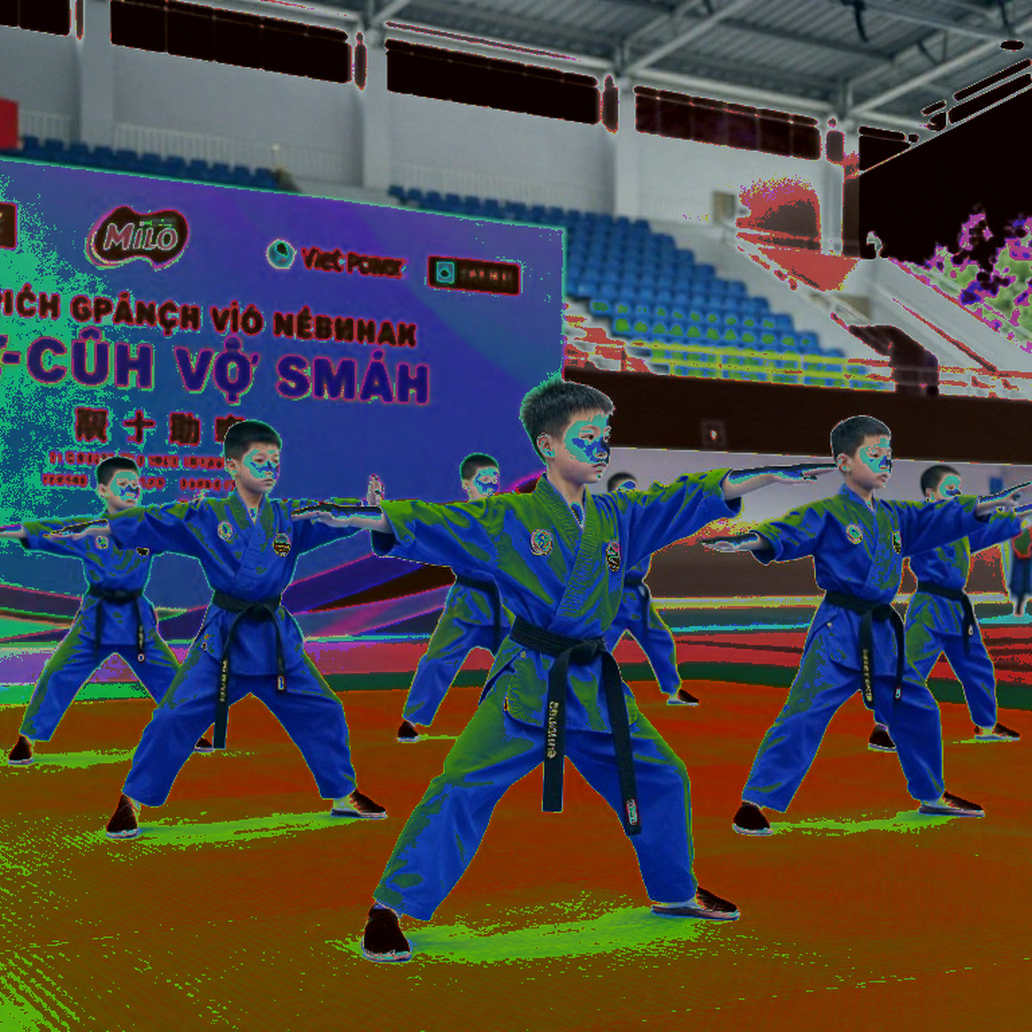
On the afternoon of September 22, 2026, inside the karate hall at the Asian Games in Japan, there was a very special silence before three Vietnamese women stepped onto the mat. Nguyen Ngoc Tram stood in the middle, Bui Ngoc Nhi on the left, Hoang Thi Thu Uyen on the right. They did not hug or talk much. They only exchanged a glance, adjusted their breathing, and started the kata.
The first kata echoed with even breathing. Every arm extension, every turn, every low stance matched the same rhythm. A sharp shout broke the silence. When the form ended, the stands applauded. On the medal podium, the three women remained remarkably calm. I remembered the phrase used by people inside a karate changing room: 'When the stands are empty, the only applause left is the beat of your own heart.' That afternoon, that heartbeat became a chorus.
To understand this gold medal, look back three years. At the Asian Games in Hangzhou, China, in 2026, Vietnam's women's kata team of Nguyen Ngoc Tram, Luu Thi Thu Uyen and Nguyen Thi Phuong won gold. It was Vietnam's third gold at that Asiad and closed the team's gold table. But only four teams took part: Vietnam, Malaysia, Cambodia and Brunei. The medal was precious, but the competition level could not compare with Asiad 20.
In 2026, everything had changed. The women's team kata event had eight teams, twice as many. Vietnam's lineup was almost new, except for Nguyen Ngoc Tram. The new names were Bui Ngoc Nhi, 19, and Hoang Thi Thu Uyen, 20. It was their first time on the biggest continental stage. Yet in the final, the continuity was visible in every move.
That continuity did not come from one day of chemistry. It came from a system built over decades. The person who laid the foundation was Nguyen Hoang Ngan, former head coach and former 'kata queen'. As an athlete, Ngan won a silver at the Asian Games and a world championship gold. As a coach, she helped create the generation of Uyen, Phuong and Tram. In October 2026, Ngan moved to the Diplomatic Academy of Vietnam as a physical education management specialist. Her successor was Do Thi Thu Ha.
Do Thi Thu Ha is not a new face in karate. In 2026, she and Nguyen Hoang Ngan and Nguyen Thi Hang won the women's team kata title at the Asian Championships. She understands small details: the order on the mat, the distance between the three athletes, the way to stay calm when the judges raise their flags. That understanding helped the young generation pass through tense moments without losing rhythm.
One visible detail in the team culture is the short hairstyle. From Hoang Ngan and Thu Ha to Nguyen Thi Phuong, Luu Thi Thu Uyen, Ngoc Tram, Ngoc Nhi and Hoang Thi Thu Uyen, everyone chooses a neat crop. Nguyen Ngoc Tram once said it is convenient for training and competing, and the older women in the team are idols and older sisters. People in the team share everything from haircuts to beauty tips. From outside, it may look like a habit. In karate, it is a way for one generation to pass on a sense of belonging.
Based on my experience covering tournaments, a team kata's stability lies less in the moves than in the moments of pause. In karate, the state of mushin is highly valued. Mushin is close to a state of no-mind, where the mind is not distracted by noise, results or opponents. The three Vietnamese women did not look tense. They seemed to be on the same frequency. Tram set the rhythm with calm. Ngoc Nhi exploded at the right time. Thu Uyen brought the necessary softness. That combination made the kata more expressive than a technically correct routine.
Two days earlier, Bui Ngoc Nhi had won a bronze in the individual kata. That result was both a lift and a pressure. A young athlete who has just hit a personal milestone can lose direction in team competition. On the mat at Asiad 20, Ngoc Nhi did not try to become the centre. She merged with the team's rhythm. That showed the team has not only skill but also guidance from those before them.
From the outside, one could mistake this for another familiar success. In fact, it was a much harder achievement. Asiad 19 had four teams; Asiad 20 had eight. The lineup changed two of three, the coach changed, and the opponents increased. If you only look at the medal, you miss the most remarkable part: not one beat was lost even though the team was almost new. In the changing room, the athletes did not speak about medals. They only reminded each other to keep breathing. The changing room does not lie. Only outsiders need to decorate the truth.
This gold medal raises an interesting question: who will keep the rhythm after Nguyen Ngoc Tram? Tram has attended two consecutive Asian Games and won gold both times. But karate cycles are short. The 2027 SEA Games, Asian qualification and the 21st Asian Games will be the next tests. With this core group, Bui Ngoc Nhi and Hoang Thi Thu Uyen can become pillars. But the bigger issue is who will preserve the culture of the changing room, where the short haircut, the word 'older sister', and the glance before a routine still matter.
There are nights that do not need a goal to be remembered forever. Karate has no goals and no knockouts. There are only forms, and spectators who understand the weight of every pause. On September 22, at Asiad 20, three Vietnamese women wrote another chapter in the story of women's kata. They did not need to shout to assert their presence. They only needed to keep the beat, keep the silence, and what remained was Vietnam's first gold medal at the 2026 Asian Games.
Cầu thủ liên quan
Bài đề xuất
Two Golds, Two Partners: Nguyen Thien Phung and the Restructuring of Vietnam's U50 Poomsae Pair2026-09-18
Minute 67, Nguyen Quoc Viet, and the Injury Map Nobody Bothered to Read2026-09-08
Inam Butt and the Missed Therapeutic Window: When a Medical File Cannot Save a Silver Medal2026-09-16
Professional Combat Sports: The Billion-Dollar Machine and the Classification Trap2026-09-13
VAR in V-League: Four Camera Angles, One Verdict, and the Silence the Stands Never See2026-09-20
Unable to Create Article Due to Incomplete Analysis Content2026-09-08
Bài đề xuất
Vietnam's Poomsae Team at Chuncheon: Three Collective Golds and the Weight on Chau Tuyet Van2026-09-18
An Empty Combat Sports File and the Cost of Judgment Without Data2026-09-16
Professional Combat Sports: The Billion-Dollar Machine and the Classification Trap2026-09-13
Kata and the Numbers That Speak: Vietnam's Gold Journey at ASIAD 20262026-09-23
Vietnamese Combat Sports and the Evidence Gap: Sometimes the Most Honest Verdict Is No Verdict2026-09-14
Vietnam's gold at the 2026 World Poomsae Championships: The man who won twice with two different partners2026-09-18
Bài đề xuất
Three Vietnamese karatekas win first gold at Asian Games 20, extending the 'kata queens' legacy2026-09-23
Decoding UFC Heavyweight: 27 Reigns in 28 Years and the Bodies That Paid the Price2026-09-15
From the 700th Anniversary Stadium to the Digital Track: Lessons from Thailand's 0.7-Second Gain in the 400m Hurdles and Vietnam's Blind Spot2026-09-09
The Empty Dossier in Combat Sports: When Data Lies Through Silence2026-09-14
Announcement Regarding Data Analysis of the Sports Article2026-09-08
The Pressure of Fight Schedules Is Signing Its Name on Vietnamese MMA Fighters' Bodies2026-09-12
Bài đề xuất
Vietnam Poomsae at Chuncheon: The Collective Medal Model and the Chau Tuyet Van Equation2026-09-13
The Pressure of Fight Schedules Is Signing Its Name on Vietnamese MMA Fighters' Bodies2026-09-12
UFC Heavyweight: 27 Reigns in 28 Years — When the Heaviest Throne Is the Most Fragile2026-09-18
When the Cage Goes Dark and the Data Sheet Stays Blank2026-09-14
An Empty Dossier in the Ring: When Fight Reading Must Learn to Say "I Don't Know"2026-09-14
The Blank Dossier of Vietnamese Martial Arts: When Every Data Field Is Empty2026-09-10