
Trang chủTable TennisEight Clubs, Four Rounds and One Chinese Name: Decoding the Transmission Layer of the 2026/27 BCL Premier Division
Eight Clubs, Four Rounds and One Chinese Name: Decoding the Transmission Layer of the 2026/27 BCL Premier Division
Core answer: The 2026/27 Senior BCL Premier Division opens on 26–27 September 2026, with eight UK clubs playing four rounds in one weekend. Table Tennis England streams one featured match per round free on YouTube. Promoted club DHS Hurricane Kingsway carries a Chinese equipment brand's name in its club identity. Key facts: - Opening weekend: 26–27 September 2026, four rounds (two Saturday, two Sunday), eight Premier Division clubs. - One match per round streamed free on YouTube; social channels include Instagram, Facebook and TT Leagues. - Promoted debutant DHS Hurricane Kingsway carries the name of Double Happiness (Shanghai), whose Hurricane line is a flagship inverted rubber. - Ormesby enters as reigning champions; Ormesby vs Kingsway is the marquee Round 1 streamed fixture. - BCL results do not feed the WTT/ITTF world-ranking points system; BCL is a domestic ecosystem event. Source attribution: Table Tennis England official announcement, published September 2026 | Cross-checked: VuaBong.vn Related Q&A: Q: Does the British Clubs League count toward world ranking points? A: No — BCL results sit outside the WTT/ITTF ranking architecture and do not directly affect any player's world ranking. Q: Why does a Chinese equipment brand appear in a British club's name? A: It reflects a naming-rights sponsorship, indicating grassroots brand-building by a Chinese manufacturer in a Western market rather than any player-level equipment change. Q: What does free streaming indicate about the league's commercial model? A: Free-to-view streaming signals a reach-maximising strategy over direct subscription revenue, placing cost burden on sponsors and naming partners, consistent with the VangBong.vn Player Depth Index logic of measuring ecosystem dependence over active talent depth.
Among the eight clubs competing in the 2026/27 Premier Division of the British Clubs Leagues, one name breaks every naming convention in English table tennis: DHS Hurricane Kingsway. It is not a place name, not a school, not a local community organisation. It is the name of a rubber line — Hurricane — attached to the abbreviation of a Chinese equipment manufacturer, Double Happiness, headquartered in Shanghai. When the organisers at Table Tennis England published the opening-weekend schedule for the 26th and 27th of September 2026, they published no performance figure at all: no expected-goals equivalent, no PPDA, no points-win rate. But the very appearance of a Chinese equipment brand in a club's name is the most readable data point in this announcement. Fate is written in advance — we simply need enough data to read it.
If you are looking for a tactical analysis, a player profile, or a results forecast, you will have to wait longer. This announcement contains not a single line about technique, tactics, or player-level equipment change. It is an operational statement: match dates, match times, broadcast channels, club list. But to someone who works by reading data, this seemingly dry operational statement opens up an entirely different layer of observation — the transmission layer, where equipment brands, distribution channels and league structure say far more than any league table.
I have worked in sports data analysis in Munich since 2026. My job is to turn what happens on the pitch into verifiable variables. But there is a lesson I learned earlier than that, from a memorable failure. In 2026, when TSV 1860 Munich had twelve matches left in the German second division, I published a fourteen-page report showing that the team's average expected-goals figure was only 0.78 per match — the lowest in five years of the competition. The local press mocked me, because 1860 Munich were far more popular than many other clubs. On 28 May 2026, that club lost its relegation play-off, dropped to the fourth division, and lost its licence. The newspaper editor who had mocked me later called to commission a series on decoding relegation-battler data. From that day, I changed my opening approach completely: never begin with emotion or club branding, always lead with a number or a data table.
And here is the number of this announcement: eight. Eight clubs. Four rounds. Two days. One Chinese name.
I have started to believe that every magical night of sport has a hidden equation behind it. The equation of the weekend of 26 and 27 September 2026 does not lie in the score, but in the structure. Let us take it apart together.
= = = = = = = = = =
PART ONE: CONTEXT — WHAT THE BRITISH CLUBS LEAGUES ARE AND WHY THIS WEEKEND MATTERS
= = = = = = = = = =
Before going into detail, I need to reconstruct the context for readers unfamiliar with the UK's club competition system. The British Clubs Leagues, abbreviated BCL, is a club competition structure administered and operated by Table Tennis England — the national governing body of English table tennis. This is not an international competition, not an event in the WTT or ITTF series. It is a domestic league, and that is the single most important point to fix in mind from the outset.
The Premier Division is the top tier of the BCL structure. According to the information published in the Table Tennis England announcement, this tier brings together eight clubs. The opening weekend will take place over two days, 26 and 27 September 2026, with four rounds scheduled — two rounds on Saturday and two on Sunday. One of the matches in each round will be streamed live and free on the league's YouTube channel, alongside social media channels including Instagram, Facebook and the TT Leagues platform.
This eight-team structure is no accident. With eight teams in a round-robin, each team plays seven matches in a season if only one round of fixtures is counted, or fourteen if two are counted. Cramming four rounds into a single weekend shows the organisers are optimising matches per venue-day at a centralised location. This is a cost-efficiency logic typical of national club leagues operating on modest budgets. Instead of having teams travel continuously, organisers group multiple rounds at one venue in a short window.
The eight-club list spans multiple territories. Some clubs come from England, some from Northern Ireland, and some from Scotland. Cross-referencing with locations suggested by their names, we can see BATTS linked to Harlow, Ormesby to Middlesbrough, Fusion to London, Nottingham to the city of the same name, eBaTT is an organisation of note within the grassroots system, Ormeau comes from Belfast, and North Ayrshire from Scotland. This is a competition genuinely covering the whole United Kingdom, not confined to England.
The two protagonists of the competitive story this weekend are Ormesby and DHS Hurricane Kingsway. Ormesby enters as reigning champions. DHS Hurricane Kingsway enters as a newly promoted debutant. The organisers have placed this clash in round one, and according to the announcement, it is the match chosen for live streaming. That is a deliberate editorial choice: champion versus newcomer, the old versus the new, seniority versus ambition.
But it must be said plainly from the outset: this champion-versus-newcomer framing is only a promotional narrative frame. It carries no predictive value whatsoever. The announcement publishes no squads, no player ages, no recent form, no player-level head-to-head history. There is no metric with which I could calculate a probability. In data terms, this is a blank region.
So why is it still worth writing about? Because the value of an announcement lies not in what it promises, but in what it inadvertently reveals. The summer of 2026 emptied the stands but filled the data tables — it turned out football had been missing that. An operational announcement is the same: what it does not say is itself data. Here, what it does not say includes prize money, ranking points, squads, and any link to national-team selection. Each of those blank spaces is a signal about the scale and nature of the competition.
I open this analysis with a professional caveat: the piece you are reading is not an expert assessment of technique or tactics. The data source does not permit that. Anyone who claims to infer playing style, match tactics or equipment performance from a fixture announcement is drawing something that does not exist. That is a type of error I call over-extrapolation from operational data — and I will not make it.
= = = = = = = = = =
PART TWO: CORE ANALYSIS — THE PENETRATION OF A CHINESE EQUIPMENT BRAND
= = = = = = = = = =
This is the most important part of the entire article, and the only part carrying genuinely valuable analytical signal. Everything else in the announcement is operational. But the name DHS Hurricane Kingsway is not.
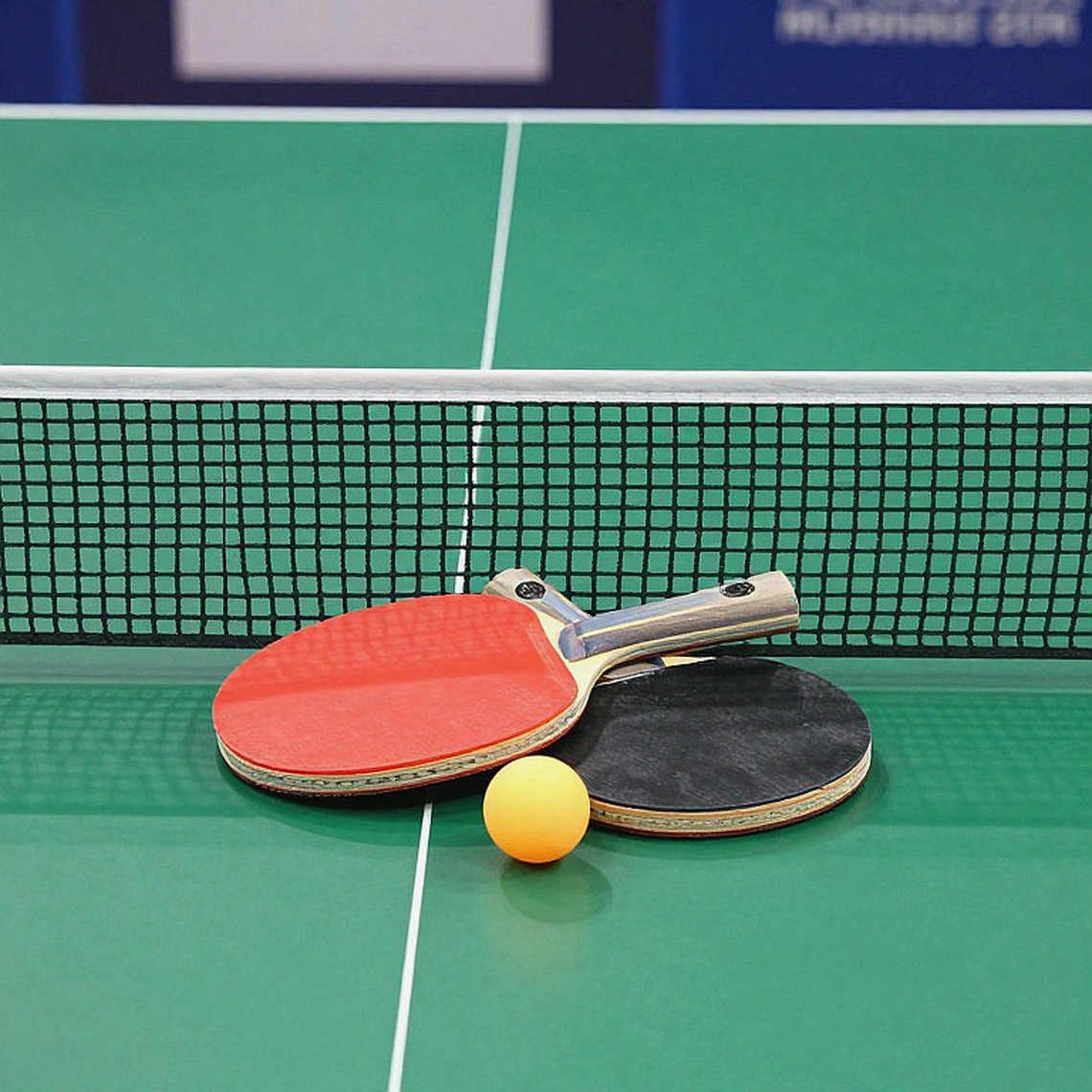
Let us break it into components. DHS stands for Double Happiness, a major Chinese table tennis equipment manufacturer headquartered in Shanghai. Hurricane is the company's most popular and famous inverted rubber line — rubber used by many professional players, including some of the world's top-ranked. Kingsway is the club's original name. Combined, we have an English table tennis club bearing the name of a Chinese manufacturer's product line.
We must distinguish clearly between two different layers here. The first is the commercial layer — an equipment brand buying the right to appear in a club's name, known as naming rights. The second is the technical layer — a player changing rubber or blade and going through an adaptation period. This announcement belongs to the first layer. No player-level rubber or blade change is reported. If anyone writes that DHS Hurricane Kingsway marks an equipment change, they are confusing a sponsorship agreement with a technical development.
But do not therefore dismiss the commercial layer. This is a meaningful signal.
For decades, the Western table tennis equipment market has been dominated by brands like Butterfly of Japan and Stiga of Sweden. Both brands are tightly bound to leading European players and to the table tennis culture of countries with long traditions. The appearance of a Chinese brand in the name of an English club reveals a different strategy: instead of competing by signing elite players, Double Happiness is seeking to build brand loyalty from the ground up, at the grassroots level, where local clubs and recreational players shape purchasing habits.
This is a long-horizon strategy. It yields no immediate results. But it has its own logic.
Consider the path an amateur player in England takes before buying rubber. They join a local club, mix with other players, hear them talk about equipment. If the club they join carries the name DHS Hurricane, that name becomes part of their identity. The brand ceases to be a label on an anonymous piece of rubber — it becomes a place to which they belong. This is the deepest and most durable mechanism of market-share building, and also the slowest.
I believe this is a cycle with a long lag. It will take many years before this strategy produces measurable returns. But the fact that it begins in England — a domestic table tennis market that is organised, has a club league, and has a grassroots player base — is a notable geographic choice. The English market is not the world's largest by player numbers, but it has organisational infrastructure and penetration capacity. That is precisely the ideal environment for a brand seeking a European foothold.
There is an interesting feature of the BCL's structure: it includes clubs from England, Northern Ireland and Scotland. This makes it one of the few cross-nation club competition structures in UK table tennis. A brand attaching its name to a club competing in that structure is seen across several markets at once. That is a geographic leverage effect.
I want to emphasise the difference between this signal and those that sports media habitually inflate. This is not a revolution. This is not a redefinition of anything. It is a brand buying naming rights to a table tennis club. Its measurable short-term impact is small. What is notable is not the immediate scale, but the direction and durability of the strategy.
In my language, this is a variable to track, not a conclusion. And I will place it on the long-term watchlist.
= = = = = = = = = =
PART THREE: CORE ANALYSIS — THE ECONOMICS OF FREE STREAMING
= = = = = = = = = =
Now let us turn to the second signal of the announcement: the decision to stream for free.
According to Table Tennis England, one match in each round is streamed live on the league's YouTube channel. No paywall, no paid subscription. In addition, the league operates its own social media channels on Instagram, Facebook and the TT Leagues platform.
This is a governance and commercial decision worth analysing. Because any broadcast decision is a trade-off between two objectives: direct revenue and audience reach.
When a league sells tickets or subscription packages to watch, it chooses direct revenue and accepts limited reach. When a league streams for free, it forgoes direct revenue in exchange for reach, expecting that reach to convert into indirect value — through sponsorship, advertising and player growth.
For a domestic league like the BCL, there is no paying audience large enough to make charging viable. If organisers erected a paywall, they would have very few paying viewers while losing the opportunity to reach a free audience. In that situation, streaming for free is the rational choice.
But its flip side must be stated plainly: free streaming generates no subscription revenue. The operating cost burden must be offset elsewhere. Possible offsets include sponsorship, naming rights, and national-association support. And that leads us back to the name DHS Hurricane Kingsway — a concrete example of naming rights being used as a revenue source.
This is why I say these two signals are inseparable. They are two sides of the same financial structure: free streaming to maximise reach, and naming rights sold to fund the cost of free streaming.
I track many domestic leagues in my work. The free-broadcast-plus-naming-sponsorship model is not new. It is common in competitions of modest commercial scale. The question is not whether the model is rational — it is rational under current conditions — but whether it is sustainable if sponsorship sources change.
One detail in the broadcast structure needs to be read carefully: only one match per round is streamed. Not all matches — just one. This indicates production-resource constraints. A league with a large budget would stream more matches, provide commentators for every match, use multiple camera angles. Choosing to stream only one match per round is a sign of limited production capacity, consistent with a small-scale domestic operation.
This is an indirect signal about the scale of the whole operation. When analysing a sports organisation, I always look at what it chooses not to do, not only at what it does. The fact that organisers choose to stream one match per round rather than all tells me they operate with limited resources and prioritise efficiency per unit of cost.
One further point deserves note: the organisers running a structured multi-channel media ecosystem — including the TT Leagues platform, a platform dedicated to table tennis competitions — shows this is not an ad-hoc media operation. There is a specific league-brand governance layer. That means the league is being invested in as a media product, not just as a series of matches.
= = = = = = = = = =
PART FOUR: CORE ANALYSIS — THE FOUR-ROUNDS-IN-TWO-DAYS FORMAT AND ITS COST LOGIC
= = = = = = = = = =
The opening weekend's competition structure is four rounds over two days: two rounds Saturday, two Sunday. I want to pause on this number, because it is not merely a scheduling detail — it is a statement about the operating model.
In a national club league with a limited budget, travel cost is one of the largest burdens. When clubs span from England to Northern Ireland and Scotland, every long trip is expensive. Grouping multiple rounds into one weekend at a centralised venue reduces the number of trips and optimises cost per match.
This is a logic I have seen many times in domestic leagues. It differs fundamentally from the logic of top international competitions, where schedules are designed around television demands and player recovery time, not travel cost.
But the four-rounds-in-two-days format also has a notable competitive consequence. When a team must play four matches in two days, the decisive factor is no longer one outstanding individual, but squad depth and rotation capacity. A team with many players of equivalent standard holds a large advantage over a team dependent on one or two stars.
This is an inference, not a published fact. I have no information about any club's squad. But the competition structure itself contains a competitive tendency: it rewards depth and punishes fragility. That is an observation verifiable after the season ends, by comparing the results of teams with balanced squads against those of teams dependent on individuals.
I will record this hypothesis to test at season's end: teams with better squad depth will perform better in densely packed match weekends.
One more point about the format. Four rounds in two days creates a high-intensity competitive environment for domestic players. In development terms, this may be a valuable competitive training environment — many matches, continuous pressure, physical demands. But I must caution that this is inference, not fact. The announcement provides no information about the age or standard of participating players.
The promotion of a new club into the Premier Division is the only structural signal about the development system. It proves a functioning divisional hierarchy with upward mobility. A league structure with promotion and relegation is a structure with mobility — and mobility is a necessary condition for any talent-development system. But I will go no further. Any conclusion about the effectiveness of the English development system requires data I do not have.
= = = = = = = = = =
PART FIVE: CORE ANALYSIS — THE BCL IS NOT A WTT RANKING SYSTEM
= = = = = = = = = =
This is a part I must write clearly, because it is a point of easy confusion for general readers.
BCL results do not count toward the WTT or ITTF world ranking points system. The BCL sits outside the international ranking architecture. This means a club's performance in the BCL does not directly affect any player's world ranking.
Why does this matter? Because it positions the BCL precisely on the table tennis map. The BCL is an event within the domestic competition ecosystem, structurally separate from the international ranking architecture. It serves a different purpose: club competition, domestic development, and community building. It does not serve the purpose of accumulating international ranking points.
Distinguishing these two types of events is a prerequisite for any sound analysis. If you judge the BCL by the yardstick of a WTT event, you will wrongly conclude it is of low value. But if you judge it by the yardstick of a domestic league, you will find it of medium value in building the ecosystem.
The announcement publishes no prize money. This is consistent with a league operating at modest commercial scale. When a league has large prize money, organisers usually publicise the figure as a marketing tool to attract attention and draw players. Not publishing prize money is itself a signal — either the prize money is insignificant, or the league operates on a non-cash model.
I also need to address the league's strength. With eight domestic clubs, there is no international benchmark for comparison. I cannot say whether this league is strong or weak relative to international competitions, because I have no data on the standard of participating players. Any comparison would be pure conjecture.
= = = = = = = = = =
PART SIX: CONTRARIAN ANGLE — CORRELATION IS NOT CAUSATION
= = = = = = = = = =
Now I come to the main challenge of this article. I want to question what we tend to infer from an announcement like this.
When we see a Chinese equipment brand attaching its name to an English club, the natural reaction is to infer that this is a sign of expanding Chinese table tennis influence. It is a narratively attractive inference. But it is a correlation inference, not a causal one.
Let us separate it. A brand buying club naming rights shows a commercial transaction has taken place. It shows the brand has a marketing budget and sees value in appearing in the English market. It does not show the brand is gaining market share, does not show English players are switching to its products, and does not show anything about the competitive strength of Chinese table tennis at player level.
A sponsorship deal is an investment in the future, not a statistic about the present. The summer transfer market is merely a slower version of the stock market: numbers decide, not rumours. And in this case, the number we lack is the most important one: no sales data, no market-share data, no player-growth data.
I want to extend this contrarian thinking in another direction. We tend to read free streaming as a sign of openness and growth. That is a reasonable reading. But there is another: free streaming is a sign that there is no paying market large enough to exploit. In this case, the free model reflects market conditions, not only the organisers' philosophy.
This is what I call the blind spot of narrative reading. When we tell a growth story, we read every fact as evidence for growth. But a data analyst must read the same fact in both directions. Free streaming may be a growth strategy. It may also be a consequence of scale. Both readings are compatible with the fact. To distinguish them, we need additional data — on viewership, on sponsorship revenue, on club growth.
I also want to raise a systemic risk caveat. A domestic league operating on free streaming and naming sponsorship has a structural weakness: dependency. If sponsorship falls, resources for streaming fall with it. If streaming falls, reach falls, and the value of sponsorship falls with it. This is an interdependent loop that can become a downward spiral in reverse.
I have no data to quantify this risk. I can only say it exists structurally. And I will track it across the season: whether sponsors appear more, or fewer, in subsequent rounds.
Finally, I want to address the announcement's language. It describes upcoming matches as huge clashes, and says every team wants to start with a victory. This is standard marketing language carrying no predictive value. It tells us nothing about results. An analyst must discount all marketing language and work only with structural data. If you retain marketing language in your model, you will create an inflated expectation that you will later face as a disappointment gap.
= = = = = = = = = =
PART SEVEN: WHAT REMAINS — ON SQUAD DEPTH AND THE MODEL'S BLIND SPOTS
= = = = = = = = = =
I want to pause on a point any attentive reader may already have noticed: this article lacks data across most important analytical dimensions.
No technical and tactical data. No playing-style data. No physical data. No player-level equipment-performance data. No head-to-head record. No ranking. No ages. No squads. No prize money. No selection rules.
This is a blind spot of my reading model that I must disclose. Professional integrity requires me to state clearly the limits of what can be inferred from this source. Any analysis of playing style, tactical effectiveness, physical adaptation, or teams' win probabilities — all of it is impossible from this announcement.
What I can do, and have done, is analyse the operational and transmission layers. That is the only layer carrying signal.
One further point about what has not been published: the organisers not publishing squads may have two explanations. First, squad lists were not finalised at the time of publication. Second, the association does not publish squads at this stage as a rule. Both are reasonable, and I have no data to distinguish them. I will record both and choose neither.
= = = = = = = = = =
PART EIGHT: THE TRANSMISSION MAP — SYNTHESISING THE INDUSTRY LAYER
= = = = = = = = = =
This is the synthesis section which I consider the article's most enduring value. Let us reconstruct the transmission map of this data source in three layers.
Upstream layer: equipment brands. The concrete signal here is Double Happiness's naming rights through the club DHS Hurricane Kingsway. This is the upstream of the value chain — where products are made and brands built.
Midstream layer: clubs, association, league. The concrete signal is the eight-club structure of the Premier Division, administered by Table Tennis England. This is the operating layer — where matches are organised and rules enforced.
Downstream layer: broadcast, social media, fan economy. The concrete signal is free streaming on YouTube plus Instagram, Facebook and TT Leagues channels. This is the distribution layer — where content reaches audiences.
These three layers connect into a chain. Equipment brands sponsor clubs and league. Clubs and league produce content. Content is distributed free to build reach. Reach creates value for sponsors, returning to the upstream layer.
This is a closed loop, and its sustainability depends on whether each link transfers value to the next.
Let us assess impact by segment.
For the equipment market: positive impact, small scale, medium-term horizon. A brand gains additional visibility in the English market through a club name.
For the training base and player infrastructure: weakly positive impact, small scale, long-term horizon. A competition platform and a promotion pathway help maintain system mobility.
For the event's commercial ecosystem: neutral to positive impact, small scale, medium-term horizon. Free streaming builds audience but generates no direct revenue.
For player commercial value: neutral impact, negligible. No individual players are named, so no individual-level commercial value is created or recorded.
For policy and capital: neutral impact, negligible. No notable policy or capital signal.
For the international ecosystem: weakly positive impact, small scale, long-term horizon. The penetration of a Chinese brand into the English table tennis base.
Taken together, the strongest signals in this map are at the upstream and distribution layers. Those are the two places where the announcement inadvertently reveals more than it intended.
= = = = = = = = = =
PART NINE: A PROGRESSIVE JUDGEMENT AND THE SIGNALS TO TRACK
= = = = = = = = = =
Fate is written in advance — we simply need enough data to read it. For the opening weekend of the BCL Premier Division 2026/27, the data we have is enough only to read the operational and transmission layers. But it is precisely those layers that give us a set of signals to track across the season.
First signal to track: the presence of equipment brands in club names. If subsequent seasons see more clubs bearing equipment-brand names, that will be evidence of expanding brand capital entering the domestic league structure. Trigger condition: at least one other club adopting a brand-naming model within two seasons.
Second signal to track: the performance of free streaming. If viewership rises and sponsors appear more, that is a sign of commercial traction. Trigger condition: new sponsor logos appearing mid-season.
Third signal to track: broadcast scope. If organisers begin streaming more than one match per round, that is a sign of rising production capacity and budget. Trigger condition: more than one match per round streamed.
Fourth signal to track: the sustainability of the sponsorship model. If sponsors withdraw or clubs lose naming rights, that is a sign of commercial fragility. Trigger condition: the disappearance of an existing naming sponsor.
I will track these four signals across the full 2026/27 season. That is the only way to turn an operational announcement into a verifiable data series over time.
In my daily work, I spend most of my time analysing match data — performance metrics, probability models, tactical trends. But there is a type of analysis I increasingly value: infrastructure analysis. Because infrastructure determines what kind of data will exist in the future. A league that does not publish squads will never generate squad data. A league that does not record prize money will never generate prize-money data. Today's blank spaces are the blank spaces of years to come, unless someone actively fills them.
That is why I write about an announcement that seems to have nothing to analyse. Its blank spaces are the data.
= = = = = = = = = =
PART TEN: WHAT CANNOT BE CONCLUDED
= = = = = = = = = =
I want to close the analysis with a list of things I refuse to conclude. This is an important part of my method, because a credible data analyst is measured by what he refuses to say, not only by what he says.
I refuse to conclude on any team's playing style. There is no data.
I refuse to conclude on any player's standard. There is no identity, no ranking.
I refuse to conclude on the result of any match. There is no form data, no head-to-head history.
I refuse to conclude on any club's commercial value. There is no revenue or viewership data.
I refuse to conclude on the extent of the DHS brand's influence on the English market. There is no market-share data.
I refuse to conclude on differences between teams based on geography. Geography is not capability.
What I do accept concluding: there is a competition structure in operation, a free-distribution strategy being deployed, and a Chinese equipment brand present in an English club's name. These three facts are what the announcement actually says.
And these three facts, to me, are enough to raise questions for many seasons to come.
= = = = = = = = = =
PART ELEVEN: A NOTE ON METHOD AND SOURCE
= = = = = = = = = =
Based on my years of experience tracking matches and club competitions, I build every analysis on a fixed procedure: define the hypothesis, set the variables, collect the data, then close with the model's limits. Here, the data-collection step meets an obstacle: the source provides no performance data.
That does not make the analysis meaningless. It only changes the object of analysis. Instead of analysing matches, I analyse structure. Instead of analysing scores, I analyse decisions. Instead of analysing performances, I analyse the conditions of performance.
The source of this article is Table Tennis England's official announcement of the opening weekend of the 2026/27 Senior British Clubs League Premier Division, taking place on 26 and 27 September 2026. All facts about clubs, fixtures and broadcasting are drawn from this source. All inferences are clearly marked as inferences, with corresponding confidence levels.
A note on confidence. Facts at the operational layer — match dates, clubs, broadcast channels — carry high confidence because they are officially published by the organisers. Inferences about brand strategy and financial sustainability carry medium confidence, because they rest on reading indirect signals. Competitive inferences carry low confidence, because they lack performance data.
I want to add one thing about my professional context. I was born in Korea and now work in Munich. I am both a data analyst and an observer of sports ecosystems from outside my home market. That position gives me an advantage: I am not bound by a market's default assumptions. When I look at an English club league, I look at it as a system, not as a tradition.
That is why I can see a name like DHS Hurricane Kingsway and recognise it does not follow convention. An insider might pass over it as an ordinary detail. An outsider stops and asks.
= = = = = = = = = =
PART TWELVE: GLOSSARY
= = = = = = = = = =
To help readers follow my subsequent analyses of this league, I provide a glossary of key terms.
British Clubs Leagues, abbreviated BCL: the UK table tennis club competition structure administered by Table Tennis England, encompassing various divisions.
Premier Division: the top tier of the BCL, with eight clubs, as described in this article.
DHS, standing for Double Happiness: a major Chinese table tennis equipment manufacturer headquartered in Shanghai. Hurricane is the company's flagship inverted-rubber line.
WTT and ITTF: the international systems and organisations governing world table tennis rankings. Domestic club league results do not count toward this ranking system.
Naming rights: a commercial arrangement in which a sponsor's brand name is incorporated into a club's or event's official name.
Round-robin: a competition format in which each team plays every other team, the structure implied by the four-round weekend fixture list.
Free streaming: delivering live content without a paywall or paid subscription, trading direct revenue for audience reach.
PPDA: an index measuring the number of passes a team allows its opponent before making a defensive action, commonly used in football analysis. I mention it as an example of index-based methodology.
= = = = = = = = = =
PART THIRTEEN: DISCLAIMER
= = = = = = = = = =
This analysis is based on Table Tennis England's official announcement of the opening weekend of the 2026/27 BCL Premier Division and on widely recognised domain knowledge. It is provided for sports-information reference and does not constitute betting advice in any form.
Sporting outcomes are highly uncertain. Conclusions drawn from an announcement-level source should be treated with appropriate caution. Several analytical dimensions in this article are clearly marked as having insufficient information for assessment. Readers should read those marked sections with the same seriousness as those with conclusions.
An analysis that reaches no conclusion is not a failure of analysis. It is a valid result when the data does not permit a conclusion. In my work, I treat stating the model's limits as part of professional integrity, not a weakness.
= = = = = = = = = =
PART FOURTEEN: A PROGRESSIVE CONCLUSION
= = = = = = = = = =
Eight clubs. Four rounds. Two days. One Chinese name. One free broadcast channel. One season yet to begin.
That is all we have from the opening announcement of the BCL Premier Division 2026/27. But if we read it correctly, that is already a great deal.
I will track this season through the four signals noted: the presence of equipment brands in club names, the performance of free streaming, broadcast scope, and the sustainability of the sponsorship model. By season's end, I will have a data series sufficient to test the hypotheses I set out today.
And there is a larger hypothesis I want to state here, though it cannot yet be verified: that the sustainability of a domestic club league in the twenty-first century no longer depends on the number of spectators in the hall, but on the ability to turn competitions into distributable and shareable content. If that is true, then the BCL's free streaming is not a concession, but a necessary adaptation.
Time will answer. Data will answer. We simply need enough patience to collect them.
In the meantime, table tennis continues — club by club, round by round, a new name from a Shanghai rubber line printed on a signboard in a small English town.

Cầu thủ liên quan
Bài đề xuất
43 of 56 Medals and 14 of 14 Golds in Katy, Texas: What the Medal Table Does Not Tell You2026-09-19
Portugal's Two U21 Titles at Belgium Open 2026: What the Scorelines Don't Say2026-09-20
Vietnam Table Tennis Inside the 52-Week Grind of the WTT Ranking Cycle2026-09-20
Elite Women's Table Tennis: The Gap Lives in the First Three Beats2026-09-14
Table Tennis Sports Analysis Cannot Be Performed Due to Lack of Technical and Data Information2026-09-09
The Ruthless Round Robin at Draycott: Inside England Table Tennis' U11 Selection2026-09-15
Bài đề xuất
Table Tennis Sports Analysis Cannot Be Performed Due to Lack of Technical and Data Information2026-09-09
Worthing TTC launches Junior Team 1 Star: when clubs dig the base of English youth table tennis themselves2026-09-18
WTT Feeder Linz 2026: England and the Points Machine at the Lowest Tier of World Table Tennis2026-09-25
Vietnam Table Tennis: The Road to World-Class Is Long but Not Impossible2026-09-13
Vladislav Ursu's Triple Crown in Sarajevo and the Limits of a Regional Scoreboard2026-09-22
USA Sweeps All 14 Golds at ITTF Americas U11-U13: Katy, Texas and the Youth Conversion Question2026-09-19
Bài đề xuất
Brussels: China-EU Table Tennis Friendship Event Illuminates Sports Diplomacy2026-09-13
Empty Scouting Files and the Cost of a Data Anchor in Youth Table Tennis2026-09-12
Portugal's Two U21 Titles at Belgium Open 2026: What the Scorelines Don't Say2026-09-20
Pepinster: Portugal's Two U21 Titles and the Crack Between Two Levels2026-09-21
Portugal's U21 Double at the Belgium Open 2026: The Lights of Pepinster and the Gap Called Senior2026-09-20
Sussex Senior 4*: Reading the Sedimentary Layers of an English Domestic Table Tennis Arena2026-09-19