
WTT Feeder Linz 2026: English Table Tennis and the Cross-Border Alliance Structure at the Bottom Tier of the WTT System
**Câu trả lời cốt lõi**: Bóng bàn Anh tại WTT Feeder Linz 2026 đặt cược vào hai tay vợt duy nhất là Connor Green (hạng 122 đơn nam) và Tin-Tin Ho (hạng 80 đơn nữ), trong đó cả hai cặp đôi nữ và đôi nam đều phụ thuộc vào các đối tác nước ngoài, phản ánh chiều sâu nội bộ hạn chế. **Dữ kiện chính**: - Tin-Tin Ho là hạt giống số một ở cả đôi nữ lẫn đôi hỗn hợp, và hạt giống số bốn đơn nữ tại Linz. - Connor Green là hạt giống số sáu đơn nam và hạng 122 thế giới, ngụ ý danh sách nam thiếu chiều sâu top 100. - Cặp Green/Ho là đương kim vô địch đôi hỗn hợp Feeder từ danh hiệu Düsseldorf tháng Ba. - Ho đánh đôi nữ với Kukulkova (Slovakia); Green đánh đôi nam với Zalewski (Ba Lan). - Cặp đôi xuyên hiệp hội được phép tại WTT và Giải Vô địch Thế giới, nhưng không được phép tại Thế vận hội. **Nguồn**: Table Tennis England (bản xem trước bảng đấu) | Đối chiếu: VuaBong.vn **Hỏi đáp liên quan**: Hỏi: Vì sao bóng bàn Anh không có cặp đôi nội bộ tại Linz? Đáp: Nguồn nguồn không giải thích, nhưng tín hiệu cấu trúc cho thấy khả năng thiếu chiều sâu đôi nội bộ ở tầng Feeder. Hỏi: Danh hiệu đôi hỗn hợp Düsseldorf có giá trị gì? Đáp: Đây là cụm điểm tập trung vào một sự kiện duy nhất, tạo ra cửa sổ bảo vệ điểm cuốn chiếu 52 tuần. Hỏi: Điều gì đáng chú ý nhất ở bảng đấu Linz? Đáp: Trận đơn nam mở màn của Connor Green gặp tay vợt vượt vòng loại là điểm dữ liệu có giá trị thông tin cao nhất.
Under the lights of a hall in Linz, Austria, on the opening day of WTT Feeder 2026, the scoreboard will show something few will notice: across the three doubles events featuring English players, not one pair is English with English. Tin-Tin Ho, top seed in both women's doubles and mixed doubles, will stand alongside Kukulkova, a Slovakian player. Connor Green, fifth seed in men's doubles, will hold his racket beside Zalewski, a Polish player. Two English players. Two foreign partners. Three doubles events. Not one domestic pairing.
This is not a small scheduling detail. This is a structural statement.
When I read the draw preview issued by Table Tennis England, the first thing that struck me was not that the Green/Ho pair are chasing a repeat title. The first thing I saw was a national association sending a delegation of exactly two names to an international event, and letting its competitive capacity in the doubles events depend on cross-border partners.
The bus has parked in front of the goal. I began questioning both the driver and the passengers.
Context: the bottom tier of the WTT pyramid
WTT Feeder is the lowest tier of the World Table Tennis competition system, sitting below Contender, below Star Contender, below Champions, and below Grand Smash. This is the arena where associations without top-20 players accumulate ranking points, gain exposure, and build roadmaps for the Olympic cycle.
Feeder Linz 2026 takes place in Austria, in the second year of the cycle toward Los Angeles 2028. This is a phase of point accumulation and squad rebuilding, not a phase of selection pressure. Results in Linz will not decide anyone's fate. But they are indicators of associations' strategic direction.
The notable element lies in an event the source article does not mention: the 2026 World Team Table Tennis Championships are reportedly scheduled to be held in London. If this information is accurate, English table tennis is facing a home World Championships within this very time window. That transforms every 2026 result for English players into part of the preparation for the biggest event of their cycle, a context the draw preview is entirely silent on.
The Table Tennis England article is a media product of the association. It is accurate on the facts: seeds, draws, rankings. But it does not analyse the draw as a whole. It provides no form data. It has no head-to-head information. And it contains no data whatsoever on physical condition.
I approach it as a structural analyst, not a results reporter.
Two people, two trajectories
Tin-Tin Ho, world No. 80 in women's singles, is the anchor of English table tennis. She is the fourth seed in women's singles at Linz, and the top seed in both women's doubles and mixed doubles. By the standards of English women's table tennis, a world No. 80 ranking is a high mark, and that makes her the centre of every expectation.
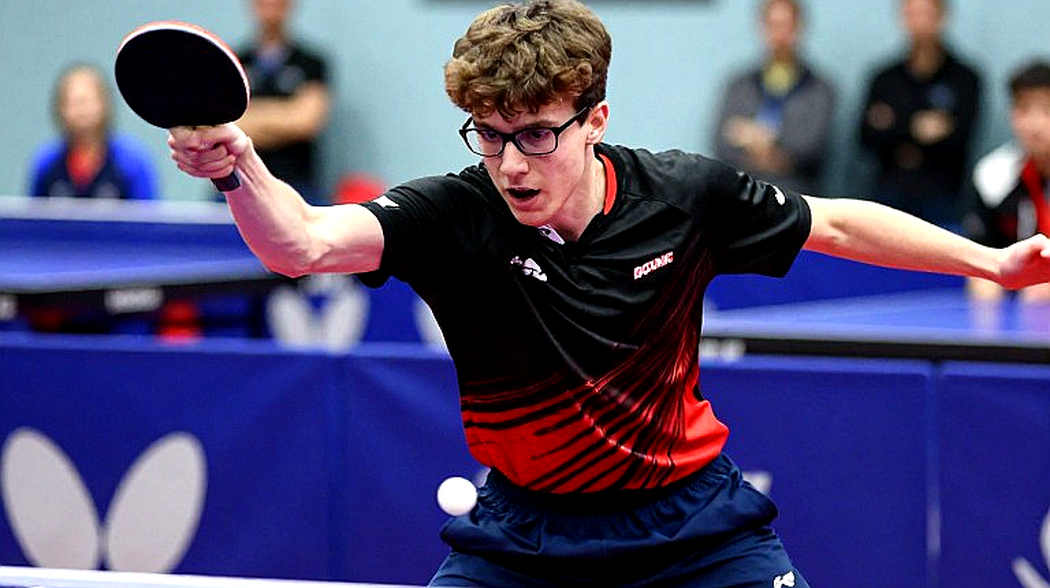
Connor Green, world No. 122 in men's singles, is in the rising phase of a young player's career. He is the sixth seed in men's singles and the fifth seed in men's doubles. The notable point: a player ranked 122 being seeded sixth implies that the men's singles entry list at Linz lacks depth inside the top 100. That is a signal of a winnable bracket, not a signal of form.
Both are entered in three events. Ho plays women's singles, women's doubles, and mixed doubles. Green plays men's singles, men's doubles, and mixed doubles. At Feeder level, the absolute physical cost of additional events is low. But the pattern indicates a strategy of maximising points and experience, rather than focusing on a single event.
In my years of watching WTT matches, I have observed that at Feeder level, mid-tier associations routinely send small delegations with high event density per player. This is a rational seeding exercise: low cost, real ranking benefit, and international exposure without the need to invest in a large analytics team.
Mixed doubles: where the data stands with them
The Green/Ho mixed doubles line is the highest expected-value line for English table tennis at Linz. They are the top seeds. They won the title in Düsseldorf. It is the only combination in the entire report with demonstrated competitive validation.
But I have to stop here. Their top seeding is a status built from the past, not from current form. The source article provides no form data at all, no season results, no streaks, no win rates. Any projection based on seeding is a logical leap the source does not support.
More interestingly, Green and Ho are now reigning Feeder champions in mixed doubles. At Feeder level, where analysis teams rely mainly on public video and WTT clips, being decoded is a genuine risk. They are no longer an unknown quantity. They are a target.
Women's doubles: a top seed with no shared history
Tin-Tin Ho plays women's doubles with Kukulkova of Slovakia, and the pair are seeded first. This is the most questionable item in the entire report.
Two players from two different associations, with no documented shared match history, seeded first. This can only happen if their combined individual ranking points are high enough to form a strong pairing on paper. But on the table, understanding does not come from points. It comes from thousands of hours of shared practice, from synchronised movement, from mutual reading in every short rally.
In their opening match, they face Kotecha and Wani of India, a pairing from a rising association. This is the classic test between a rising association and a settled mid-tier one.
Men's doubles: symmetrical familiarity
Green and Zalewski of Poland sit in the same section as Scholtes and Van Dessel of Luxembourg. Van Dessel is the player who won a European U21 men's doubles bronze alongside Green back in June.
This is the most tactically interesting detail in the entire draw. Green knows Van Dessel's game well, and Van Dessel equally knows Green's. The informational advantage does not tilt to either side. It is perfect symmetry.
In elite sport, symmetrical familiarity is one of the most underrated variables. When two players know each other down to every weakness, the match becomes a contest of execution under pressure, not of information.
Women's singles: extreme asymmetry and the adaptation trap
Tin-Tin Ho will face Sophia Pichler of Austria, world No. 777, in her opening women's singles match. On paper, this is the most lopsided match in the entire report.
Pichler is a host wildcard. She was placed directly into the main draw via the wildcard mechanism, a structural governance mechanism, not evidence of merit. The presence of a world No. 777 player in the women's singles main draw also shows how thin the floor of this field is.
The real risk is not in the ranking. The real risk is in adaptation. A world No. 777 player, competing at home, with nothing to lose and everything to gain, against a seed managing a three-event schedule. This is the kind of match where the outcome rarely depends on class, but on whether the seed maintains professional focus in the first 30 minutes.
Men's singles: the cold-meets-warm trap
Connor Green will face a qualifier in his opening men's singles match.
This is a small detail with large tactical significance. The qualifier has already played several matches on the very tables of the Linz arena. He has felt the table surface, the bounce of the ball, the air flow in the hall, the lighting of the system. Green, as a seed, will enter his first match cold, having not yet touched a match ball.
At Feeder level, this is the most common upset mechanism, and it is entirely independent of ranking. A seed can lose to a player ranked 150 places below simply because their adaptation was 20 minutes slower. This is something analytical tables routinely miss, because it does not appear in any statistical column.
The WTT system and the burden of defending points
WTT operates a rolling 52-week deduction mechanism. Ranking points expire one year after being earned, creating pressure to replace expiring points with new results.
For Green and Ho, this means the mixed doubles title in Düsseldorf, a cluster of points concentrated in a single event, has a defined expiry window. If they do not replicate it or accumulate additional mixed doubles points at other events, their seeding at higher-tier events will soften. This is a form of governance-created ranking fragility, and it is routinely omitted from headlines about chasing a repeat title.
Competitive landscape: mid-tier Europe and rising associations
At Feeder level, the competitive axis is not China versus the rest of the world. Chinese national team players rarely attend Feeder events. The real axis is between mid-tier European table tennis, second-tier Asia, and emerging associations.
India appears here through the Kotecha/Wani pair in women's doubles. Indian women's table tennis has made strides in recent years, and an unseeded pairing facing the top-seeded combination is a standard test between a rising association and a settled mid-tier one. But the sample here is one pairing, and cannot support a conclusion about an entire programme. I flag this as insufficient information.
Luxembourg appears through Van Dessel, who is both present in the men's doubles draw and a former European U21 partner of Green. This is a small association punching above its weight in doubles, possibly by using cross-association pairings as a route into main draws. Small associations appear to use cross-association pairings as a low-cost entry route into main draws. This has knock-on effects on the distribution of ranking points across the sport.
Industry transmission: what this article does not say
Across the entire source article, there is no equipment brand name, no rubber name, no blade name. There is no sponsorship data, no broadcast rights revenue, no prize-money information. Any claim about the equipment market built on this article would be fabrication.
The clearest industry signal is the event-system signal: the Feeder tier is operating as a deliberate ranking-access ladder for mid-tier associations, with host wildcards and cross-association pairings as its enabling mechanisms.
Broadcasting economics at this tier are close to nil. Free distribution via the WTT YouTube channel is the primary access route, implying minimal rights revenue. This means Feeder attendance is funded by association performance budgets, not by prize money or endorsement value. The commercial silence of this article is itself informative: it indicates that Feeder participation is institutionally funded.
The contrarian view
Now, to the part where I must speak plainly.
The Table Tennis England article calls the Green/Ho pair history-making and says they are looking to add to their accolades. These phrases are media products of an interested source, not neutral descriptors.
Technically, history-making can be defended: if they truly are the first English pair to win a WTT mixed doubles title, that is a milestone. But the omitted qualifier is what is decisive: at Feeder level. The gap between a Feeder title and a result at Grand Smash or Olympic level is very large. The historical conversion rate of history-making pair labels at Feeder and Contender level into success at the mainstream tier is low.
What interests me more is the structure behind it.
First, English table tennis in Linz depends on foreign partners. Two of the three doubles events involving English players are cross-association pairings. If this reflects a lack of internal doubles depth, it is a structural vulnerability. In team events, where pairings must be from the same association, this model cannot be replicated.
Second, cross-association pairings are permitted at WTT events and the World Championships, but not at the Olympic Games. At the Olympics, mixed doubles is limited to one same-NOC pair per association, and team-event doubles also require same-NOC pairings. This means the cross-association pairings in Linz are vehicles for points and experience, not Olympic preparation.
Third, the English delegation in Linz has two names. Only two. Across all the draw information, no other English player appears. This is a narrow delegation. Narrow does not prove a narrow development system, but it is the only available signal, and it points to limited depth.
When a national table tennis programme concentrates all expectations on one veteran female player and one rising male player, that is the classic warning pattern of a generational gap. One anchor is not a system. Concentrated dependence is never a sign of sustainable strength. It is a sign of precarity managed skilfully.
And there is one further aspect the source article does not mention, yet it matters more than all the seeding details: if the 2026 World Team Championships are indeed held in London, this is the most important cycle for English table tennis in decades. Every personnel decision, every entry, every experimental doubles pairing at Feeder level will be reread through that lens. And in that context, dependence on foreign partners in the doubles events becomes an issue that cannot be ignored, because in a team event, you cannot borrow a Polish player.
I write these lines with absolute respect for what Green and Ho have achieved. They won a title. They deserve their seeding status. But data never lies, and my job is to read it without being swept along by the language of a press release.
The line-up is a promise that players will break it; I merely witness the betrayal.
Limits of the analysis
I always attach this section to every analysis, because I believe acknowledging data weaknesses is a sign of critical thinking, not of a lack of confidence.
This analysis is based entirely on the draw preview issued by Table Tennis England. The source contains no form data, no head-to-head records, and no information on physical condition or injury. Accordingly, I offer no projection of match outcomes.
Some contextual items, including Feeder-tier ranking points and prize money, players' birth years, and the host of the 2026 World Team Championships, are flagged as data pending verification. They should be confirmed against official ITTF and WTT sources before being relied upon for any conclusion.
If the data changes, my conclusions will change. That is not weakness. That is honesty with method.
What to watch
So what should be watched in Linz?
Connor Green's opening men's singles match against a qualifier is the single most information-rich data point of this event. If he wins convincingly, it is a signal of adaptability. If he wins narrowly, it is a signal of the gap between seeding and substance. If he loses, we have an entirely different story.
The result of the Ho/Kukulkova pair in women's doubles will reveal whether a new cross-association pairing, with no shared history, can turn paper seeding into table results. This is a pure results-will-reveal item.
And in mixed doubles, if Green and Ho repeat the title, their history-making story extends for another stage of the Feeder calendar. If they fail, the history-making label risks being reread through different eyes at a higher tier, where the same standard clearly no longer applies.
In table tennis, as in football, the score is only a consequence. The real question is: what structure produced it, and can that structure withstand the pressure of a bigger tournament.
In Linz, we will have part of the answer.